The Texas construction industry has lots of work to look forward to, according to analysis by Twisted Nail, a Texas-based construction aggregate supplier.
The company analyzed national and state-level data from the U.S. Census Bureau and found that today, Texas leads the nation in commercial construction spending at nearly $90 billion annually. That’s more than double any other state.
The continued vitality of the state’s construction industry is fueled by federal incentives, low state taxes, manufacturing investments and population growth, with clean energy, semiconductor and advanced manufacturing projects accounting for much of that activity.
Further goods news comes from the U.S. Bureau of Labor Statistics which projects job growth of 5.8 per cent for skilled trade workers through to 2034, and even higher levels for other construction workers. This is encouraging given how construction employment has flat lined across the country over the past six months to August.
The boom in data center development is a particularly bright star for Texas construction.
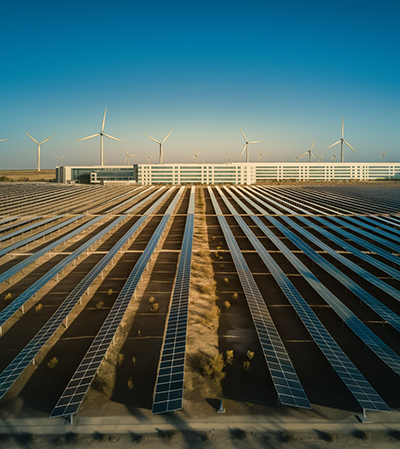
One of the largest and most interesting data facilities planned is the 50,000-acre data center hub near Laredo, dubbed “Data City, Texas,” announced by Houston-based Energy Abundance Development Corporation this past March.
“Data City offers a unique solution, achieving the holy grail of hyperscalers’ clean energy ambitions, delivering low-cost 100 per cent 24/7 green energy at scale,” the company said in a news release.
Although powered initially by Texas-produced natural gas, Data City proposes to shift to green hydrogen sourced from the company’s adjacent 2TWh Hydrogen City salt dome storage facility. Wind, solar and batteries are also part of the plan. In this way, Data City will be fully self-powering and isolated from ERCOT, the state’s energy utility.
Data City will be built in phases, with the first 300 MW and one-million-square-feet of data center space set to launch in 2026, and could expand quickly to 5 GW and over 15-million-square-feet of leasable space, the announcement says.
Even more ambitious is a $300 billion AI campus near Amarillo, Texas, called HyperGrid, planned by Fermi America. If plans move forward, the 18-million-square-foot facility could generate 11 GW of IT capacity, powered by a combination of natural gas, solar, wind and nuclear energy, making it the world’s largest energy and data complex.
Texas is getting a good piece of the $375 billion estimated by investment bank UBS that will be spent globally in 2025 on AI infrastructure. As much as $500 billion of data center investments are projected in 2026 and an estimated $3 trillion by 2028. In fact, nearly 20 data center projects are underway or planned in the Austin area alone.
Smaller rural communities become excited about the economic prospects surrounding new data centers proposed for their area. But while massive data centers mean short term construction jobs and add revenue to local municipal tax rolls, the longer-term employment picture is not as rosy. Completed data centers don’t require a high number of long-term workers.
As reported in the Wall Street Journal, some 1,500 people, including site workers, electricians and engineers, are involved in the construction of Stargate Project’s data center covering 1,100 acres near Abilene, Texas. The Abilene facility is part of the $500 billion nationwide AI infrastructure venture involving OpenAI, SoftBank, Oracle and the investment firm MGX.
However, Abilene’s economic development agency says the Stargate facility will hire only about 100 full-time employees, a fraction of the number of people who might work in a similarly-sized commercial development like an office park, factory or warehouse.
Nevertheless, the booming data center market is good news for the building industry should other areas of construction in Texas take a pause due to economic uncertainty.
Even if all the planned facilities don’t get built, data center expansion is likely to continue due to demand.
According to Jones Lang LaSalle, a global commercial real estate and investment management company, vacancy rates in existing data centers are at a record low of 2.3 per cent nationwide and virtually zero in Texas. Strong preleasing through 2027 is expected to keep vacancy rates at low levels.
However, it isn’t all clear sailing. The future of Texas data center development is somewhat contingent on the availability of power and water.
Texas data centers used nearly 22 million MWh of electricity in 2023, 4.6 per cent of the state’s electricity consumption. ERCOT projects that by 2031, the state grid will need to more than double its 2024 capacity, mainly due to the growth of data centers. This suggests the importance of new data centers having some self-powering capability.
What is even more challenging is the water supply required to cool processing servers, amounting to millions of gallons every day for each facility. In a state that often faces drought conditions, this could set up conflicts between proposed data centers and agricultural and industrial users and residential communities.
Building new data centers may be critical to the future success of the state’s construction industry. However, the limited long-term, large scale employment potential, alongside the required power generation and water supply demands, present complex realities that need to be recognized over the coming years.