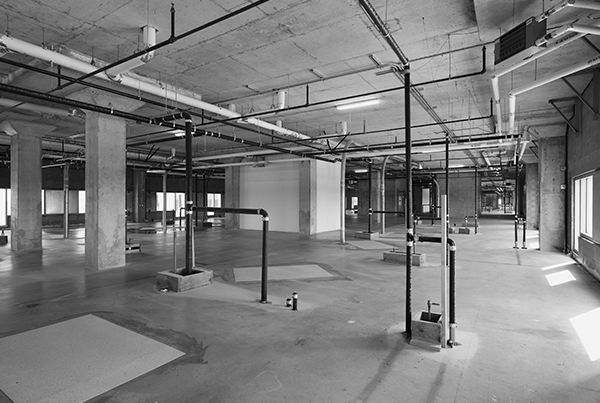
Across Canada, the average vacancy of commercial office space in Q2 of 2025 held steady at 17.2 per cent, according to a report from Cushman & Wakefield.
Although slightly lower than 2024 and far lower than the United States, this remains well above pre-COVID levels, despite the back-to-the-office movement gaining traction in recent months. Some cities are concerned the associated low levels of downtown foot traffic is damaging to property owners and local businesses, and lowers city tax revenues. How to resolve this is the subject of much discussion.
One approach often suggested would be for cities to focus development attention on combined mixed-used residential and commercial spaces where home, work and shopping are blended together into one. This would offer more stable and possibly higher returns compared to traditional single-use assets, writes Joanna Gerber.
“By diversifying income streams, including residential rent, commercial lease and potentially short-term or flexible-use units, investors gain protection against market fluctuations that might impact one segment of the property but not others.”
Cushman & Wakefield looks at the issue differently and sees single building office-to-residential conversions as a route towards increased urban habitation while unlocking significant real estate portfolio value.
In their report called Reimagining Cities: Disrupting the Urban Doom Loop, Cushman & Wakeman looked at 208 Walkable Urban Places or WalkUPs, being defined as well-connected, dense areas with a mix of housing, workplaces, and retail that prioritize pedestrian access and safety, across 15 major U.S. cities.

“While occupying only three per cent of the cities’ land mass, (WalkUPs) account for almost 26 per cent of real estate valuation, 37 per cent of tax revenues and 57 per cent of GDP,” the report says.
The overall direction of the report suggests cities should create more WalkUPs by increasing available livable, rentable living space and by adding more “cultural, entertainment, professional sports, hotel, local and destination retail and other play spaces.”
While this approach seems reasonable from an ROI standpoint in light of the fire sale prices for certain existing older urban buildings, selecting which buildings are suitable for such conversions involves a number of complex and overlapping factors.
A recent webinar discussion among three experts in the field of design, engineering and property development laid out many of the criteria that must go into the analysis of any building under consideration.
Not many buildings make the cut at the outset, said Steven Paynter, Toronto-based global building transformation and adaptive reuse leader for global architects Gensler. Depending on the city, only between 15 and 30 per cent of buildings Paynter sees meet the repurposing requirements suitable to that particular market.
Initially attractive are those buildings not leasing well, either because they don’t meet Class A standards or because their lease rates aren’t low enough for back office activities.
“If you can’t do either of those, you’re probably prime for conversion,” he said.
Then there are structure considerations.
Any two buildings likely have “different bones” and floorplate configurations, said Matthew Normandeau, principal at engineering firm Simpson Gumpertz & Heger Inc.
“They’re constructed differently and will have different constraints that really affect viability.”
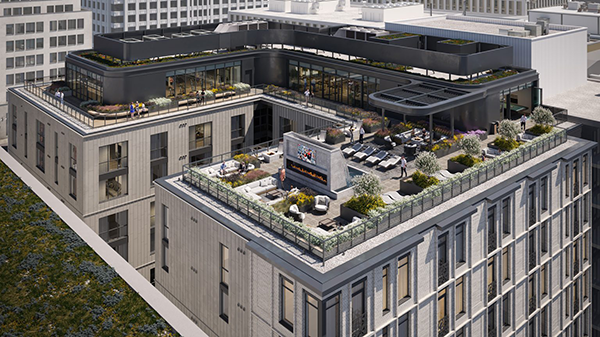
He pointed out façades, windows and roofing, particularly on Class B and C buildings, can be quite old, limiting their operational performance. MEP changes that require new holes in concrete slab floors are challenging as well.
You need someone on the design team “who can walk in with X-ray vision” and determine what makes up each building, said Paynter.
“You’ll go into a lot of buildings where nothing in there makes sense.”
Renovations, small additions and other minor changes made over time must likely be undone. Paynter says the best building is one built in the ‘70s that no one has ever touched. Original systems are near their end-of-life anyway.
“It makes for a lot less pain trying to figure out what you can keep and haven’t paid for when you bought the building.”
The other major question surrounding any conversion is the target market, Paynter said.
“We start with the most obvious, which is, ‘If you convert it, does anyone want to live there?’”
While dated architecture may not provide the look and feel sought by potential new occupants, some buildings may have historic character that one may not be able to change or want to change, Normandeau said.
Changes to façades and lobbies can be costly, and amenities like pools, rooftops decks and barbecue areas while wonderful could result in major reconstruction. All these must have an ROI in the form of extra rent.
Is that realistic for the market?
What would really improve the viability of office-to-residential projects is a relaxation of municipal bureaucratic processes and restrictions. Square foot financial incentives as recently offered in Calgary, long-term 75 per cent property abatements available now in Boston and the proposed U.S. federal credit are attractive and effective.
However, simply speeding up municipal approval processes can save millions, said Paynter.
“You don’t have the cost of carrying a site for years while the city messes around deciding whether or not they’re going to approve it.”
After all, time is money.
John Bleasby is a freelance writer. Send comments and Climate and Construction column ideas to [email protected].