A three-year clean infrastructure initiative was recently launched at Brock University with the objective of reducing the institution’s carbon footprint and impact on the planet.
The SPARK (sustainability, performance, adaptation, renewal and knowledge) energy retrofit will enable Brock to reduce campus greenhouse gas emissions by 83 per cent by 2028, surpassing the university’s initial target of a 75 per cent reduction by 2030 (compared to a 2013 baseline). The initiative will also cut energy usage by 60 per cent.
“Brock has embarked on SPARK to address a growing backlog of Deferred Capital Renewal and Maintenance, ensuring the university’s renowned student experience and teaching and research activities are able to continue unaffected by campus facilities well into the future,” said Scott Johnstone, vice-president, administration and services.
SPARK will leverage the Canada Infrastructure Bank’s low-interest carbon fund in partnership with Enbridge Sustain through an energy-as-a-service funding model. This approach will move the retrofit forward without upfront capital costs from the university.
The program targets the university’s Walker Complex, Arthur Schmon Tower, Thistle Complex, Robert S.K. Welch Hall and Mackenzie Chown Complex H-Block.
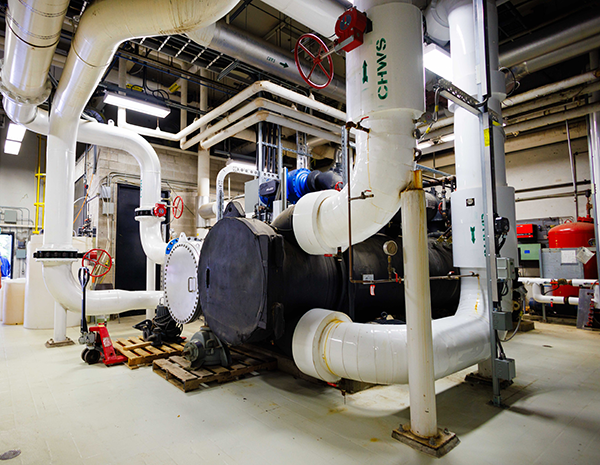
Johnstone said the initiative will address high Energy Use Intensity on these buildings driven by the physical limitations of heating, cooling and ventilation systems dating back to 1964. Despite efforts to optimize older campus systems, in addition to ongoing regular maintenance, they’ve reached their limits of what is currently possible, with performance decreasing over time, he added.
Under the SPARK initiative, lights across campus will be converted to LED, new efficient hot water heat pumps installed and building automation system controls optimized, new air handling units will be installed in several buildings across campus and new fume hoods installed in the Mackenzie Chown Complex.
“Brock has partnered with Enbridge Sustain on SPARK, which has a total estimated cost of more than $100 million over three years. Canada Infrastructure Bank is providing 70 per cent of the funding with the remainder funded by Enbridge Sustain. Brock will use its own capital for asbestos abatement, where needed,” said Johnstone.
Enbridge Sustain has hired Blackstone Energy Services as their developer to implement all measures under SPARK.
Mary Quintana, Brock University associate vice-president, facilities management, says SPARK will improve system performance across campus and prepare Brock to thrive in the face of future climate risks and uncertainties.
“This is not only about infrastructure renewal; it’s about breathing new life into Brock and our community, ensuring that our spaces match the ambition and excellence of our people,” she said.
Design is underway, with consultants conducting site visits and inspections across campus. The initiative’s completion date is planned for 2028.