Data centres are taking up a lot of oxygen in the construction industry space.
ConstructConnect reports data centre spending in the United States was projected to exceed US$52 billion by the end of 2025.
That would be more than double the spending recorded in 2024 and nearly eight times that of 2023. Although spending in Canada was lower but still significant at US$3.4 billion, it is expected to reach US$6.27 billion by 2031.
Meanwhile, many believe traditional commercial construction is not expected to show much growth in 2026 on either side of the border.
That’s why data centre facilities present themselves as an important construction opportunity. So does the creation of the energy infrastructure required alongside. After all, data centres need massive amounts of grid capacity that currently may not exist in certain regions.
As the high volume of new project proposals continues to come forward, power authorities cannot afford to miscalculate. They need to correctly understand which future projects are real and which are imagined.

Power authorities can gain some initial insight of future demand through interconnection requests. However, these need to be taken with a grain of salt. One former Google executive believes power authorities in the U.S. are receiving anywhere from five to 10 times the number of interconnection requests than will actually be required.
Canada is a suitable location for the massive new data centres being proposed. It has a cool climate that helps offset the facility cooling costs that often reach 40 per cent of the total power used. In this regard, Canada is ranked by the New Statesman Media Group as the top “energy effective” country in the world.
Toronto, Montréal and Alberta currently account for 93 per cent of Canada’s IT load. Looking ahead, Alberta illustrates the massive scale of new investments that are moving forward.
The province is becoming a major hub for the latest AI data centres, with projects like the 970MW GLDC project, eStruxture’s $750 million 90MW expansion in Calgary and the Keephills Data Centre 230MW Phase I development which have been approved to proceed. However, continued high demand forced the Alberta Electric System Operator (AESO) to announce last June a cap of 1,200MW for “large load projects,” such as data centres until 2028.
As of last July, Ontario had received new data centre connection requests exceeding 6,500MW, nearly 30 per cent of the province’s 2024 peak demand. Going forward, the province intends to, “prioritize and accelerate approvals for data centres that deliver measurable benefits to both local communities and to the province’s long-term competitiveness.”
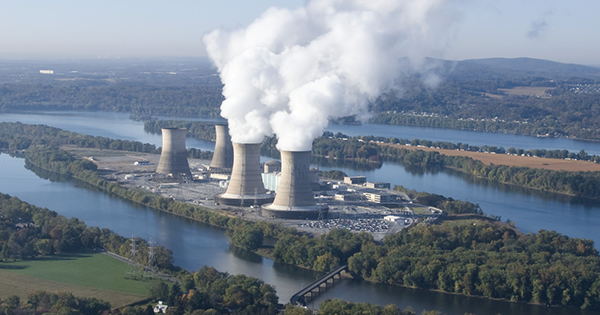
Part of the province’s power buildout includes billions of dollars to build new nuclear reactors and overall existing ones.
However, not all proposed data centres in Canada will actually be built. Some will be set aside due to connection delays, power constraints, equipment shortages and land grant approvals.
Kevin O’Leary’s highly publicized Wonder Valley data centre in northwestern Alberta is an example of a project beset by delays.
South of the border, the U.S. might be in store for exceptionally high data centre development which, if realized, could seriously impact existing grids all over the country.
“AI could drive 20 to 50 per cent of U.S. electricity demand growth between 2025 to 2030, highlighting the need for proactive planning to align AI load growth with a modern energy infrastructure,” says energy management company Schneider Electric.
Schneider suggests utilities must get their projections right and be realistic about the true level of demand in the future in order to deal with what has been termed the “phantom load problem.”
Data centres also use power in surges, a destabilizing factor that utilities have not needed to cope with in the past.
“Unchecked AI development, potentially reaching 500 TWh by 2030, could lead to oversized and inefficient infrastructure expansions, failing to meet the need for stable, affordable and accessible electricity to power sustainable AI development,” the company says.
Some of the largest data centres developers don’t plan to be totally dependent on the grid. Reuters reports Meta, Microsoft and Amazon Web Services have invested, or have signed, Power Purchase Agreements to extend the lifespans of large existing nuclear power plants as well exploring the possibility of supplying their own Small Modular Reactors.
Schneider Electric also points to the importance of self-powered generation proposals like that as well as renewables as part of power generation solution.
In fact, Alberta proposed Bill 8 in December to incentivize the development of self-powered data centres. If passed, Bill 8, “would provide data centres with a clear pathway to connect to Alberta’s power grid and support growing demand for data centre infrastructure.”
Data centres that bring their own generation would be prioritized, thereby accelerating the approval process.
“A significant portion of the U.S. electric grid infrastructure was constructed between 1960 and 1980 and is now nearing the end of its useful life,” concludes Schneider Electric. “We simply cannot capitalize on U.S. AI growth and keep pace with electrification unless we possess a grid that is genuinely modernized and smart.”
Building-out the North American power grid can be seen as a new and exciting opportunity for the construction industry that could help offset any near-term slowdowns in traditional commercial construction.
John Bleasby is a freelance writer. Send comments and Inside Innovation column ideas to [email protected].