At a Glance:
- U.S. containerized imports totaled 2,093,422 TEUs in February, down 9.7% from January and 6.5% from February 2025, per Descartes.
- Descartes said the decline followed typical seasonal patterns, with February still ranking as the fourth-strongest February on record.
- The company said war involving Iran and changes in U.S. tariff policy are increasing risk, costs and uncertainty across global shipping networks.
WATERLOO, Ontario — U.S. containerized imports declined in February from both the previous month and the same month a year earlier, according to a new report from supply chain solutions provider Descartes, as geopolitical tensions surrounding a widening war in the Middle East and shifting tariff policies added fresh uncertainty to global supply chains.
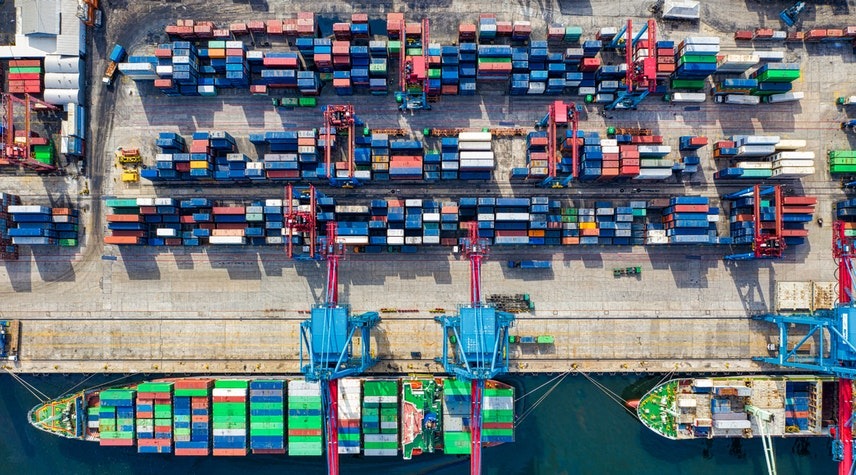
Descartes said U.S. container imports totaled 2,093,422 twenty-foot equivalent units in February, down 9.7% from January and 6.5% from February 2025.
The company said volumes remained in line with post-pandemic averages for the month and ranked as the fourth-strongest February on record, suggesting demand has held relatively steady despite a more volatile trade environment.
See also:
The report characterized the February decline as a typical seasonal pullback after January gains rather than a sign of broad weakness in import demand. February volumes remained 17% above February 2019 levels, according to Descartes.
Imports from China and Asia soften
Imports from China, still the largest source of U.S. containerized goods, totaled 728,562 TEUs in February. That was down 5.5% from January, down 16.5% from a year earlier and 28.8% below the record high reached in July 2024. China’s share of total U.S. container imports edged up slightly to 34.8%.
Descartes said China-origin volumes were still concentrated in major consumer and industrial categories. Furniture and bedding remained the largest category at 122,919 TEUs, or 16.9% of China-origin imports, although that category was down 18.5% from a year earlier. Plastics was one of the few major categories to post growth, rising 11.5% year over year. Machinery, electrical machinery, footwear, toys and sporting goods all posted declines.
Across the top 10 countries of origin, February volumes fell 9.4% from January, reflecting broad-based softness across Asian sourcing markets. China posted the largest monthly decline, followed by Vietnam, Thailand, India and South Korea. On a year-over-year basis, Descartes said continued growth from several Southeast Asian countries, including Thailand, Vietnam and Indonesia, helped offset part of the drop from China but not enough to reverse the overall decline.
At the port level, container volumes across the top 10 U.S. ports fell 9.9% from January. Los Angeles was the only major gateway to post a monthly increase. New York/Newark and Long Beach recorded the largest drops, while declines were also reported at Houston, Oakland, Norfolk, Charleston, Tacoma, Miami and Savannah.
Port operations remain relatively stable
Even with those changes, port operations remained relatively stable. Descartes said transit delays showed mixed but moderate month-to-month movement, with increases at some West Coast ports offset by improvements in the Pacific Northwest and Gulf Coast. The company said there were no signs of widespread congestion across major U.S. gateways.
Market share shifted modestly toward the West Coast in February. West Coast ports accounted for 44.2% of total imports, up from 43.4% in January, while East and Gulf Coast ports slipped to 39.5% from 40.8%. It was the ninth straight month in which West Coast ports held the larger share.
Iran conflict, tariffs add risk to global shipping
A larger concern in the report was the worsening geopolitical backdrop. Descartes said the outbreak of war involving the United States, Israel and Iran had sharply raised risk across key maritime corridors, particularly the Strait of Hormuz and the Red Sea. The company said commercial traffic through the Strait of Hormuz had effectively halted after military strikes and retaliatory actions triggered security warnings and a collapse in transit volumes.
That disruption is forcing some carriers to suspend sailings through the Gulf and Red Sea or reroute ships around the Cape of Good Hope instead of using the Suez Canal, according to the report. Descartes said those diversions are lengthening transit times, raising fuel and operating costs, and increasing schedule volatility. For U.S. importers, the likely effects include higher freight costs, longer delivery times and added pressure on supply chain planning.
Descartes also pointed to continued volatility in U.S. trade policy. The report said a U.S. Supreme Court ruling in February invalidated a large share of the Trump administration’s reciprocal tariffs imposed under the International Emergency Economic Powers Act, creating the potential for significant importer refund claims. But the administration also moved quickly to replace many of those tariffs by invoking Section 122 of the Trade Act of 1974, putting in place a temporary global tariff that preserved much of the cost burden for importers.
Looking ahead: Refunds on the horizon?
As a result, Descartes said the effective tariff environment remains unsettled. While some importers may eventually see relief through refunds, replacement duties and existing tariffs on products such as steel and aluminum are keeping costs elevated and compliance more complicated.
Beyond the United States and China, the report also cited broader policy shifts affecting trade flows. Descartes said ratification of a U.S.-EU trade agreement remains on hold, delaying hoped-for tariff relief in transatlantic trade. At the same time, revised U.S.-India tariff terms that took effect in February may improve cost predictability and gradually support more bilateral trade.
Descartes said in its analysis that February’s import results point to a market that is seasonally softer but not collapsing. The more pressing issue, the company said, is that importers are operating in a trade environment increasingly shaped by military conflict, rerouted vessels, tariff changes and elevated policy risk.