Canada’s first 3D-printed multi-storey building is being constructed at the University of Windsor.
It’s also a “living laboratory” as researchers and constructors study every phase of the innovative project, constantly gathering data on material performance, structural behaviour and construction efficiency, especially for Canadian conditions.
Work got underway last fall on the three-storey building but paused for the winter. The building should be completed this year with seven residential units and a total of 25 beds.
The project grew out of the university’s highly regarded engineering program as a response to Canada’s housing crisis. In doing so it sought new methods of construction. The university partnered with Toronto-based Aretek (formerly Printerra Inc.) which has provided the 3D printing technology and onsite expertise.
Funding has been provided by FedDev Ontario in the amount of $2 million and Desjardins Ontario Credit Union gave $250,000. The projected cost “is still variable at this time,” said Ryan Kenney, University of Windsor associate vice-president operations. “But a core goal is to demonstrate that 3D-printed construction can reduce labour costs and cut waste — factors that make housing more affordable at scale.”
Why a student residence?
Kenney said it was the “right fit” because it addresses a campus need and provides a laboratory for academic and student researchers.
“Using an on-campus site gave us the ability to closely integrate construction with the research and training happening in the faculty of engineering.”
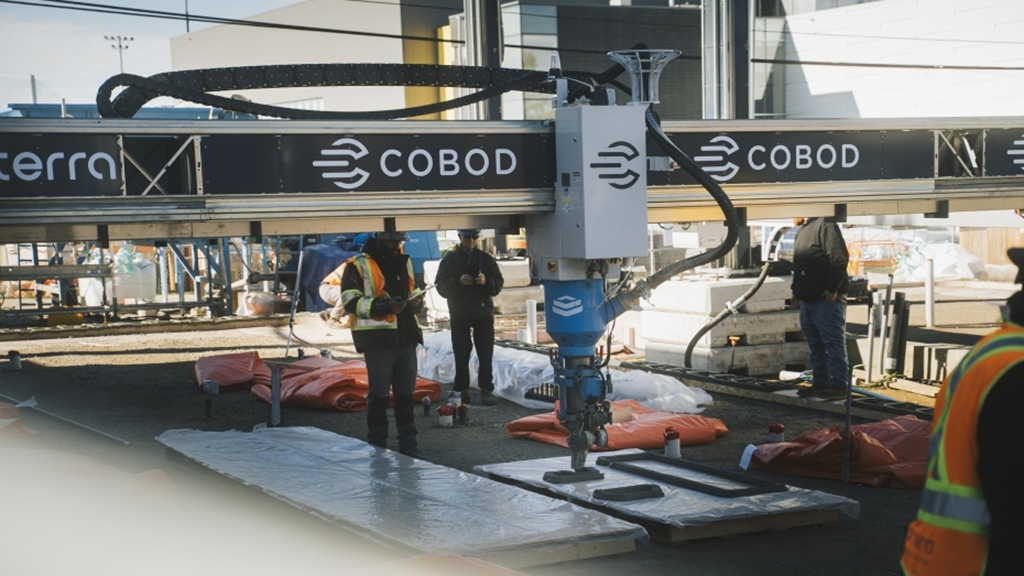
3D construction is somewhat unconventional. The 3D printer moves along a guided track and extrudes a specialized concrete mixture layer by layer to form the building’s walls.
“The process runs in planned stages rather than continuously — each phase involves printing, curing, material testing and engineering validation before the next section begins,” Kenney said.
Only a small crew of three or four people oversees the operation, managing equipment including the nozzle, batch plant and the controls using a computer tablet.
The concrete mixture is engineered for 3D printing, differing from conventional poured or block construction in how it’s applied and how it cures. This results in up to 30 per cent more efficiency and produces less waste.
The building’s other construction methods – mechanical, electrical and rooftop solar panels — are added rather conventionally “but the printed envelope itself delivers superior energy performance,” Kenney said.
The building will be net-zero.
Meanwhile students and faculty are “embedded” in the work onsite and off “using the construction site as a hands-on training environment throughout the build.”
Halting construction during the winter has allowed researchers to do material testing, curing, calibration and engineering review in the testing lab.
The construction site is part of a wider 3D-printing construction initiative the university is taking on.
The site provides the basis for a large R&D lab allowing “scalability and refinements to the technology for broader adoption across Canada,” Kenney said.
This month the university held a conference on 3D-Pirnting Housing Solutions drawing academics, industry and government officials and addressing issues like the technology’s commercial application.