A modular housing building in Beaverton, the new headquarters of the Toronto Region Conservation Authority and an expansion of a Mississauga community centre are among the 10 winning recipients of the Ontario Association of Architects’ (OAA) 2026 Design Excellence and Service Awards.
The biennial program commemorates the work of Ontario architectural practices anywhere in the world.
Selected from among 96 submissions by a panel of design experts, the 10 projects will be officially recognized at the OAA’s conference, titled Powering Through Innovation, which will be held next month in Waterloo.
The 96 submissions were narrowed down to a shortlist of 20 finalists using criteria that included creativity, context, sustainability, good design/good business. All the projects have been completed since Jan. 1, 2020 and are currently in use.
The winning recipients are:
Angle of Repose: Designed by Reasonable Projects Inc., this Passive House certified house in Ontario’s Algonquin Highlands features airtight three-foot-thick walls, ultra- high performance glazing and an electrical system. According to the design submission, “At the heart of the Angle of Repose Lake House lies the conviction that design excellence and environmental performance are inextricably bound — a single category.”
Beaverton Heights Modular Transitional Housing: This modular transitional housing facility was designed by Montgomery Sisam Architects Inc. A high-performance building envelope, fully electrified systems and rooftop solar panels significantly reduce energy consumption and environmental impact. “Delivered rapidly and economically, the project sets a new precedent for design excellence in housing for vulnerable populations,” says the submission brief.
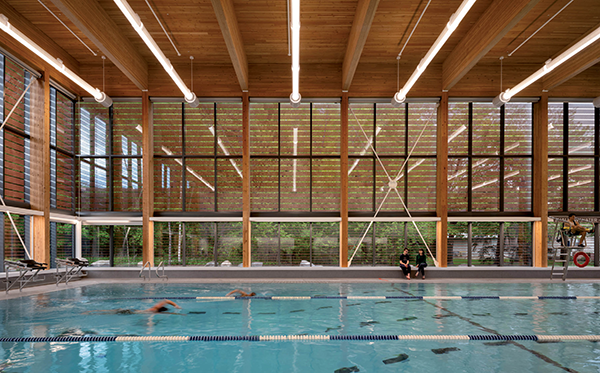
Carmen Corbasson Community Centre: Designed by Diamond Schmitt Architects, this project is a 45,000-square-foot expansion of a Mississauga community centre which integrated a natatorium, fitness centre and aerobics studio within the existing arena and gymnasium complex. The submission brief says the project extends the original building’s architectural logic while resolving circulation and accessibility challenges and drawing daylight deep into the interior. “The result is a design that expands programming opportunities, while renewing the centre’s role as a vibrant community hub.”
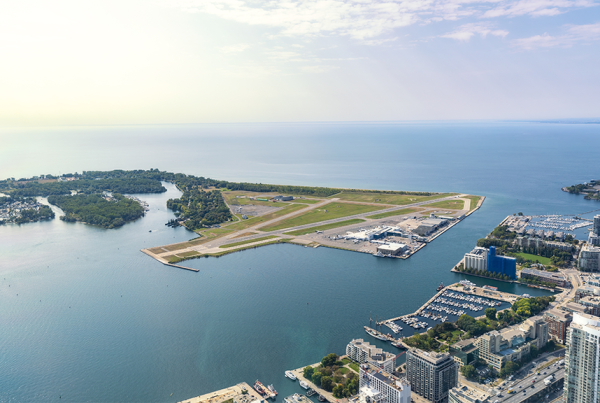
Kìwekì Point: Designed by Janet Rosenberg & Studio Inc. (prime consultant and landscape architect) and Patkau Architects Inc., this project encompassed the transformation of a limestone bluff in Ottawa and the restoration of its connection with the city through the Pìdàban pedestrian bridge. Anchoring the site is Whispering Point, a cantilevered architectural outlook. “By recontextualizing historic monuments and integrating Algonquin storytelling with this new topography, the project establishes a resilient, inclusive beacon of reconciliation,” says the design submission.
Koffler Scientific Reserve’s Dining and Operations Centre: Designed by Montgomery Sisam Architects Inc. and located on the Oak Ridge Moraine in a natural area of King City, the mass timber building integrates passive design strategies to achieve net-zero energy and net-zero carbon performance. In their submission write up, the architects noted expansive space in the exposed timber and large perimeter windows blur the boundaries between indoors and outdoors, reinforcing researchers’ engagement with the land. “The project is designed to naturally foster connection and community, strengthening the social dimension of fieldwork.”
Schwartz Reisman Innovation Campus: Located in the heart of downtown Toronto, this 13-storey building was designed to advance the University of Toronto’s mission of linking academic research and entrepreneurial endeavours. The design team consisted of Teeple Architects (architect of record; now Teeple Architects Canada Inc.) and design architect Weiss/Manfredi Architecture/Landscape/Urbanism. According to their submission, the 13-storey building establishes a new gateway to Queen’s Park and frames the heart of the university’s campus.
The Marianne and Edward Gibson Art Museum: Located in Burnaby, B.C., this single-storey structure was designed by Hariri Pontarini Architects (design architect) and Iredale Architecture (architect of record) as a place for fostering civic engagement. In their submission, the design team wrote, “nature anchors the Gibson within a forested, mountaintop setting and becomes an active participant in the museum’s identity where daylight and views extend deep inside.”
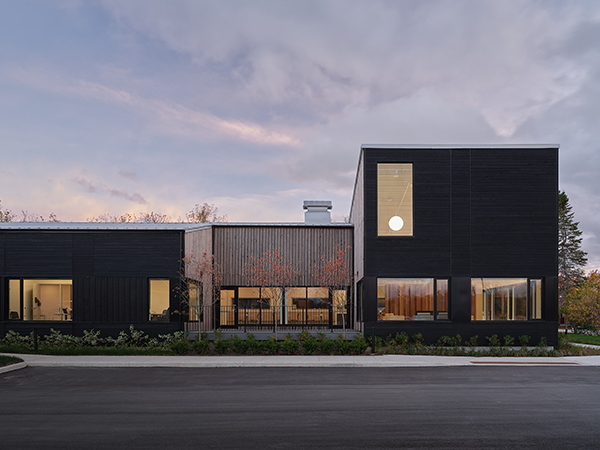
Toronto and Region Conservation Authority Headquarters: Set on the bank of Black Creek in north Toronto, this mass timber structure was designed by Bucholz McEvoy Architects Ltd. + ZAS Architects Inc. In their submission, the design team stated the new headquarters is a demonstrator project for sustainable development in the ravines of Toronto over which the conservation authority holds stewardship. “The TRCA HQ is a collaborative workplace supporting an inter-disciplinary and public-engaging work methodology, underpinned by the principles of TRCA’s mission of conserving, restoring and managing natural resources.”
Toronto Public Library: Bridlewood Branch: Ken Fukushima Architecture in association with David Fujiwara Architect was the design team of this project which encompassed the conversion of a former supermarket to provide a new, larger space for the library. In their brief, the design team noted the exterior storefront is technologically innovative and the interior is inspired by the “great spaces of historic libraries and from community history to make the library a unique and relevant expression for the neighbourhood.”
Ulster House: Even before the OAA design awards were announced, this LGA Architectural Partners Ltd. designed housing complex in Toronto was honoured with number of other awards. The project transformed a single-family lot into five compact homes with individual entrances that balance livability, affordability and environmental performance. “As both a five-plex and a small condominium, Ulster House offers an alternative to detached houses and highrise towers while maintaining the scale and character of its neighbourhood,” the architects wrote in their submission.
In commenting on the winning projects, OAA president Lara McKendrick said the Design Excellence Awards “showcase exciting examples of the quality work being performed by members of Ontario’s architecture profession as well as the clear impact our built spaces can have on our communities.”
Submissions also had to include Energy Use Metrics (EUI) to reflect the OAA’s commitment to pursuing climate stability and ensuring sustainable design remains a core priority for the architectural profession, said McKendrick.
These projects, along with the teams behind them, will be recognized during the OAA Conference at its Celebration of Excellence which will be held at Tapestry Hall in Cambridge May 14.
At the event, the OAA will also reveal which projects won the Michael V. and Wanda Plachta Award (for projects that cost less than $8 million to build) and the Lieutenant Governor’s Award for Design Excellence in Architecture (the best design excellence project located in Ontario).
The event will also reveal the winner of the People’s Choice Award — the top project as voted by the public during a two-week online voting poll earlier this month.
As well, the OAA will honour Shim-Sutcliffe Architects founding partners Brigitte Shim and A. Howard Sutcliffe with the Lifetime Design Achievement award.
Additional award winners will be honoured at special recognition and plenary event earlier that day. They include Juxta Architects Inc., the winner of the Best Emerging Practice, and 2026 Medal of Service recipient Michael McClelland.
In addition, William Lobban, William Greer and Jacqueline Toi Mei Chan will be posthumously added to the Honour Roll, which recognizes prominent deceased members of the profession.