
In last month’s column, Why familiar is the new luxury, I explored how recognizable design language helps consumers evaluate furniture with greater confidence. When forms feel understood, buyers are more comfortable investing in pieces meant to live in their homes for years.
The natural follow-up question is why certain forms feel recognizable in the first place. The answer lies in cultural memory.
Design cycles in the furniture industry move quickly. Collections are introduced every season, materials shift and silhouettes evolve as brands respond to new influences and changing tastes. Cultural memory develops at a much slower pace. The visual expectations people bring into a showroom or online catalog are shaped over decades through repeated exposure to particular forms and proportions.
Homes people grew up in, interiors they encountered in magazines, hotels they visited and historic spaces they experienced all contribute to a shared design vocabulary. Even when consumers cannot identify a style or historical period, those accumulated references shape how new products are interpreted.
Understanding this difference between fast design cycles and slower cultural memory offers an important perspective for brands developing new collections.
How cultural memory forms in furniture design
Furniture enters cultural memory through repetition across environments and generations. When a form appears consistently in homes, architecture, hospitality spaces and media, it gradually becomes part of the visual language people associate with domestic life. The cabriole leg offers a clear example. During the eighteenth century, English cabinetmakers such as Thomas Chippendale refined this curved leg form in chairs, desks and case furniture. Pattern books helped distribute the design widely across Britain and North America. Over time the
silhouette appeared in homes across different regions and economic levels. The association between the curved leg and elegance became embedded through repeated exposure.
Cultural memory in contemporary furniture
Brands that understand cultural memory often build new designs by working within these recognizable visual frameworks. Bernhardt provides a useful example. Founded in 1889 in North Carolina, the company has produced furniture across traditional and contemporary styles while maintaining careful attention to proportion and construction.
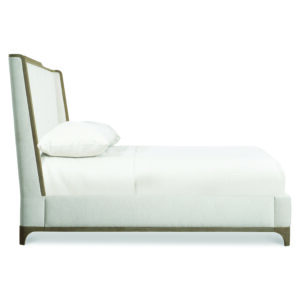
The Albion Panel Bed from Bernhardt reflects the structure of classic panel beds that have appeared in American homes for generations. While the finishes and detailing are contemporary, the architectural framework of the bed remains clear and recognizable. The result feels current while still grounded in an established furniture language.
Lighting brand Visual Comfort & Co. demonstrates a similar relationship between history and contemporary design. The Darlana Lantern designed by Chapman & Myers draws on traditional lantern forms found in historic European and American architecture. Its geometric frame echoes those earlier structures, while updated materials and scale allow it to function in modern interiors. The historical reference provides visual grounding while the execution introduces a new interpretation.
In both cases innovation appears through material choices, scale and context rather than through completely abandoning recognizable structure.
Why cultural memory matters for product development
Cultural memory influences how people evaluate furniture because it provides a reference point. When a new design aligns with proportions and structural patterns people have seen repeatedly, it becomes easier to interpret its purpose and place within the home. Designers benefit from recognizing these visual frameworks. Studying historical furniture forms reveals structural relationships that have proven effective across generations. Chair heights, table proportions and cabinet structures were developed through long periods of practical use. Understanding these patterns allows designers to introduce new materials or manufacturing techniques while maintaining forms that remain intuitive to consumers.
Marketing teams benefit as well. When brands can articulate the lineage of a design or explain how a piece relates to earlier furniture traditions, the product gains context. That context strengthens storytelling and often increases perceived value.
Looking ahead
Design cycles will likely continue to accelerate as technology and global markets reshape the furniture industry. Cultural memory moves differently. It accumulates through repeated exposure to certain proportions, materials and spatial relationships that become associated with the idea of home.
For brands, this presents an interesting opportunity. Product development does not begin with a blank page. It begins within a design language that consumers have been absorbing for years. The companies that study how those visual patterns developed often find that new ideas become easier to introduce when they connect to something people already understand.
Guided by a lifelong curiosity for history and connection, Julia Reinert created The Lifestyle Historian™ to unify research, marketing, and storytelling into one practice. Across antiques, interiors, fashion, travel, and more, she uncovers the hidden narratives that make brands and objects truly remarkable.