TRS needed a formwork solution that reduced or even eliminated the need for onsite redesign or rework. Doka’s customisable Radius Top 50 met that need.
Lochay Power Station delivers approximately 170GWh of renewable generation for the region each year. Its ongoing refurbishment, on behalf of developer SSE Renewables, includes replacing interior main generation components with modern, efficient technology. The upgrade will increase the station’s hydro power generation output.
Its complex angles, along with its integration with older concrete, excluded the use of some formwork techniques. In a setting where generator alignment and load transfer were critical, bespoke shuttering was crucial. Such a system needed to incorporate myriad contours and integrate with new and existing concrete details to create a smooth finish.
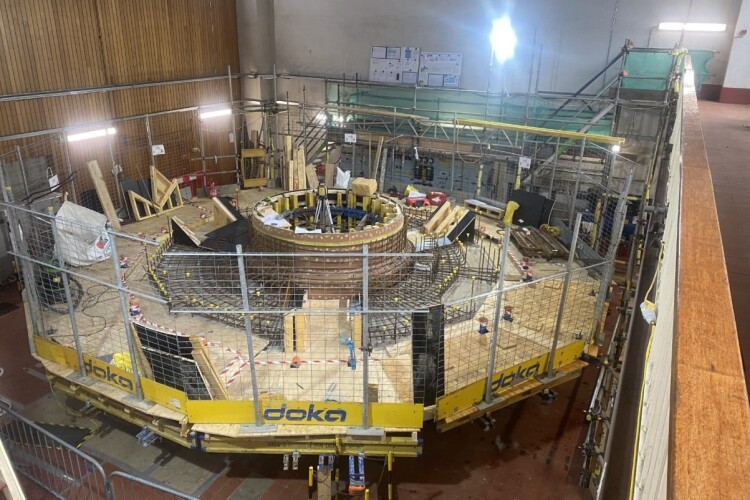
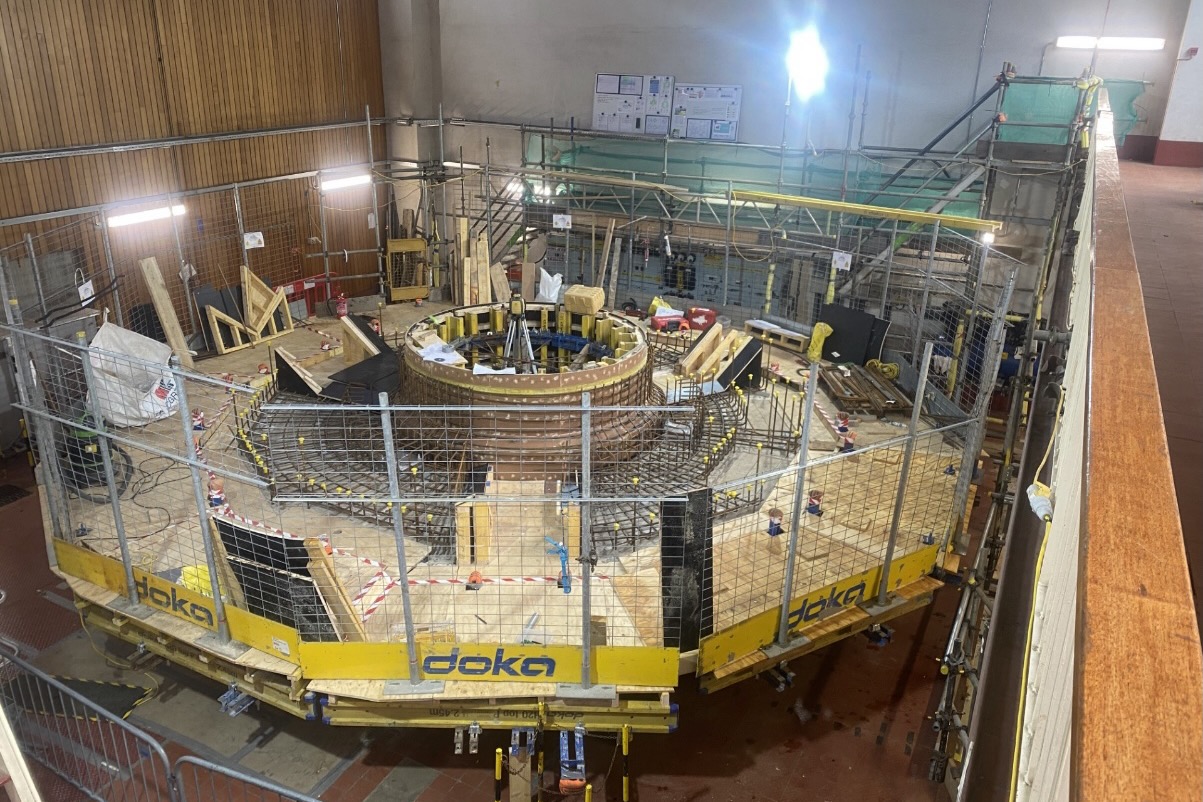
Doka’s timber-beam Radius Top 50 formwork was integral to this outcome. The system’s adaptability ensured each pre-assembled componentcomplied with the plinth’s intricate shape. The formwork’s fast, easy assembly contributed to reduced cycle times and the project’s completion within the agreed 12-week timeframe.
Doka produced a 3D-led design of the plinth. Its engineers used this to calculate the formwork’s precise radii and angles, and create a shuttering form shaped from the design.
Teams also developed a bespoke connecting plate to establish a WS10 formwork ring, manufactured precisely to the required angle. This level of accuracy improved material efficiency and consequently helped reduce the project’s environmental impact.
Doka’s hybrid strategy involved its teams cutting and preparing forms off-site and supplying them partially constructed. This allowed for final adjustment in situ to align forms with the existing concrete.
Tom Scott, project manager at TRS Formwork, said: “What Doka provided us in terms of design, formwork and technical support was first class. The final design worked perfectly, without us making any on‑site adjustments.
“The resulting 12-sided plinth, with its complex corbels and angles, worked to the millimetre. The precision allowed seamless integration between the new plinth and the existing structure while keeping the power station operational and the refurbishment programme on track.”
Got a story? Email [email protected]