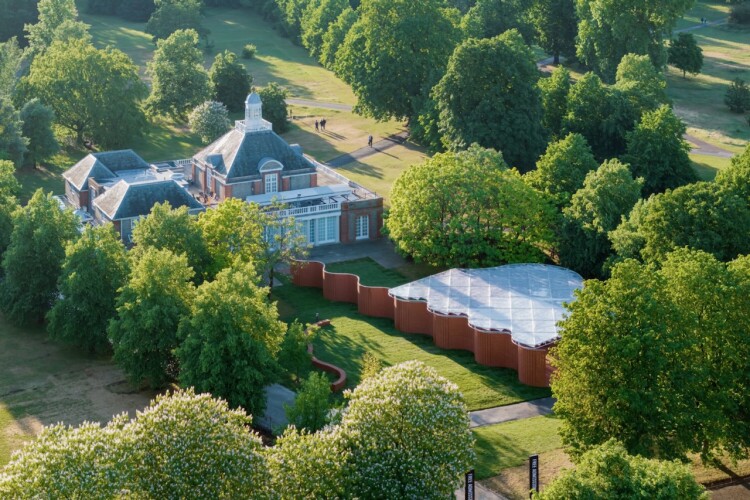
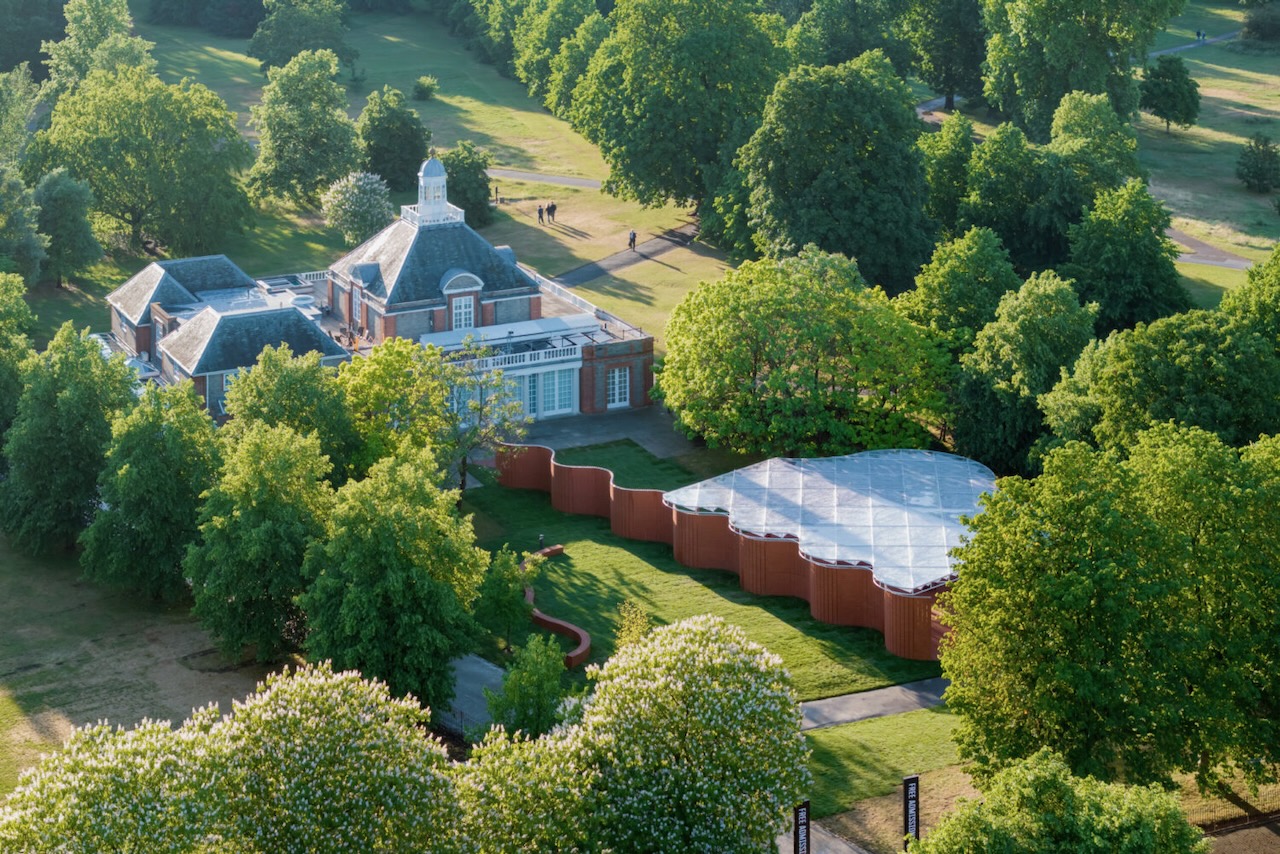
The architects on the project, used to showcase the cutting edge in design, drew inspiration from the architecture feature known as a serpentine or crinkle-crankle wall which forms one side of the pavilion. Thematically, the creation is inspired by the figure of the serpent as a generative and protective force.
AECOM provided multidisciplinary engineering and technical advisory services for the structure, collaborating closely with the architect, the Serpentine and specialist contractor Stage One to realise the distinct design vision. Central to the structure’s design is legacy beyond its first life and creating a structure that is fully demountable. While traditionally brick walls are fully bonded with mortar beds, a focus on waste reduction during the demount and rebuild, meant a slender steel subframe was incorporated inside the wall and a prestress applied along the top edge of the wall via threaded bars. This composite arrangement ensures that the walls and columns can support the weight of the roof, and controls the deflection and dynamic excitability of the walls.

A specific challenge for the structure was the variation of brick sizes. With no traditional mortar beds to absorb any construction tolerances, AECOM adopted a combination of soft joints, wedges and shims to ensure the prestressing was sufficiently uniform to stabilise the walls and avoid localised damage to the bricks.
“We are incredibly proud to have delivered LANZA atelier’s architectural vision for the 2026 Serpentine Pavilion,” said Jon Leach, director, AECOM. “Through a combination of engineering experience and experimentation we have designed a masonry structure that is true to concept while also fully demountable, ensuring the pavilion has a sustainable legacy beyond its first life.
“Full-scale testing to calibrate our computational models was key to determining the benefits of the prestressing and composite action, along with understanding the impact of the inconsistency and tolerances of the masonry unit sizes. The result is a hybrid prestressed masonry solution that gains significant benefit from the wall’s curved geometry and the use of piers as a traditionally bonded wall would, but which allows the wall to be fully demountable.
“A particular highlight of our contribution was embedding our young and graduate engineers into the scheme, giving them valuable experience in working alongside the architect and contractor for the whole life of the project, with a freedom and focus to deliver a piece of art that can be easily relocated in the future.”
Got a story? Email [email protected]