More extreme weather is coming this year.
The Intergovernmental Panel on Climate Change report released in 2023 predicted with a high level of confidence “the proportion of intense Tropical Cyclones (TCs), average peak TC wind speeds and peak wind speeds of the most intense TCs will increase on the global scale with increasing global warming.”
Developers working in regions frequented by hurricanes and other extreme weather systems need to be aware.
“Choosing the right construction material is essential, not just for durability but for safety and long-term investment,” writes Claire Glynn, digital marketing manager at FrameCad, a leading steel frame designer and builder.
Canada is not immune to severe weather events and can draw lessons from other regions.
When Hurricane Dorian devastated the Caribbean in 2019, Intellisteel Group, a Florida-based CFS engineering and manufacturing company, stepped in to support the residents of the Abaco Islands in the Bahamas with CFS replacement buildings.
“We rebuilt entire structures in these communities that were designed to withstand winds up to 220 mph,” the company says. “We manufactured and pre-panelized the entire structures off-site, then shipped these pre-fabricated steel paneling structures to residential homes, hurricane shelters and primary schools to help rebuild the island and protect its residents and children against future disasters.”
Steel framing proved to be the correct material choice when Hurricane Ian (2022) and Hurricane Milton (2024) hit western Cuba, Florida and the Carolinas.
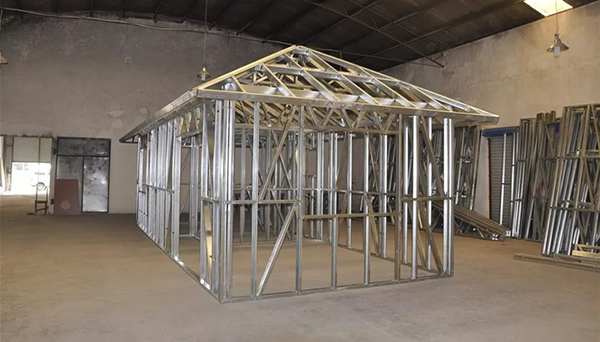
“These category 5 storms brought wind speeds of up to 160 and 180 mph which caused widespread devastation,” writes Glynn. “While buildings constructed with traditional materials suffered significant damage, hurricane resistant buildings with steel framing stood resilient.”
BuildSteel, an industry initiative and non-profit organization representing the Steel Framing Industry Association, outlines three principal reasons why CFS is the preferred material for buildings in storm-prone regions.
Of primary importance is CFS’ excellence for resisting wind events up to Category 5 hurricanes. This high wind resistance is due to the combination of the material’s high strength-to-weight ratio and engineered connections that are capable of dissipating wind loads.
CFS components also offer structural integrity, meaning they do not warp, rot or crack under pressure, and are able to bend and absorb high wind forces without fracturing.
Durability over time, even after harsh weather conditions have moved on, is another CFS feature. CFS does not rot, does not retain moisture, will not harbour mold growth and is impervious to pests. Because CFS uses zinc or similar coatings to boost durability, it will last hundreds of years before its corrosion resistance deteriorates. Traditional wood structures and those built with other fibrous materials can, on the other hand, absorb moisture and weaken over time.
In recognition of CFS’ lower risk profile and lower repair costs, Glynn says properties in storm-prone areas constructed with CFS can often enjoy reduced insurance premiums, resulting in significant cost savings for property owners, developers and investors.
DreamWeaver Homes, founded in 2016 and headquartered in Pennsylvania, is taking its CFS building solutions directly to an area calling for its use. In March this year, the company launched a $7.5 million Series A investment round to advance its plans to build a Puerto Rican CFS manufacturing facility. This initiative was the result of Hurricanes Maria (2017) and Fiona (2022) and the earthquakes that followed. More than 250,000 homes were damaged or destroyed. Thousands of families still live in temporary conditions.
The company’s steel-framed homes are engineered to exceed Puerto Rico’s 2018 emergency building codes and can withstand Category 5 hurricanes while also meeting enhanced seismic standards for earthquake resilience.
The DreamWeaver homes can be assembled in five to eight days, the company says. A fully finished home can be delivered, placed on its foundation, connected to utilities and ready for occupancy in just two to three days. The light weight of the steel-frame homes, up to 70 per cent less than concrete, require dramatically simpler foundations on Puerto Rico’s challenging karst geology, saving $30,000 to $60,000 per home.
The Caribbean is far from the only area addressing resiliency and occupant safety through the use of CFS framing. DreamWeaver notes 70 per cent of single-family homes in Hawaii are built with steel framing, compared to less than one per cent on the U.S. mainland. In Japan, where structures are mandated to withstand seismic severity of 6+ to 7 under Japan’s Shindo intensity scale, thousands of steel-framed homes are built each year.
As Glynn concludes, “Incorporating steel framing into your projects can provide peace of mind, safety for inhabitants and a competitive edge in a market increasingly focused on sustainability and disaster readiness, making it the ideal choice for building hurricane-resistant structures and homes capable of withstanding cyclones, windstorms and other powerful storms.”
John Bleasby is a freelance writer. Send comments and Climate and Construction column ideas to [email protected].