New proposals for enormous data centres across the United States and Canada are announced almost weekly. Many will occupy sites several thousand acres in size, made possible due to the immense amount of rural land available in North America.
Europe does not have the same abundance of open land. As a result, some areas are imposing restrictions or attempting to direct data centre developments towards under-utilized or abandoned industrial sites rather than to productive farmland.
While many U.S. states are welcoming data centres with various tax incentives, the region of Lombardy in northern Italy has approved a 100 per cent tax on data centre developments in rural areas and a 200 per cent tax for those proposed for agricultural and green zones. Lombardy is not banning data centres entirely. There are nearly 50 in operation now, most around the Milan area, with another 33 either under construction or pending approval.
“We cannot block the development of companies and employment. The race for artificial intelligence is already a fact,” said Massimo Sertori, Lombardy’s energy councillor. “We can, however, try to keep the phenomenon under control by avoiding excesses and the exaggerated exploitation of the territory.”
The other factor influencing decision-making reflects the outlook of Pete Sacco, founder and CEO of PTS Data Center Solutions. As outlined in an earlier column, Sacco foresees faster AI response times being required, as “inferencing” starts to dominate over “training.” He believes this can only be achieved with smaller data centres located closer to end users.
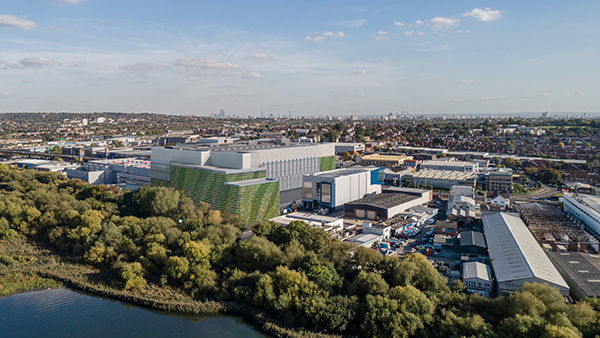
Obviously no massive data facilities anywhere can occupy hundreds of acres in the middle of a business district. Therefore, if they hope to locate near urban centres, they may need to look like the one being constructed in London, U.K.
Pure’s $3 billion (CDN) two-building data centre campus in northwest London’s Brent Cross district occupies just under nine acres of land. Building One (LON01) is already live. When the second building becomes operational in 2029, the total facility will be a 90MW data centre. Although not as large as many being planned in North America, it is still significant in size. Importantly, the Pure data centre is located close to its users.
Also notable are Pure’s efforts to address environmental sustainability while also recognizing the sensitivity of the centre’s placement within the community that surrounds it.
LON01 has already achieved a Platinum zero-waste-to-landfill certificate and uses hydro-treated vegetable oil (HVO) in place of diesel for backup generators. Pure’s second building will be visually distinct as well.
“The site (of the second building) has planning permission for what will be one of the world’s largest living walls,” says Pure. “Over 750,000 plants will wrap around Building 2 to reduce noise and air pollution, as well as encourage biodiversity of insects and birds next to Brent Reservoir’s Site of Special Scientific Interest.”
Pure has also donated a living wall to a local primary school in Brent Cross to educate pupils about nature and climate action and has helped plant “tiny forests” in partnership with Earthwatch Europe and the local council. The company is also supporting local school garden and allotment projects through Seeds for Growth.
The project also contributes to the local community, says lead project builder MACE Group.
“More than 1,100 students have engaged through educational sessions, work experience, and T Level placements. Thirteen local job starts have been created to date, with seven sustained beyond 26 weeks, and 44 candidates have been supported through pre-employment programs. These initiatives align with wider commitments to developing skills and employment opportunities across north London.”
Delivering a second and larger building within a live operational campus situated in a highly constrained location presents unique project delivery challenges. MACE says offsite manufacturing was adopted for key components. A disused industrial unit was repurposed to create high quality welfare and office accommodation. A park-and-ride system, logistics hub and controlled access routes supported smooth site operations.
A high level of co-ordination between the builder MACE Group and its project delivery team was made possible through the use of Aphex, an execution platform for construction site teams. This has helped smooth the flow of work, said Roheel Babla, planning manager for MACE.
“It’s helped us run more effective meetings and gave everyone visibility over the entire plan, which has been transformational for co-ordination across the project.”
The Pure campus at Brent Cross has been described as one of North London’s most significant digital infrastructure programs. It demonstrates what can be achieved in terms of sustainability, local engagement and sophisticated project delivery towards what could be a new age of data centres.
John Bleasby is a freelance writer. Send comments and Inside Innovation column ideas to [email protected].