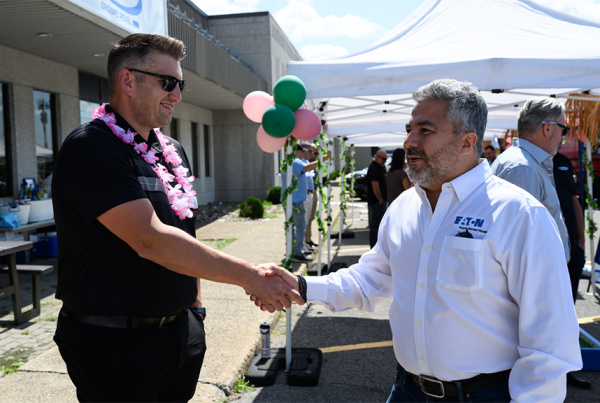
HAMILTON, ONT. — HOPA Ports and the Mississaugas of the Credit Business Corporation (MCBC), the entity representing the business development interests of the Mississaugas of the Credit First Nation (MCFN), have partnered to save a biodiesel production facility from permanent closure.
The two have signed a Memorandum of Understanding establishing a framework for an ongoing partnership, a release reads.
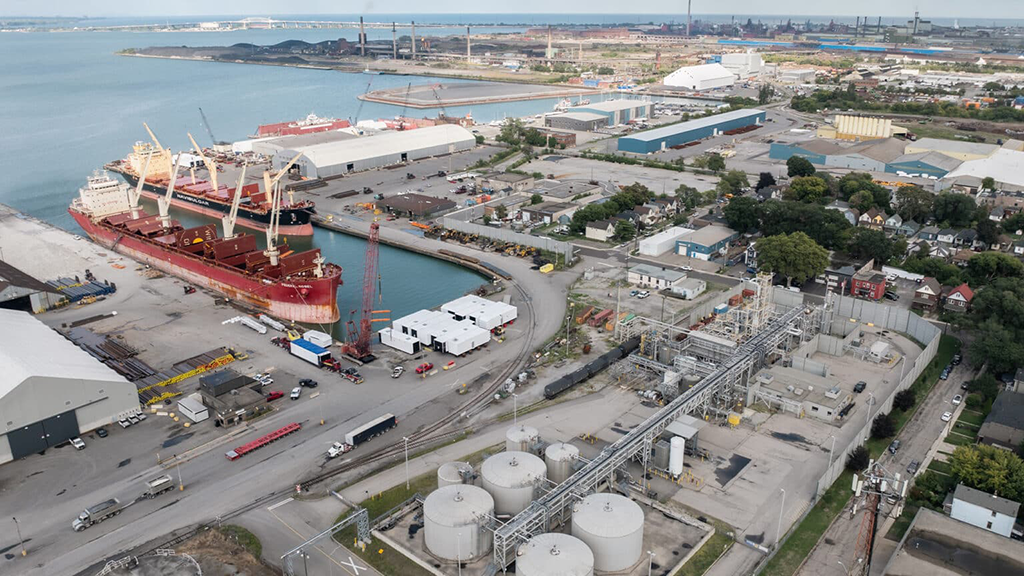
The project will be operated by Biidaaban Renewable Energy, a newly formed entity established to restart and operate the facility located at Pier 14 at the Port of Hamilton.
“This investment represents an important step toward reclaiming and advancing economic participation in sustainable energy by MCFN,” said Warren Sault, president and CEO of MCBC, in a statement. “Biidaaban, meaning ‘a new day’ and pronounced (bee-daw-bun) is an Anishinaabe term that means the point at which the light touches the earth at the break of dawn, and reflects both the renewal of this facility and our commitment to realizing a new dawn of economic reconciliation using a Treaty Forward Approach through long-term environmental stewardship.”
Biidaaban Renewable Energy has secured the necessary arrangements to assume operations of the facility, including a long-term lease for the lands, building and plant assets, enabling a restart of biodiesel production.
Operations are expected to start later this summer, following final preparations and commissioning of the facility.
“Biidaaban goes beyond simply bringing a proven asset back into operation with a strong, long-term ownership foundation,” said Tim Haig, incoming president and CEO of Biidaaban Renewable Energy. “Rooted in Indigenous majority ownership, the right policy environment, and a team of experienced partners, Biidaaban is positioned to deliver reliable, low-carbon fuel solutions while creating over 70 jobs and multiple economic opportunities across the region.”
The facility is expected to reduce approximately 130,000 tonnes of CO₂e emissions annually, equivalent to removing more than 28,000 passenger vehicles from the road each year.
Prior to its shutdown by former U.S.-based owners, the facility produced biodiesel from a mix of agricultural and waste-based feedstocks, the statement describes.
As the owner of the lands, HOPA Ports stepped in to acquire the plant, stabilize and preserve the site.
During its dormancy, HOPA supported and maintained the facility, bridging the gap until a “viable path forward could be established,” the release notes.
The restart will help rebuild domestic production capacity, reduce reliance on imported fuels and support Canadian agricultural producers and circular economic supply chains.