BuildForce Canada’s latest 10-year construction forecast reveals it is tracking 800 major projects worth $500 billion – that’s half a trillion dollars – to be rolled out across the country over the next 10 years.
The research agency’s Construction and Maintenance Looking Forward reports for Canada’s residential and non-residential construction sectors, released July 20, highlight sharp peaks and valleys in construction investment and employment over that period. BuildForce predicts residential construction employment across the nation will decline four per cent by 2028; ICI investment is on track to spike 10 per cent over the next decade; and construction of roads, highways and bridges may drop 17 per cent compared to 2025 levels through 2035.
“Employment demands are projected to be significant across the non-residential sector to the end of the forecast period, and particularly as investment rises to a forecast peak in 2029,” said BuildForce executive director Irwin Bess.
“We are also tracking a long list of further projects that have not yet reached final investment decisions and therefore have not been modelled into our forecast scenario. Any of these projects could have significant implications on investment and employment growth as and when they are approved.”
Nationally, residential construction is expected to remain on a downward trajectory in the early years of the forecast. BuildForce noted activity has slowed as higher interest rates, weaker population growth and uncertainty surrounding the Canada-U.S. tariff dispute weighs on the market.
Investment is projected to continue declining through 2028 before rebounding later in the decade, driven first by demand for new housing and, over time, by steady growth in residential renovation activity.
Growth fuelled by engineering
Non-residential construction is expected to post modest overall growth over the 2026–2035 forecast period, with investment rising about two per cent.
The strongest gains are projected in the early years, climbing roughly eight per cent to peak in 2029.
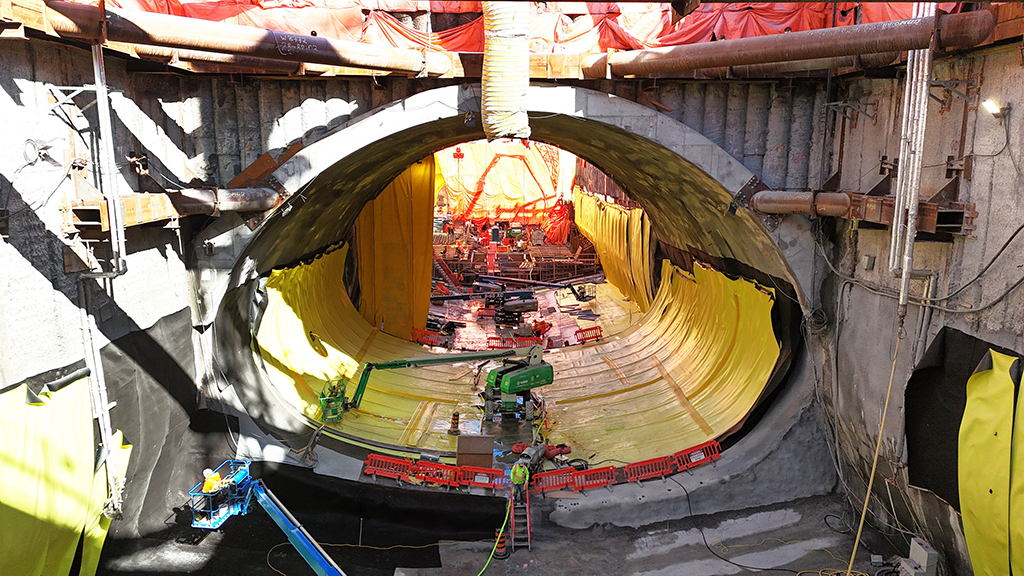
That growth will be fuelled by a wave of major engineering projects, including transit expansions in Alberta, British Columbia and several regions of Ontario, along with significant investments in water and wastewater infrastructure and utility projects.
Spending on health care and education projects will also spur significant work.
“It’s important to look at the steady trend in terms of where we’re going here on the non-residential side, and it points to sustained capital investment throughout the forecast period,” said Bess. “In some parts of the country, what you’re seeing is those big capital projects are offsetting some of the declines in the residential side.”
The annual BuildForce reports are intended to alert stakeholders to labour force trends, with regional needs forecasted for each trade over the decade. Overall, in addition to replacing retiring workers, the industry is expected to need another 49,600 employees to meet growing demand.
Combined with projected retirements, that brings the total hiring requirement to 188,700 workers by 2035. While the sector is expected to attract about 158,300 new entrants under the age of 30 over that period, it could still face a labour shortage of roughly 30,400 workers by 2035.
Once again, BuildForce calls for renewed focus on the recruitment and retention of women, Indigenous and new Canadian workers to fill those gaps.
“If we look at women in construction, I think that’s a share that hasn’t really moved much,” said Bess.
“Other groups, such as Indigenous people, we have a number of indicators in there that point out it’s a fast-growing segment of the population, but when you look at their share of the construction labour force, it’s 4.8 per cent, which is up from previous years. But to get to the type of participation we need, I think there’s more that can be done to promote career opportunities for Indigenous youth.”
Bess noted that over 160 groups participated in its LMI (labour market information) groups, offering insights into labour force needs.
“I would say the value here is bringing that bigger, coherent picture to the conversations about what’s possible, where the opportunities are going to be and, more to the point, where the pressure points are,” he said.
Major watch list
What the two reports do not show are projects on BuildForce’s watch list – that have been announced but with no FID.
Among them are proposed builds on the federal Major Projects list and others such as western oil and gas projects.
Bess said BuildForce will be tracking those projects closely because there will be significant labour repercussions when they come onstream.
“I mentioned the North because there are a number of projects on the watch list and recent announcements that could have significant pressures in the North, or pull labour to the North, and even within northern regions of various provinces,” he said.
“I mentioned the importance of tapping into talent where they are, and the Indigenous population is a fast-growing one. It just goes back to how can we promote career opportunities for youth, Indigenous youth, and invest in their retention in the industry.”
BuildForce reports there is still healthy growth in Alberta, which has been Canada’s strongest new-home market over the past two years.
Bess said there will be labour market ripple effects across the country if many new projects are greenlit, and he said, “The maintenance of those facilities too in Western Canada is really something that we’re also watching very closely.”