BuildForce Canada has released its annual Construction and Maintenance Looking Forward reports for the residential and non-residential construction sectors. This final provincial breakdown pertains to Prince Edward Island and Newfoundland and covers the forecast period from 2026 to 2035. The Daily Commercial News also has national coverage today on our website.
CHARLOTTETOWN – According to BuildForce, Prince Edward Island’s (P.E.I.) construction sector saw notable growth in 2025, thanks to the residential sector benefitting from elevated levels of new housing construction and the non-residential sector experiencing strong levels of activity in engineering construction and with ICI buildings.
But the outlook will be much more moderate to 2035.
New‑housing construction activity is expected to contract into 2028 before rising again into the early-2030s.
By 2035, residential employment in the province is projected to contract by nine per cent compared with 2025 levels, with losses confined to employment in new housing (-26 per cent).
“Residential construction activity in Prince Edward Island has been significantly elevated in the years leading up to, and immediately following, the COVID-19 pandemic,” said Irwin Bess, executive director of BuildForce Canada, in a statement. “Although our forecast is calling for residential construction levels to cycle down from those peaks, they remain nonetheless above historical norms through to 2035.”
For P.E.I.’s non-residential sector, engineering construction activity peaked in 2025 with major utilities projects, including Enwave Energy’s Energy from Waste Renewal and electricity capacity expansion initiatives. Construction of ICI buildings has similarly been driven by a high volume of health care, education, government and commercial projects.
As many of these projects conclude, non‑residential investment is expected to decline into the early 2030s. A modest upcycle follows as economic growth strengthens and demand for commercial, industrial, and transportation‑related infrastructure returns.
Non‑residential construction employment is projected to remain elevated into 2026 before gradually declining as utilities and institutional projects wind down. By the end of the forecast period, it is expected to be approximately eight per cent lower than 2026 levels, although still above long‑term historical norms.
Slowing demand growth is expected to cause hiring needs to contract by 480 workers over the forecast period, BuildForce notes. When that figure is added to the projected retirement of 1,650 workers, the province’s hiring needs could reach as many as 1,170 workers. These hiring requirements may be addressed by the recruitment of an estimated 1,720 first-time new entrants under the age of 30 from the local population. This, in turn, may create a potential surplus of as many as 550 workers that could be at risk of leaving the province to pursue construction work elsewhere.
“Although we are seeing construction activity slow into the end of the BuildForce forecast period, context is important,” explained Sam Sanderson, executive director, Construction Association of Prince Edward Island. “The industry is stepping down from record-high levels of activity, and even at these comparatively lower levels, investment levels remain at or above historical average levels over the decade. Our industry must maintain a steady focus on recruiting and retaining new workers to continue to meet planned demands.”
NEWFOUNDLAND AND LABRADOR
BuildForce predicts an interesting switch for Newfoundland and Labrador over the forecast period.
Construction activity contracted modestly in 2025 as growth in the province’s residential sector was more than offset by a contraction in non-residential construction. But, the outlook calls for these trends to reverse to 2035.
Although the outlook calls for a modest contraction in residential investment, that slowdown is projected to be more than offset by growth of nearly 25 per cent in non-residential investment.
In the middle of the forecast, new housing construction is projected to return to growth, with activity increasing in the construction of both single-detached and multi-unit residential structures. Levels then slow into 2035. Meanwhile, residential renovation activity is expected to generally rise across the decade, BuildForce states.
By 2035, these factors are projected to combine to contract residential construction employment by 10 per cent compared to 2025 levels.
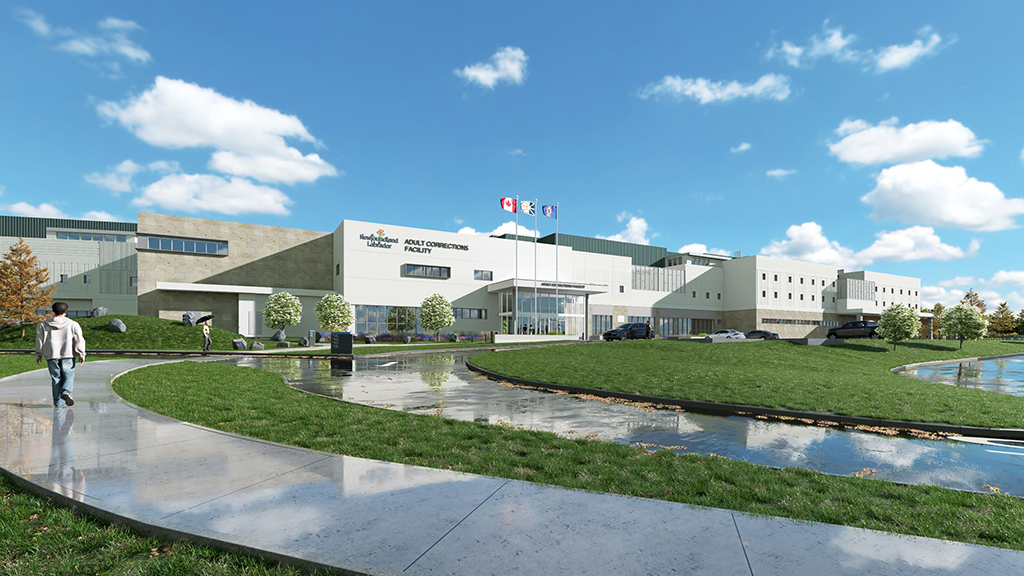
Major projects such as the Bay du Nord offshore oil development project and the expansion of the Churchill Falls Generating Station are expected to elevate non-residential investment to a forecast peak in 2031. Investment in the construction of ICI buildings, meanwhile, is expected to see notable growth across the forecast period, with work either currently ongoing or planned to start on such key projects as the St. John’s Penitentiary, and the Canada Revenue Agency National Verification and Collection Centre.
By the end of the decade, non-residential construction employment is projected to rise by 15 per cent compared with 2025 levels. The greatest growth is recorded in employment relating to ICI buildings, which is projected to add 27 per cent over the forecast period.
Newfoundland and Labrador’s construction labour force outlook is heavily influenced by an aging demographic.
By 2035, as many as 5,900 workers, or 30 per cent of the 2025 labour force, are expected to exit the industry due to retirement. Combined with demands created by growth, the province could face a total hiring requirement of 5,700 workers.
An estimated 4,100 first-time new entrants under the age of 30 are expected to join the sector from the local population. Even with these additions, however, the industry may face a hiring gap of 1,600 workers, BuildForce notes.
“While Newfoundland and Labrador’s work picture outlook is reasonably bright, we should move forward with cautious optimism as many of the projections rely on projects that have not yet been approved for final investment and are hinged to further opportunities that require energy transmission to initiate and launch new projects,” said Bob Fiander, executive director, Trades NL: Building Trades of Newfoundland & Labrador, in a statement. “Our supply of highly skilled labour is prepared to address significant demand in the near-to-mid-term. We now find ourselves with an advantage having time to work with industry stakeholders to plan and prepare for future supply, training, retention, and growth for the construction and maintenance industries.”
“There is good reason to be optimistic about the long-term outlook for non-residential construction in Newfoundland and Labrador,” added Terry French, president of the Construction Labour Relations Association of Newfoundland and Labrador. While activity is slower in the short term, the potential for major projects on the horizon and a labour force ready to respond position the industry well for future growth.”