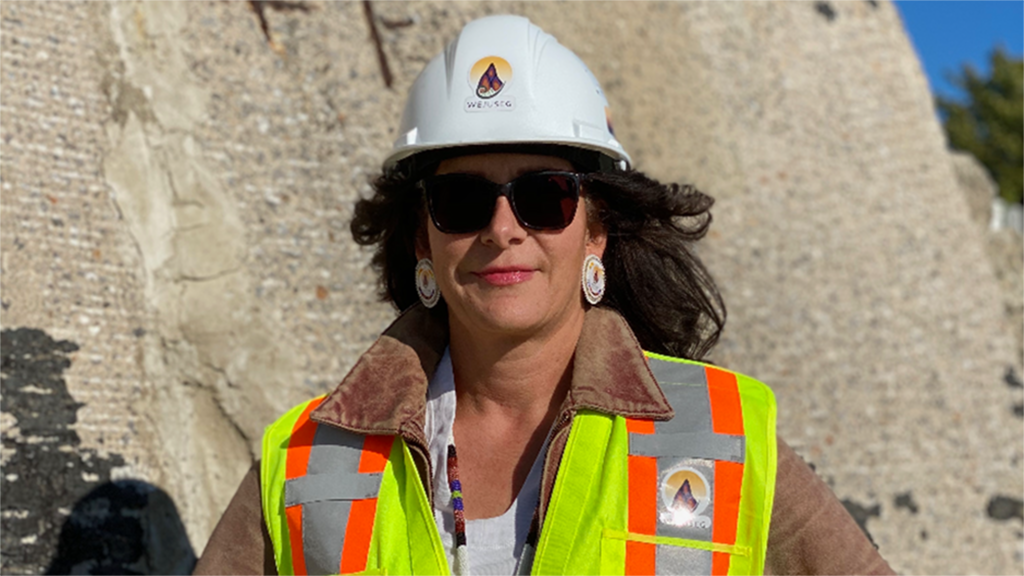
Victoria LaBillois was the first Mi’gmaq woman to run a construction company and conduct business beyond her First Nations community, Listuguj, Que., in 2011.
But with almost no one to turn to for guidance on running Wejipeg Excavation, trial and error became a big part of the business.
“I had to learn pretty much everything from scratch,” she says.
LaBillois leaned on her academic experience (she has a master’s degree in business administration) and navigated Quebec regulatory agencies, pricing models and jobsite networks to keep business moving.
“It was a lot of investment of time and energy to figure out a lot of things. I was flying blind.”
If she had had a mentor, things would have been different.
“I’m sure it could have saved me hundreds of hours and given me some confidence early on.”
A successful contractor today, LaBillois says young Indigenous entrepreneurs shouldn’t have to face the same difficulties she did.
It is one of the reasons she is involved in the upcoming Rezolution Summit, a conference on Aug 11 and 12 in Toronto with an overarching theme of Indigenous wealth creation and economic sovereignty.
The subject of mentorship is a part of the third annual summit.
Organizers have asked that delegates bring their mentees to the show, LaBillois says, pointing out she will be addressing those newbies at a pre-summit workshop, covering the importance of social capital and how it can lead to success for young businesses.
“I’ll be sharing practical tips on how to build their networks and I’m going to expect that they will put these tips into use at the event.”
LaBillois says the challenges and barriers might be fewer for young entrepreneurs today even in remote Indigenous communities, but she believes mentors are critical to a young entrepreneur’s success.
She points to an increase in supports in remote Indigenous communities now. They often have economic development officers and Indigenous financial institutions that offer “a portal,” both regionally and nationally, on business practices, particularly around financial literacy.
Entrepreneurship, she reminds young Indigenous businesses, is not new to First Nations people.
“We had well-established trade routes across the continent. I tell them we always knew how to save and invest. It’s not new, it is just getting back to it.”
Over the span of her career, which includes about 20 years in an Indigenous public service capacity before hanging up her business shingle, LaBillois has dealt with hurdles and barriers – the biggest being racism.
She describes a time operating Wejipeg Excavation when she was called “the Indian loader” and another when a fuel company turned her down for an account because they said “they don’t deal with the Reserve.”
Accessing insurance can be difficult for Indigenous businesses, she adds.
“I think there is an awareness of the (racism) issue and attempts to address it but it is something that is rarely talked about until it rears its ugly head.”
Her philosophy has always been to push through barriers.
“I’m just here to do my thing, Get the job done.”
LaBillois, who has never thought being a woman was a barrier to working in construction, says gender inequity is still prevalent in an industry slow to catch up to other fields.
But conditions for women are improving.
Roughly 23 per cent of all Indigenous businesses are run by Indigenous women, outpacing growth of non-Indigenous women-led companies, she points out.
As Indigenous people represent the largest demographic under 25 in Canada, linking them to training and jobs will go a long way to addressing labour shortages.
“It’s a solution that is often overlooked.”
Over the next decade LaBillois expects to see more Indigenous businesses in a variety of fields.
“I see more equity participation in large projects…We’re making strides and my hope is that this becomes normal and that we don’t need to have a special policy to hire Indigenous workers or to engage with Indigenous businesses.”
With Indigenous businesses contributing almost $50 billion annually to the Canadian economy, she remains optimistic.
“I’m very encouraged about the positive changes in the landscape.”