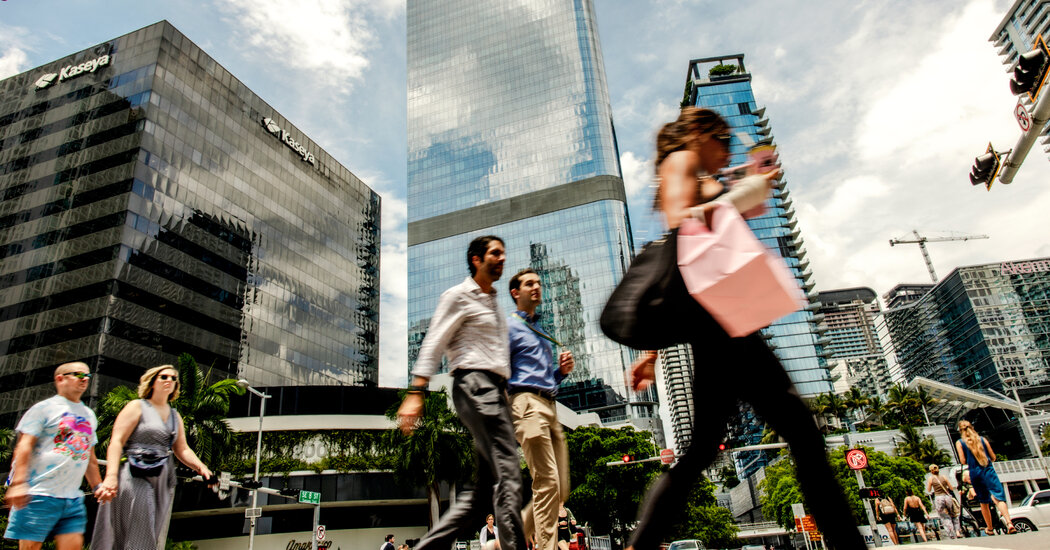
For the first time, living in South Florida costs more than in the New York City region, according to the U.S. Bureau of Economic Analysis.
The bureau, a part of the Department of Commerce, published the finding in a July update to the Regional Price Parities (R.P.P.) index, which compares living expenses among geographic areas, including goods, housing, utilities and other services. The update is based on 2024 data.
The index compares expenses relative to the national average. San Francisco topped the list of all U.S. metropolitan areas, with costs of 15.6 percent over the average. Miami followed at about 14.1 percent over; Los Angeles at 13.5 and New York at 12.5 percent over. Because R.P.P. numbers combine the economies of cities and their surrounding areas, Miami proper was not directly compared with notoriously pricey New York City.
According to Raymond Lord, a Miami real estate broker, people in the area feel the pressure of the rising cost of living. “We definitely go out less; we cook in more,” he said.
That pressure comes even as rents in Miami are on the decline. While inflated during the pandemic, rent has begun to normalize as residents have left Florida for New York or California, Mr. Lord said. “We did see rental prices come down a substantial amount, but the cost of living prices didn’t go anywhere,” he said.
Rising expenses in South Florida can be traced to the 2022 post-pandemic boom. While local economies suffered during the lockdown, Miami experienced growth, fueled by relocations and laxer restrictions that allowed its businesses to stay open. Notably, Florida also lacks a state income tax, an incentive for high-net-worth individuals to make it their home.
While living expenses may be climbing, demand isn’t waning. “People are willing to wait and pay for insane things,” Mr. Lord said, citing Miami’s ever-present lines for high-end grocers, like Nude, Erewhon’s equivalent in the Brickell Bay neighborhood. “I don’t see companies being pressured to lower prices anytime soon.”
For South Florida’s growing roster of billionaires, those prices aren’t without a market. What’s a $20 smoothie when Miami’s homes are going for tens of millions?