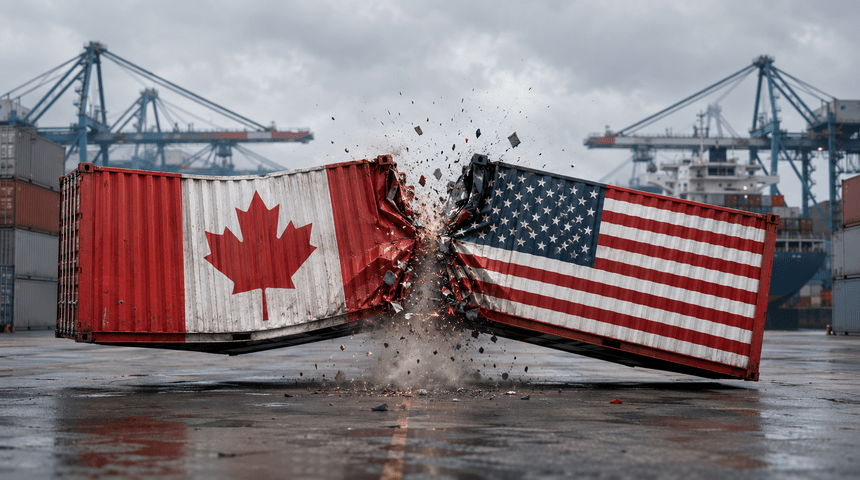
WASHINGTON — President Donald Trump has delayed a new round of 50% tariffs on Canadian goods for three days as the United States and Canada work to finalize a broader trade agreement.
The tariffs, which were scheduled to take effect at 12:01 a.m. Aug. 19, have been postponed until 12:01 a.m. Aug. 22, according to a White House proclamation. The duties would affect an estimated $20 billion in Canadian exports to the United States.
Trump announced the pause Tuesday night, approximately 90 minutes before the tariffs were set to begin.
See also:
“I have paused the 50% tariffs against Canada that were scheduled to kick in tomorrow morning for a three-day period, based on the fact that Canada and the U.S.A., subject to the finalization of documents, have a deal,” Trump wrote on social media.
Canadian Prime Minister Mark Carney offered a more measured assessment, saying the two countries had made “substantial progress” but still had important issues to resolve.
The White House said Canada had expressed a commitment to address U.S. complaints involving restrictions on American alcoholic beverages, dairy products and motor vehicles. The Office of the U.S. Trade Representative said the emerging agreement would include expanded market access for American goods, economic security commitments and alignment on digital trade.
The additional negotiating time provides a brief reprieve for businesses on both sides of the border, but it does not eliminate the uncertainty surrounding U.S.-Canada commerce. The two countries are deeply connected through cross-border manufacturing, transportation and materials supply chains.
For the home furnishings industry, separate U.S. duties on Canadian softwood lumber remain an important unresolved issue. Canada has sought relief from those duties, as well as tariffs of up to 50% on Canadian steel, aluminum and automobiles. Those measures are not covered by the three-day pause.
Canadian lumber is an important input for U.S. residential construction and related industries, meaning elevated duties can contribute to higher material costs and housing affordability pressures. Furniture and home furnishings companies also rely on the movement of components, equipment and finished products across the northern border.
Candace Laing, president and CEO of the Canadian Chamber of Commerce, said the delay offered relief but not the certainty businesses need. “Businesses may not be closing up shop with this news, but an extension doesn’t bring the certainty that a signed interim deal would,” she said.
The negotiations also come ahead of a wider review of the United States-Mexico-Canada Agreement. U.S. and Mexican officials have already held several rounds of talks over the trade pact, which Trump signed during his first term but has since criticized.
The administration based the postponed tariffs on Section 338 of the Tariff Act of 1930, a rarely used provision allowing duties of up to 50% in response to trade discrimination. The proclamation directs U.S. Customs and Border Protection to suspend collection of the additional duties during the three-day period and process refunds if any duties were collected.