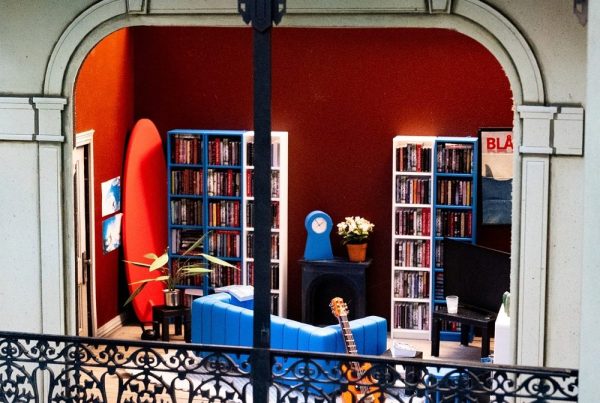
The LHRC developed a circadian lighting prototype for the Swedish Energy Agency, which included modes for day, downlight only and night.
WAC Group is sponsoring a series of educational webinars created by the Mount Sinai Light and Health Research Center (LHRC) in New York. The LHRC brings together researchers, educators and designers to discuss how light can improve people’s lives and sustain a healthy planet.
Topics include how the visual system processes light, lighting factors that affect visibility and comfort, the impact of light on color perception and spatial experience, and an introduction to the circadian system. All of those topics are influencing lighting product development.
You can register for the remaining three webinars here.
The second of the four-part webinar series, “Lighting for People,” takes place Tuesday, Aug. 5 at 2 p.m. EDT. Mark S. Rea, a LHRC professor at the Icahn School of Medicine at Mount Sinai will speak with Patrick Laidlaw, director of business development and integration for WAC Group.
Rea is an expert in human vision, lighting engineering and photobiology, among other areas, and the author of more than 100 scientific and technical articles related to those and related subjects.
Rea and Laidlaw will provide a basic understanding of how lighting influences vision, perception and biological rhythms.
The third webinar, “What Is “Human-Centric” Lighting and Why Does It Matter?” is scheduled for Tuesday, Sept. 9, from 2- 3 p.m. and will explore the impact of light on human health and well-being, with a focus on human-centric, circadian or “healthy” lighting.
Laidlaw will sit down with Marian Figueiro, professor and director of the LHRC at Mount Sinai. Figueiro is among the world’s leading experts in the area of light and health. She continues to actively expand her influence through translational research and teaching. Dr. Figueiro previously served as the director of the Lighting Research Center at Rensselaer Polytechnic Institute.
The fourth and final webinar is “Providing Home Lighting That Supports Your Clients’ Health and Well-Being.” The date and time are still to be announced. Building on the content from Webinars 1 and 2, this session will offer a practical, step-by-step approach to incorporating lighting that supports vision, health, and well-being in both residential and commercial environments.
Laidlow will discuss those topics with Jennifer Brons, program director at the LHRC. Brons earned her bachelor’s degree in architecture from the University of California- Berkeley and her MS in Lighting from Rensselaer Polytechnic Institute. Since 1997, her work has focused on lighting design applications and human factor studies for new lighting technologies.