Detroit’s Brush Park, one of the city’s oldest neighborhoods and one time home to splendid mansions of the Gilded Age’s lumber barons, has been transformed.
Called City Modern, the eight-acre $100 million development immediately north of the central business district, features 20 residential buildings of eclectic design and pitched to different income groups.
Finally completed last month after 10 years of construction, it fills a gap linking downtown and Detroit’s sports, medical and museum districts. And it spreads neighborhood revitalization west of the city’s main north-south artery, Woodward Avenue, linking the earlier gentrified Midtown district built on what also was largely derelict properties.
Detroit’s recent history may be marked by desolate post-1960s middle-class neighborhoods, but Brush Park was distinguished by the abandonment and decay of one-time luxurious homes. The City of Detroit acquired the properties and Bedrock, the city’s preeminent developer renowned for refurbishing dozens of once forlorn downtown office buildings, won the bid.
The city demolished most of those mansions, but Bedrock acquired three and has repurposed them into luxury condominiums.
Jonathan Mueller, Bedrock’s senior vice-president of development, said while the old neighborhood was distinguished by “fabulous architecture” it would have been “really not possible” to adapt those old structures given their emaciated state.
Nevertheless, the goal was to create something “appropriate to the neighborhood” including architecturally and for density “in a way that really feels cohesive with the rest of the neighborhood.”
A key was getting a Planned Development zoning allowance for a brand-new Form Based Code, a precedent being applied to the rest of the district and other derelict zones the city is seeking for redevelopment. Mueller said this is “less restrictive than typical zoning such as side yard setbacks and height restrictions, giving developers an opportunity to think creatively (and) speaks volumes about the final outcome of the project.”
Bedrock also owns an additional 20 acres nearby known as Brewster-Douglass, post war highrise public housing and the famously childhood home to members of Motown musical group The Supremes.
But City Modern gave impetus to other developments. When ground was broken in 2015, only one other was under construction.
“I would guess there are a dozen or so other projects that are completed or under construction now,” Mueller said. “City Modern led the way for Brush Park.”
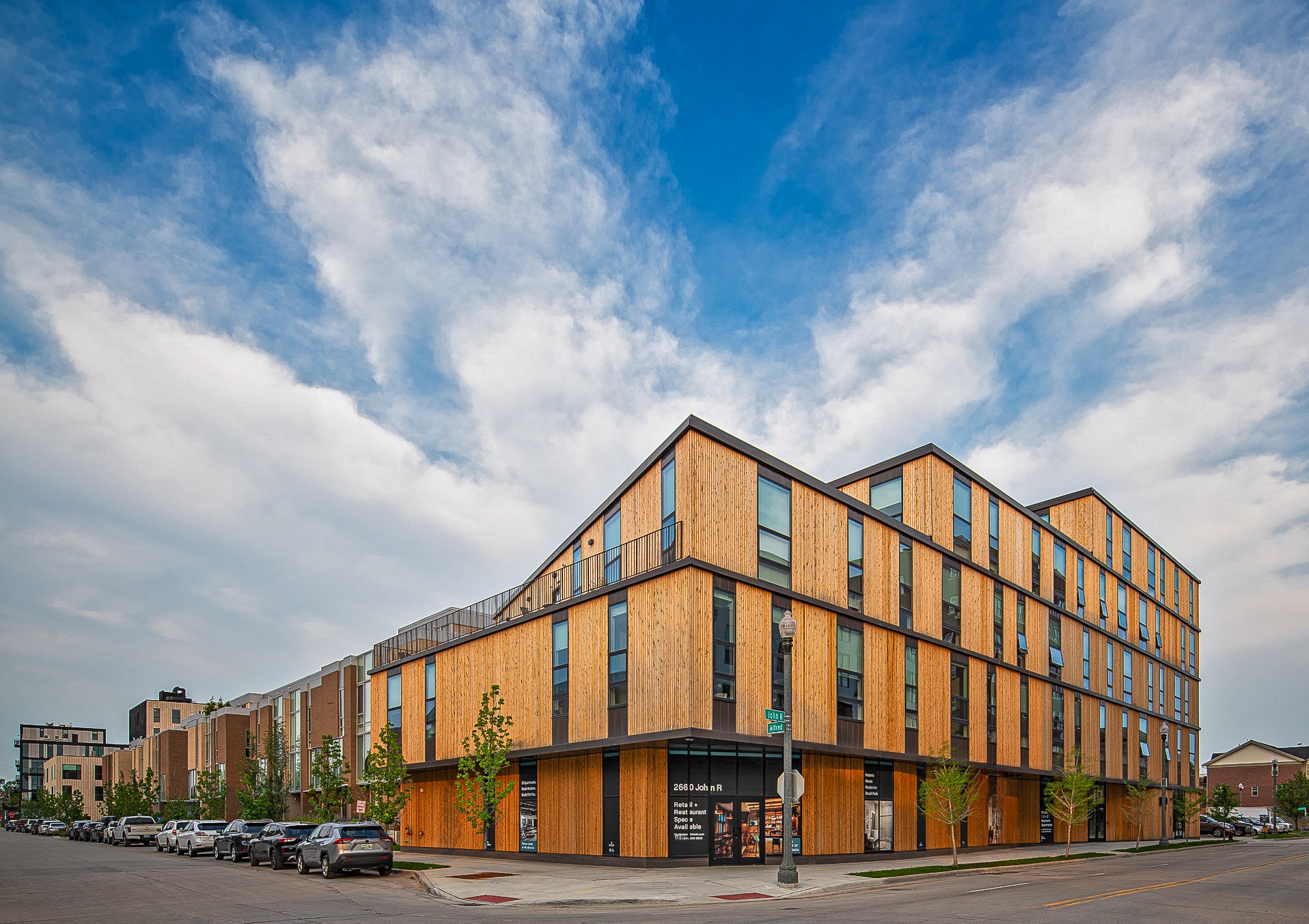
City Modern’s buildings are based on whether the housing is for sale or rent. Townhomes and Carriage Homes are two and three storeys while apartment buildings are five or six.

With the Form Based Code, Bedrock was able to build higher on street corners and perimeters such as along vibrant Woodward Avenue.
Architecturally the buildings have slightly individual characteristics. Mueller said Bedrock created a “design narrative” and sought proposals from architects locally and across the country, settling on six.
“We looked at what was common or typical in the neighborhood historically, so you see a lot of brick wood and some use of metal.”
The buildings respond to different generations and income groups including The Flats, 45 affordable housing units for those aged 55-plus; 20 per cent of the 450 residences. Other residences are market rate. Carriage Homes and Townhomes are for first time buyers and young families. The remaining apartments are The Residences – 286 units over eight buildings.
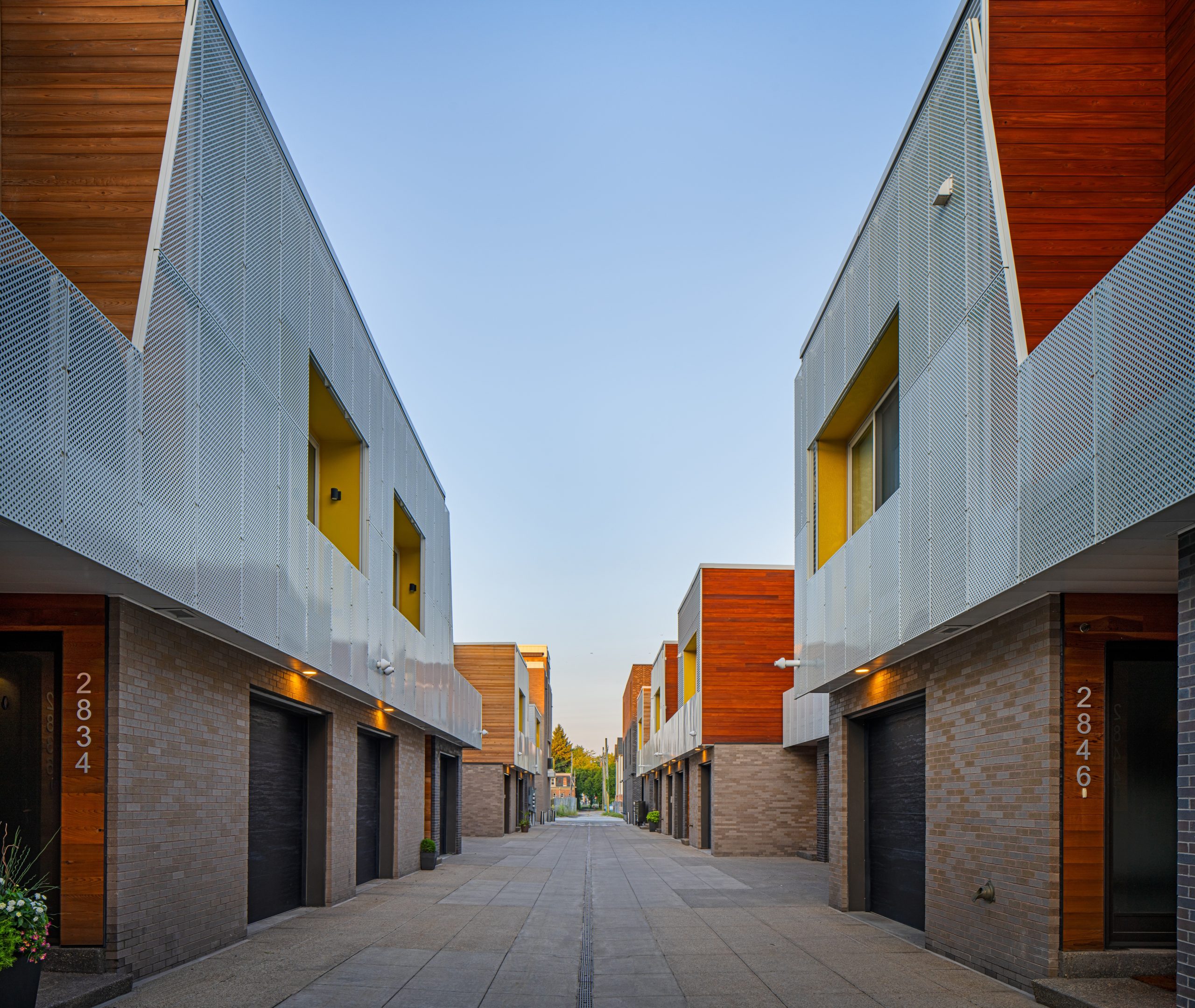
Design wise, Carriage Homes respond to the mansions of old where many homes had detached carriage houses where horses and carriages were parked. The new reimagined homes are fitted into pedestrian friendly alleys with shared courtyards.
The townhomes cleave hard to the old “Victorian fabric” of Brush Park.
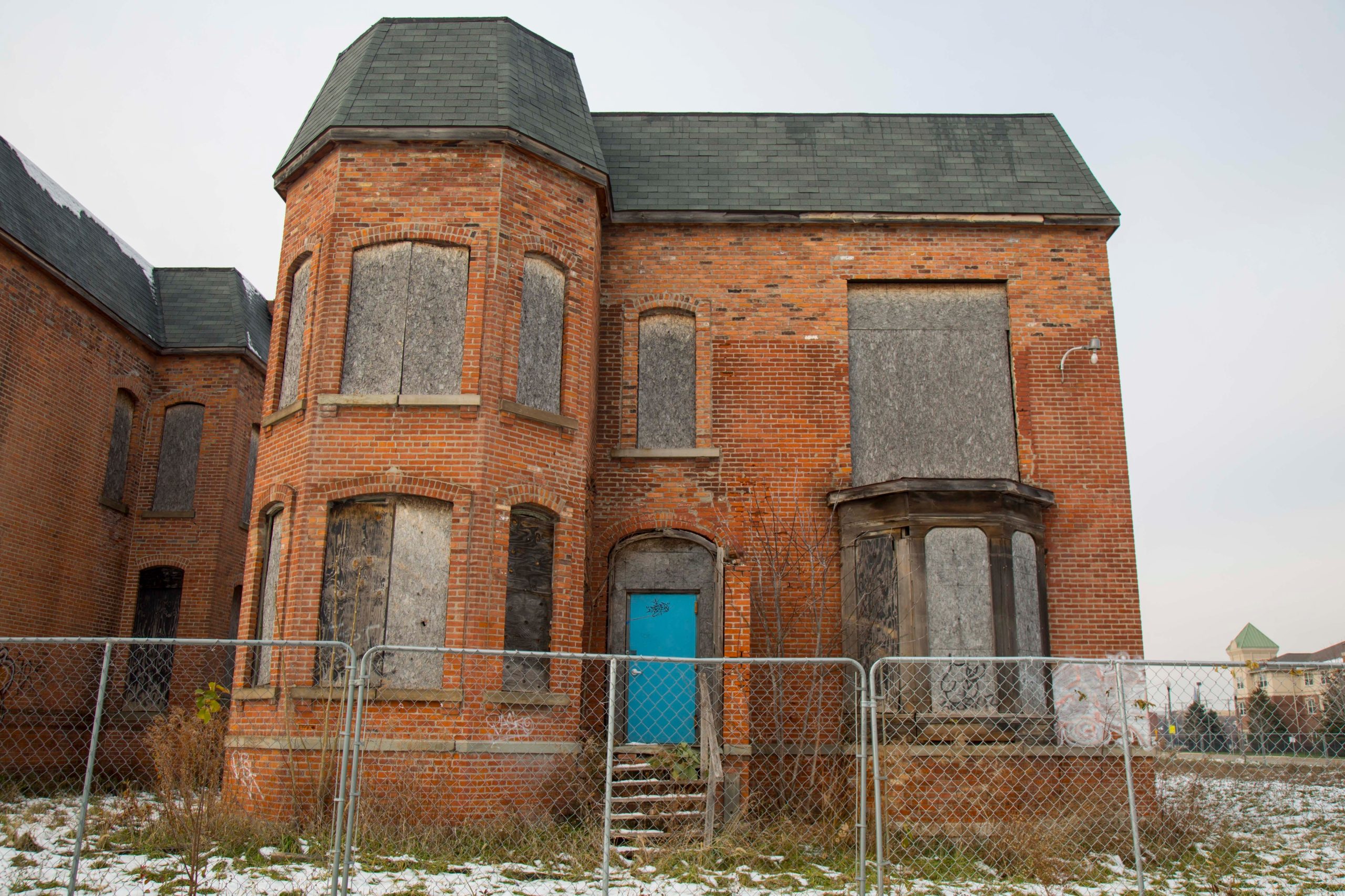
As for those more than century old mansions themselves, Bedrock rehabilitated three from what were basically shells.
“Those structures were literally just four walls and a roof,” Mueller said. “There were no interiors, all of the floors had rotted and fallen through.”
Two were combined as semi-detached homes and one a single-family home.
1/3
BEDROCK DETROIT – A photo of one of Detroit’s Gilded Age derelict mansions in the city’s Brush Park neighborhood before redevelopment.
2/3
BEDROCK DETROIT – A view along a City Modern Carriage Homes alleyway.
3/3
BEDROCK DETROIT – An example of an architecturally distinct building yet part of City Modern’s common design narrative.