Extreme heat around the world is becoming the new normal. A study examining the period of May 2024 to May 2025 revealed that half the global population experienced 30 or more additional days of extreme heat that were hotter than all those observed in their local area from 1991 to 2020.
It’s important to recognise that extreme heat is deadly. In August 2003, a record heat wave in Europe claimed an estimated 50,000 lives. The U.S. Environmental Protection Agency says that more than 1,300 deaths per year in the United States are due to extreme heat, the leading weather-related cause of death.
Urban centres are the hardest hit.
San Antonio, Texas is a notable North American hot spot. From 1970 to 2024 the city’s average summer temperature has risen more than in almost all other cities in the U.S. South, according to recent analysis from research group Climate Central. The city has experienced 43 hotter-than-normal summer days compared to 1970. And it’s not over for this year. The city has a 40 to 50 per cent chance of having above normal temperatures from August through to October.

Cities both in the United States and Europe are taking bureaucratic steps to focus specifically on heat issues, such as naming Heat Officers to develop and manage safety programmes.
Physical efforts to deal with urban heat are also underway.
In San Antonio, a $5 million Cool Pavement Program will resurface 22 miles of the city’s hottest streets with heat deflecting pavement. Temperatures on the streets targeted by San Antonio’s programme can be up to 20°F higher than other streets in the city due to a lack of trees and shade.
Nearly a dozen U.S. cities have similar pavement programmes under way, with several more considering pilot projects. Los Angeles leads the way. In 2017, the City began treating over 175 lane miles of streets with a reflective coating. The treatment reportedly reduced ambient temperatures by 8.0°F during its first year. Even after a few years of wear-and-tear, temperatures are still up to 6.0°F cooler.
Seville, sometimes called “The Frying Pan of Europe”, has adapted an ancient cooling technique invented by the Persians 3,000 years ago called a qanat. The system uses gravity to transport water from an aquifer or well, often in mountainous areas, to lower-lying areas for irrigation and domestic use.
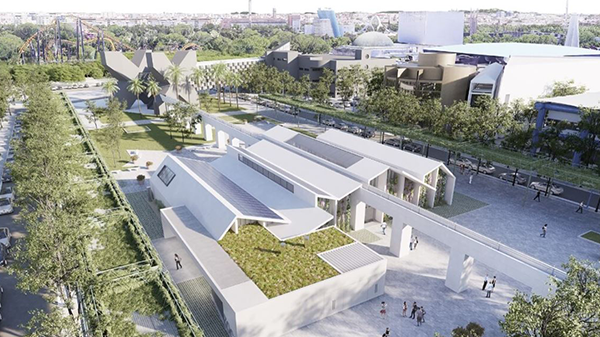
In this case, the City of Seville installed what is called CartujaQanat on either side of an amphitheatre, underground gallery and open-air facility. During the night, water stored underground cools naturally as the temperature drops. Some of this is pumped up and sprayed on solar panels covering the amphitheatre, creating what’s called a “falling film”. During the day, solar-powered pumps funnel water above ground through small pipes where fans spray the cool air into the ground floor area of the amphitheatre. Nozzles outside the amphitheatre spray mist into the air. This cooling effect reduces the ground temperatures by as much as 10°C, turning the area of two football fields into an urban oasis.
Increasing the number of parks with trees is often listed among the modern urban planning considerations for heat mitigation. What is being learned is that beyond traditional green spaces, even so-called re-use parks, like New York’s High Line elevated walkway, can have a significant positive impact.
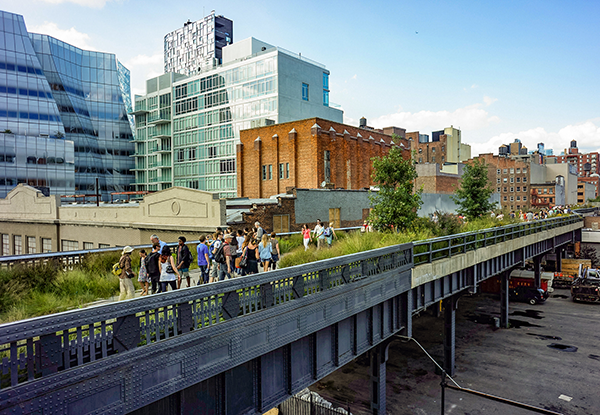
A study conducted by Climate Central found that, on average, the Urban Heat Island Index along the High Line is reduced by 7.2°F compared to surrounding neighborhoods.
While mitigating extreme heat in open urban areas is critical, buildings of the future must also be designed and built with extreme heat in mind.
In Antwerp, Belgium, new and renovated roofs of certain slopes and areas must be “green roofs”. Buildings are being repainted in light colours to reflect heat instead of absorbing it.
Adapting buildings to a future that projects extreme heat makes economic sense as well.
“Buildings that overheat or are over-engineered to compensate will consume more energy than necessary and will ultimately lose market appeal,” writes Abhishek Parmar, head of sustainable development at UK workspace provider HB Reavis.
On an operational basis, Parmer advocates occupant-centric controls that can adjust the interior lighting and HVAC systems in real time. Also helpful are automated seasonal commissioning platforms which constantly re-tune building systems as weather and occupancy shift.
“No matter where you are, you are going to experience heat waves,” Melissa Guardaro of the Arizona State University School of Sustainability told Time magazine. “It’s best to prepare for not only the emergencies like heat waves and heat domes, but also long-term increase in urban heat.”