Atlantic Canada’s construction industry has historically felt left out in federal budgets, but Prime Minister Mark Carney’s fiscal document is encouraging for the region’s four provinces, though it leaves questions unanswered.
Duncan Williams, president and CEO of the Construction Association of Nova Scotia (CANS), is pleased with the infrastructure plan as it will help boost home construction.
“It’s going to be a matter of how quickly they can get it to the street.”
While CANS supports the union trades training infusion, he questions why monies for the open shop arena are lacking in the budget document.
Williams says the feds failed to prioritize accelerated investment in oil and gas exploration, and points out federal oil revenues were not allocated to support net-zero initiatives.
“It’s a gap in the budget.”
He says the Major Projects Office is a positive development, if it works as intended (to accelerate national interest projects through streamlined federal regulatory approvals) and financing is co-ordinated between private and public interests.
But the CANS president is concerned taxes “on unfair and unreasonable permitting processes” are not being eliminated.
Removing “de-transfer taxes” would help preserve the value of tax credits supporting affordability.
“The province would take a hit, but it is short-term pain for long-term gain.”
Federal government job cuts planned are welcomed because millions of dollars are spent “in our space on research overlaps,” Williams says.
Increased defence spending is also good news “for the industry and economy” in Nova Scotia and New Brunswick, home to many military installations.
But there is an alignment gap between post-secondary education/training and what the market needs, he says, adding the announcement to restore numbers for the Provincial Nominee Program (PNP) is good news.
The PNP is the immigration pathway to nominating people for permanent residency based on local economic and labour market needs.
Immigration is not a silver bullet but has to be part of the labour needs solution, Williams says.
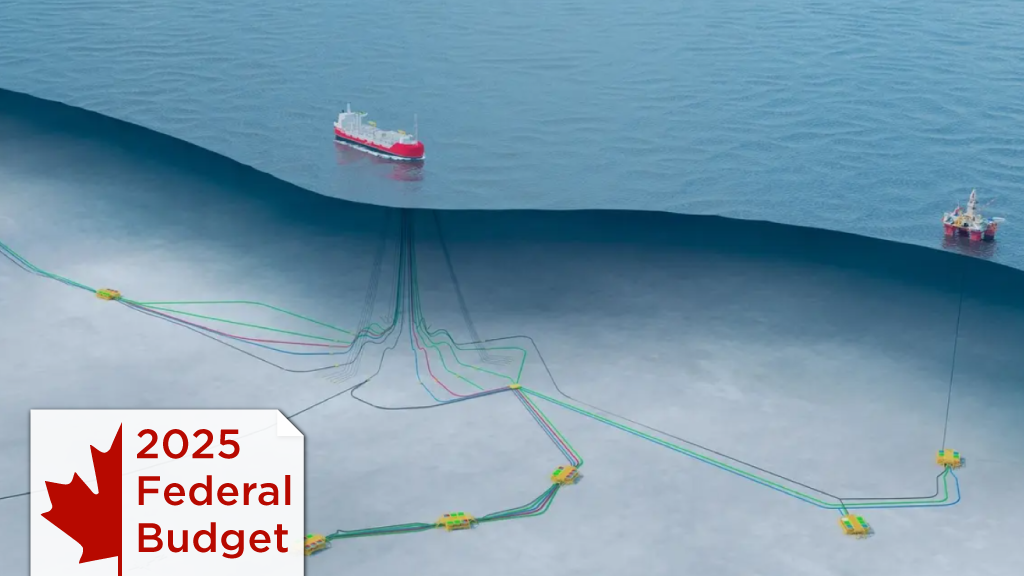
The Newfoundland and Labrador Building and Construction Trades Council (Trades NL) hopes the Major Projects Office lives up to its objective of accelerating developments such as the Bay du Nord offshore oil project.
The $14 to $16 billion project could create 18,000 construction jobs, says Bob Fiander, executive director, Trades NL.
Essential, however, is the transferability of skills, “so when we construct our natural resources across the country, we become the most qualified people.”
Trades NL is encouraged by the Building Communities Strong Fund’s first phase in 2026-27, which earmarks $17 billion for infrastructure such as roads to support housing development. It also removes the GST for first-time home buyers.
“It should spur some developments,” Fiander says.
The New Brunswick Construction Association supports the infrastructure plan in principle, but project specifics are lacking, says John-Ryan Morrison, executive director.
“Hopefully in the next round of announcements there are major announcements.”
He says two major ports in New Brunswick need capital infusion and the province’s “archaic” rail system is inadequate for supply chain transportation. Sinking capital into wraparound infrastructure (roads and sewer and water) will ensure vital housing gets built.
“We are looking for fair funding, stronger supply chain support and a workforce training plan that includes everyone, both open and closed shops,” he adds.
“A more co-ordinated national approach is needed to connect immigration, apprenticeship, upscaling and youth engagement” for training, Morrison explains.
The provincial and federal budgets, unveiled simultaneously in Prince Edward Island, offer solid support for the construction sector, says Sam Sanderson, executive director of the Construction Association of Prince Edward Island.
“It could create a busy province.”
Sanderson says in addition to federal infrastructure monies, an uptick in foreign credential recognition training and evaluation, along with upskilling and reskilling announced “adds a tremendous amount of positivity.”
Another encouraging sign is P.E.I.’s budget tabled $296 million over five years for roads, bridges and highways and the overall budget is $1.65 billion.
“It’s a pretty big number. Looking at health care, schools and other spending this isn’t something we’ve seen in years.”
Sanderson, a board member of the Canadian Construction Association, adds the federal budget presents encouraging developments across Canada.