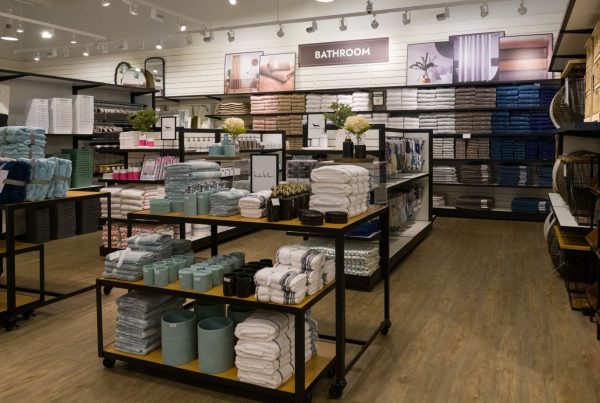
Mediocrity is not always obvious to a business owner. It tiptoes in and might be disguised as fine. The projects are fine. The clients are fine. The invoices go out, the team stays busy enough, the pipeline looks ok. Everything’s fine. It’s the kind of fine that keeps you busy but not better. It’s polite and predictable.
And being “just” fine is choking the oxygen out of an industry built on imagination and kept alive by savvy business innovation.
I’ve been in this business long enough to know that mediocrity isn’t born from bad designers; it’s born from the good ones who are worn out. When the calendar stays full, the day-to-day fires never stop, and the pressure to please outweighs the instinct to push, average starts sounding reasonable and all that you can expect.
To me, mediocrity is the enemy of momentum. It starves curiosity and dulls your instincts. It convinces you that comfort is competence and that competence is enough to succeed. It’s not. Not if you want to command premium fees, build authority or attract the right clients.
The cost of comfortable
Mediocrity isn’t the opposite of failure but it can be the opposite of growth. You can’t innovate from a safe distance or scale a firm that way.
You have to get a little scraped up. Try something. Break something. Get it wrong. Do it again. Creativity and growth both live in tension. In the small discomforts that force you to rethink and refine.
And when you avoid that edge, you trade evolution for ease. And this isn’t only about your design chops, it’s about how you lead, price and position your firm. The designers who will still be standing five years from now are the ones who can think creatively about their businesses, not just their projects.
How we slip into it
It doesn’t happen overnight. It happens one shortcut, one default decision at a time. You stop questioning or experimenting. You start reaching for the same solution because it worked last time or because everyone else is doing it. We tell ourselves we’re being efficient but half the time that’s code for being checked-out, bored or following the herd. Designers love a good system (guilty here), but when comfort becomes the goal instead of progress, you’re no longer leading but simply maintaining.
Reigniting the creative mojo (and the Business One)
So how do you fight it? By remembering what this industry is actually about.
Design, at its best, is interpretation but not repetition. Business, at its best, is evolution, but not imitation. Neither is achieved with complacency.
This means questioning your own defaults. Pushing the conversation with clients past “what they like” into “what they haven’t thought of yet.” It also means pushing yourself to think past “what’s worked before” into “what’s next for us.”
Be as curious about your numbers as you are about your design selections. Study your time, your bottlenecks, your pricing, your people and give credence to these insights.
We have to live our lives like a big research facility for both creativity and leadership. Embrace the failures. Celebrate the quirks. Experiment ruthlessly.
Auditing your engine
A true audit means slowing down long enough to see the patterns and the habits that created them. Mediocrity feeds on autopilot; your goal is to break the cycle.
Evaluate your last 5 projects for creativity
Lay them out side by side. Don’t look for flaws, look for sameness. Are you defaulting to the same palettes or approaches? Mark one element you could have pushed further in each project and make that your new baseline.
Assess your energy. Not your time
The energy drain shows up in avoidance. Which part of your process do you dread? Discovery, documentation, project management or install? Wherever you feel the least engagement is where your creativity and profitability might be smothered. Delegate it, reinvent it or decide to lead it differently.
Question your influences
If all your inputs are interior design related, you’re not exposing yourself to enough diversity. Go outside the genre. Every great designer borrows from worlds beyond their own.
Pay attention to your circle
Who do you bounce ideas off? If they agree with you too much, you’re getting validation and not encouragement to grow. Bring in someone who questions you. It might be a peer, a mentor or even your accountant. Growth requires friction.
Once you’ve done the audit, don’t stop there. Awareness alone won’t build better work, but good habits will. Momentum fades fast when comfort creeps back in, so protect the edge you just sharpened.
6 healthy habits that keep mediocrity at bay
Be uncomfortable on purpose
Every project and every year in business should scare you a little. If you’re never unsure, you’re repeating yourself.
Have a point of view
Not just opinions but convictions. Most importantly in design, but also in management and defending the culture of your workplace. If your work or your firm could look like anyone else’s, you’ve already lost some of your value. Get fired up about something you are passionate about.
Tell yourself the truth
If a project’s gone flat, admit it. If your systems aren’t supporting profit, fix them. The best leaders I know call themselves out before anyone else has to.
Ask better questions
Curiosity is unequivocal oxygen for creativity and innovation. Ask your clients why they think what they think. Ask your team what they’d change. Ask your bookkeeper what number worries them most. Stay interested.
Embrace continuous learning
Make micro-learning a daily habit. Watch a sub install tile and ask why they do it that way. Study the ergonomics behind a chair. Learn how lighting affects behavior. The more you understand, the more authority your creativity—and your value—carries.
Rest your brain
Exhaustion is fertile ground for mediocrity. Nothing original grows when you’re running on fumes. Step away. Boredom is the breeding ground for better ideas.
Why does all of this matter?
Mediocrity doesn’t just dull creativity. It devalues the profession and the businesses behind it. When clients can’t tell the difference between average and exceptional, they stop wanting to pay for exceptional.
When designers can’t tell the difference between busy and profitable, they cannot experience the growth necessary to sustain their revenue, their team’s creativity or the long game of running a sustainable firm.
We protect our value through the work we do. The creative work that makes people feel something and the business ethos that delivers results are worth paying for. It takes intention, discipline and the willingness to toss out the safe idea in favor of the one that might fail spectacularly but could also change everything.