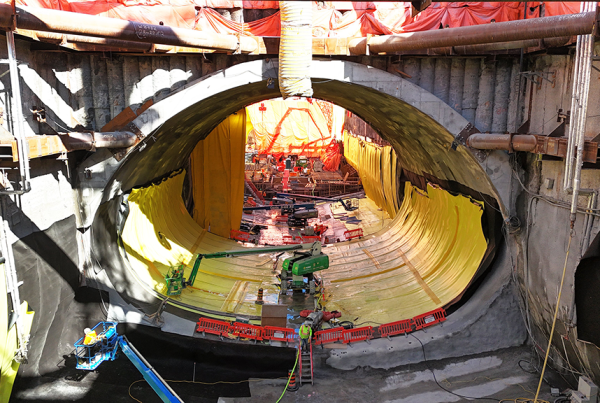
There is more work than there are skilled tradespeople to do the jobs in Niagara Region, with one reason being a pair of large projects that demand the labour.
“The South Niagara Hospital and the Port Colborne Battery Separator Plant are currently employing around 450 IBEW members across the 309A and 631A trades,” said International Brotherhood of Electrical Workers Local 303 business manager Mark Cherney.
He said they are seeing an influx of work after a lean period through 2013 and into the COVID-19 pandemic. Both factors kept them from expanding their work force.
In a short-term solution they are meeting demands of contract partners by sourcing electricians and communication workers from their IBEW affiliates in surrounding areas.
“We are working with our electrical contractor partners to ensure the work force requirements of each project are understood to meet demands,” said Cherney.
According to Niagara Construction Association past-president Kevan Peters, other active strategies are:
- Hiring more apprentices and committing to structured training programs.
- Partnering with local colleges (e.g., Niagara College) to create co-op placements and onsite learning opportunities.
- Offering mentorship programs where experienced tradespeople guide newcomers.
Cherney added his local has been increasing their apprenticeship numbers to keep pace with the demand through their Job Readiness Training.
The program, titled, Wiring the Future, prepares people for electrical apprenticeships in the Niagara Region by providing six weeks of classroom training (safety, skills) followed by 12 weeks of paid field experience with signatory contractors. This leads to registered 309A apprenticeships, supported by government funding for high-demand trades.
“We have been offering our apprentice entry level Job Readiness Program since 2023. This has allowed us to supply our contractor partners with apprentices who are more skilled than what we had traditionally been able to provide in the past. This has led to increased productivity for our contractors. Word of mouth advertising has meant we have no shortage of applicants looking to join the trade,” he said.
Peters added other long-term solutions to fill the gap include upskilling and reskilling the existing workforce, international and immigration recruitment, leveraging technology and improving working conditions.
Other options are:
- Providing competitive wages and benefits to retain talent.
- Ensuring safe, well-organized jobsites and modern tools.
- Funding certification courses for employees to move into higher-demand trades.
- Using on-the-job training for multi-skilled roles (e.g., carpenters learning basic electrical).
- Funding certification courses for employees to move into higher-demand trades.
- Participating in government incentive programs to offset the cost of hiring apprentices.
“Wages are certainly the main driver in attracting a workforce. With a new three-year contract in place, we are excited about the wage package that was negotiated and are attracting new members from around the region,” Cherney said. “With completion deadlines looming for the industrial projects, we are seeing increased overtime hours being offered to our members.”
Both Cherney and Peters point particularly to post-COVID for the Niagara Region project boom.
“The South Niagara Hospital was in the headlines for many years, and we were expecting a shovel in the ground by 2019 to keep with the trend of a seven-year cycle, give or take, that began back in 1996 with the construction of Casino Niagara. When the pandemic hit it delayed potential projects that are now in full swing. We are also seeing new industrial manufacturing moving into Niagara which has created an increased demand on construction. Projects like the Asahi Kasei’s Battery Separator Facility and Jungbunzlauer’s Xanthan Gum Expansion are moving forward with key completion dates already set,” said Cherney.
Peters credits the main projects utilizing trades workers are from the public sector.
“We are currently witnessing a lull in private sector residential construction; however recent government investments in public infrastructure have resulted in a strong temporary demand for skilled, unionized, trade professionals. These investments are intended to keep the industry engaged until the private sector bounces back,” he said, adding the “private-sector, non-union residential market remains weak.”