Façades can be regarded as the face of the building, while cladding as the protective skin. Their fundamental purpose is to work together to act as the wrappers that enclose and protect building structures while ensuring the interior comfort of occupants.
At the same time, these functions need to be balanced with an attractive outward appearance. After all, curb appeal is important for marketing reasons among other things. Both residential and commercial tenants need to be visually attracted to the building.
The importance of balancing the function and form of façades and cladding, whether for a new-build or retrofit, cannot be overstated. This is particularly true with major retrofits and efficiency upgrades of older existing buildings.
Not every building is a viable retrofit candidate. While a lot of attention is paid to improvements of the building’s interior esthetics, mechanical elements and tenant amenities, there are fundamental issues concerning the façade that must be addressed. For example, converting an existing commercial building into a residential space is complex and often goes beyond the need to simply improve insulation values. It may also require changing fixed glazing to operable windows to allow natural ventilation.
The question often comes down to whether the original building frame was built in such a way that a new modern exterior can be installed economically to meet the building’s new intended purpose.
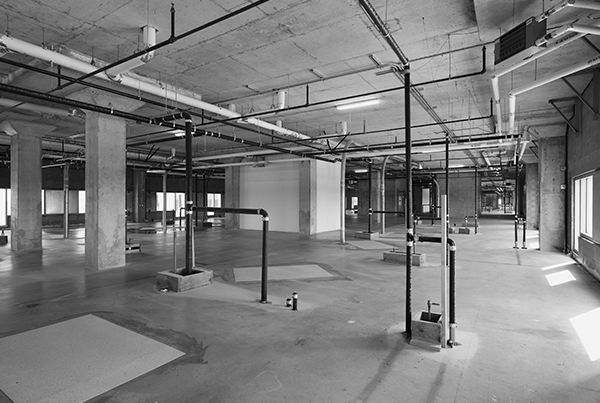
The recently described retrofit of the unused commercial Pall Mall complex in Manchester, U.K. is an excellent example. Only with a major thermal upgrade to the 1960s-era façade and cladding could the building avoid demolition and find a new purpose. Not only was the Pall Mall upgrade project judged economically feasible but it was so successful rents in the multi-building complex have almost tripled.
The Pall Mall project also highlights the importance of form or the outward appearance.
Respect was paid to the distinctive dark bronze appearance of the façade and original window design that had contributed to its recognition by the National Heritage List for England. A replacement façade was created in an improved, airtight manner with triple-glazed windows.
The good news for upgrade project candidates is exterior cladding systems, the skin as it were, have come a long way since they first appeared a hundred years ago, particularly those made of metal.
As metal fabrication technology has advanced through the decades, building designers now have a wide choice of metal-based systems from which to choose that can be mixed with the latest glazing products. These include single skin or plate metal panels, aluminium composite materials and insulated metal panels.
Modularity has become a key part of today’s exterior cladding and façade systems. Beyond ease of installation, Modular Panel Systems (MPS) can offer non-combustibility, 100 per cent recyclability, continuous insulation and low maintenance costs over time.
MPS designs has few limits. Panels can be flat, tapered, dimensional or custom-designed. Aluminium, either anodized or painted, is available. Corten and stainless steel are also popular choices, as are copper and zinc. Each has individual characteristics and maintenance requirements to suit the project’s purpose.
The function of the façade and cladding is not only to accommodate insulation but also to act as a rain screen. In this manner, MPS cladding acts as one part esthetic and one part water infiltration barrier in a pressure equalized system.
The Metal Construction Association describes Pressure Equalized Rainscreen (PER) systems as having, “some amount of open joinery and generally allow a limited amount of water into the rainscreen cavity area between the cladding and the air/water barrier,” as well as employing a rainscreen cavity with added compartmentalization “to minimize water penetration in areas such as building corners where wind pressures can increase significantly. “
Today façades and cladding, and their sophisticated blend of environmental technology and esthetic variation, have resulted in a wide palate of MPS options that align a building’s exterior form with function. It can result in visually striking results.
One notable project is the Ragon Institute in Boston. Architecture firm Payette designed an aluminum façade consisting of tapered fins that offers the viewer a sense of depth and variation while integrating with a high efficiency curtain wall system.
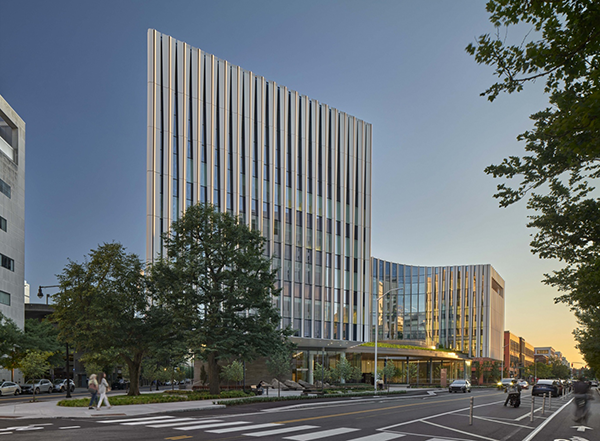
“The fins filter light, shape views and hide mechanical equipment,” write the editors of the Architect’s Newspaper. “Their variation in spacing and profile, driven by internal programs and solar exposure, brings a shifting sense of enclosure to the uniform glass between them; depending on the angle, the building appears as solid, transparent or somewhere between.”
There can be geographical challenges that façade design can also help address.
CO Architects and Ewing Cole, the designers of Hope Plaza, an outpatient facility in Duarte, Calif., were faced with a challenge concerning the building’s orientation. In this case, no one façade design was suitable for all sides.
Chevron-shaped, anodized metal panels were used on the east, west and south façades. However, due to the strong impact of the sun, additional shades were located above high-performance windows on the south side in order to increase solar control. In contrast, the expansive views of the San Gabriel mountain range on the north side were maximized by using a glass curtain wall featuring large sections of clear glass.
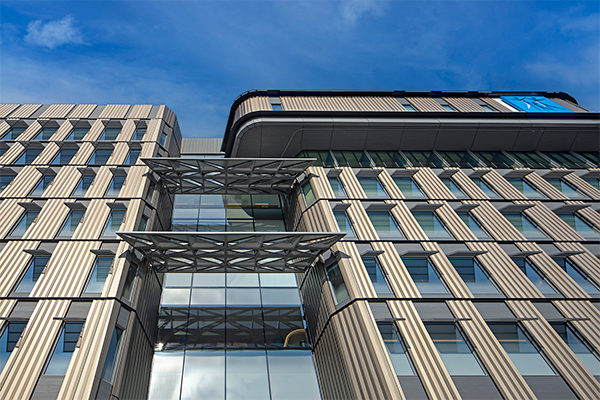
Façades and cladding systems have become the subject of their own specialized conferences across almost all major cities in North America and around the world during the calendar year. These feature presentations and panel discussions, with experts examining the fast-paced evolution of façade and cladding technology in areas like sustainability, technical innovation and advances in materials.
Such strong focus on continued façade and cladding development assures project owners and their occupants of highly efficient and attractive buildings in the future.
John Bleasby is a freelance writer. Send comments and Climate and Construction column ideas to [email protected].