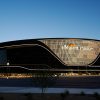
Exterior and interior finishing work is underway at Ādisōke central library, a net-zero carbon facility being built in the LeBreton Flats district on the western end of downtown Ottawa that will feature sustainable materials, climate-friendly elements and showcase Indigenous culture.
Signature red cedar wood being installed around the first level of the structure is nearing completion and elements related to the exterior, such as landscaping, benches and an outdoor patio are underway.
Inside, crews are working on the staircases, walls are being framed and painted, installation of tiles is ongoing and light fixtures are going up.
“Spring is in the air, and construction continues to advance with new details taking shape at Ādisōke,” says an update from the City of Ottawa. “With every bit of progress, the vision for Ādisōke comes to life.”
The $334-million project, which began in late 2021, was originally scheduled to be completed in 2024. The timeline was later adjusted to this summer but has been pushed back beyond that.
The exact reason has not been explained publicly, but project manager Tara Blasioli warned the finance and corporate services committee last year there could be delays due to the complexity of the interior work, which requires custom-made fixtures, furniture and art installations.
The five-storey, 216,000-square-foot structure will replace the main branch at Metcalfe Street and Laurier Avenue West that was built in the mid-1970s. The building will serve a dual role – as Ottawa Public Library’s Central Branch as well as the main location for Library and Archives Canada’s services.
The project is emerging as one of the most distinctive architectural statements in the National Capital Region.
The building’s form is defined by a sweeping, wave-like roofline that echoes the movement of the nearby Ottawa River, while its combination of warm wood and textured stone reflects both the natural landscape and the cultural narratives embedded in the site.
Ādisōke, which means storytelling in the Algonquin language, is built on the traditional territory of the Algonquin Anishinābe People. Architects drew heavily on Indigenous perspectives and environmental context, resulting in a structure that is both symbolic and functional.
The exterior façade blends the cedar cladding with high-performance glazing, creating a visual contrast that shifts with the seasons. The cedar, treated to withstand harsh winters and intense summer sun, gives the building a warm, organic presence, while the extensive use of glass opens the interior to natural light and panoramic views of the river and Gatineau Hills.
The windows are fitted with ceramic fritting patterns that not only reduce bird collisions but also incorporate Indigenous storytelling elements, such as the strawberry motif symbolizing healing and connection.
Inside a central atrium acts as the heart of the building, rising through multiple floors and encouraging movement, interaction and gathering.

The atrium is intentionally designed with wood finishes, soft lighting and natural textures to create a welcoming environment. Staircases and balconies are wrapped in wood panelling, reinforcing the sense of continuity between floors.
Public art is deeply integrated throughout the facility. Installations by Indigenous artists are embedded into walls, glass and shared spaces.
Oral history listening stations and storytelling spaces will further reinforce the building’s role as a living repository of knowledge.
Native plants, trees and an Indigenous garden create a transition between the built environment and the natural world. A gathering circle offers space for community events and ceremonies.
Sustainability is at the core of Ādisōke’s design. The building has been engineered to meet net-zero carbon standards, meaning it will produce as much energy as it consumes on an annual basis. This is achieved through a combination of energy efficiency, renewable energy generation and low-carbon materials.
Solar panels are being integrated across both the rooftop and parts of the building’s façade. They will generate electricity onsite, reducing reliance on external energy sources. The building is also connected to a district energy system, allowing it to benefit from centralized, efficient heating and cooling.
The use of “green” concrete, which incorporates recycled materials and requires less energy to produce, significantly lowers embodied carbon. Locally sourced materials further reduce transportation emissions, while reclaimed wood is used in various interior applications.
Triple-glazed windows, increased insulation and airtight construction minimize heat loss in winter and reduce cooling demands in summer. At the same time, the design maximizes natural daylight, reducing the need for artificial lighting.
Additional features include a green roof that helps manage stormwater and regulate temperature as well as an indoor vertical garden that improves air quality and introduces natural elements into the interior environment.
Energy-efficient lighting systems, advanced air filtration and smart building technologies further contribute to operational efficiency.
Its proximity to public transit, cycling paths and pedestrian routes encourages low-carbon travel, while electric vehicle charging stations accommodate the shift toward cleaner transportation options.