A years-in-the-making arts center whose purpose is to unite Detroit and its suburbs has some saying it’s turned into another object of division.
The Schaap Center for the Performing Arts and Richard and Jane Manoogian Art Gallery unofficially opened doors last autumn with a grand opening slated for May. It’s the brainchild of local resident and retired Wayne State University professor Paul Schaap and his now deceased wife Carol, both passionate lovers of the arts.
The center, built with more than $50 million in private and community fundraising, sits on the border of Detroit and its eastern suburb, Grosse Pointe Park. The border, defined by Alter Road, was perhaps the starkest example of the disparity between overwhelmingly Black and poor Detroit and its affluent white and middle- and upper-class suburbs. People equated driving across it as going through an Alice in Wonderland “looking glass.”
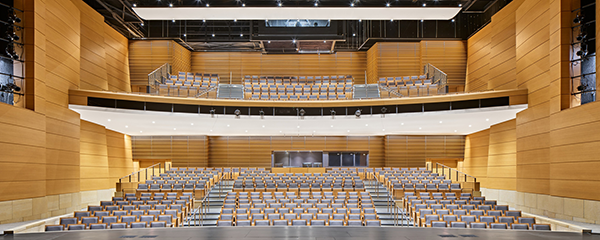
But the 50,000 square foot building with a 424-seat bi-level theatre, overseen by area construction manager PCI/Dailey Industries, with prestigious nationally known acoustics and lighting consulting firms, has been designed to change that.
There is also an outdoor “public realm design” architectural brick and stone garden plaza along busy Jefferson Avenue, the main thoroughfare connecting the cities.
The center, which didn’t make any official available for an interview, says online this will be “a place to come together and rediscover the kindness and good in all of us.”
Former executive director Jaime Rae Turnbull told an audience the center “has the ability to break down borders and heal some things that we’ve seen in the past.”
Certainly, the Schaap has united various arts institutions on both sides of the border with several symphony orchestras, theatre groups and the prestigious Detroit Institute of Arts — the city’s main art museum — pledging support.
But, says resident, activist and professional neighborhood developer Graig Donnelly, the problem is “less about the idea on an arts center being there it’s more about the how.”
In that regard, say critics, the Schaap has run roughshod over community and planning interests in its zeal to get the center built.
An adjacent Catholic church complained about construction impacting its waterline breaks, wall cracks and mortar.
There were also two lawsuits, now settled. In one, Detroit sued for demolishing properties, including a historic tavern, without a permit.
Then the Municipality of Wayne County, which encompasses both cities, sued for construction over a sewer and drainage pipeline critical to preventing area flooding.
The center and Grosse Pointe Park agreed to share the cost of storm sewer separation.
Grosse Pointe Mayor Michele Hodges agreed there is “a history” to the project but maintained her support, noting the collaboration of Detroit art institutions and the fact talks continue between her city and Detroit over strengthening the border.
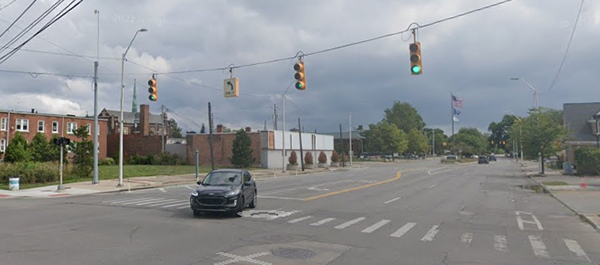
She called the border “much more porous” and hailed a planned “cultural corridor” linking the two cities.
“In fact, we’re working with the (Detroit Mayor Mary) Sheffield administration to make certain those aren’t just words, that there are actual tactical initiatives in place that really bolster the border and strengthen the tax base for all.”
She noted the Schaap is “a catalyst for doing that.”
The mayor declined to comment on the architecture – “there’s always going to detractors and supporters” but called the project “professionally developed.”
But Donnelly, the activist, listed several problems with the whole build, which he called a “vanity project by some very wealthy individuals.”
He said it “has not done a very good job of engaging the community on either side of the border.”
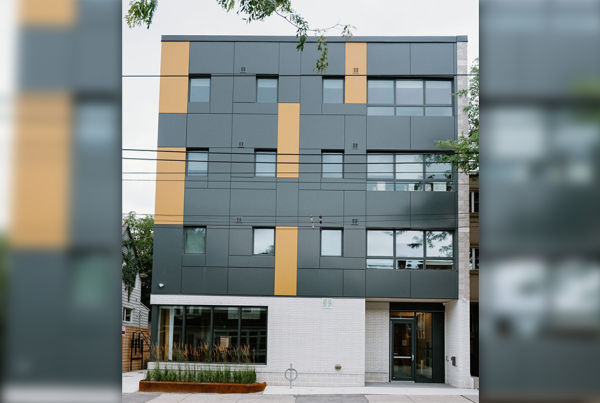
Donnelly said architecturally the building “really turns its back on Detroit” with the rear of the building facing the city and front entrance at Grosse Pointe Park.
He called this “just another wall” to divide the cities. Even suburban residents feel the developer “got a deal on the land,” assembled by the city, that nobody else would have.
Further, the design “is as though it is in a very suburban area, probably on a major thoroughfare…it’s not actually the type of building that you would want to see on a nice commercial business corridor abutting significance residential.”
But for Hodges, the fact it was built altogether is significant.
“Cultural institutions around the country and the world are being closed,” she said. “You don’t see $50 million institutions being opened.”