Judging by the overwhelming volume of attendees at Canada’s largest skilled trades and technology competition, there is considerable interest in skilled trades by students, their families and the public at large.
Almost 40,000 visitors attended the Skills Ontario Competition which was held at the Toronto Congress Centre May 4 to 6.
Approximately 2,900 students representing 65 Ontario school boards and 23 colleges participated in the 77 different competitions. Most were individual contests, although there were some team events, says Skills Ontario chief executive officer Ian Howcroft.
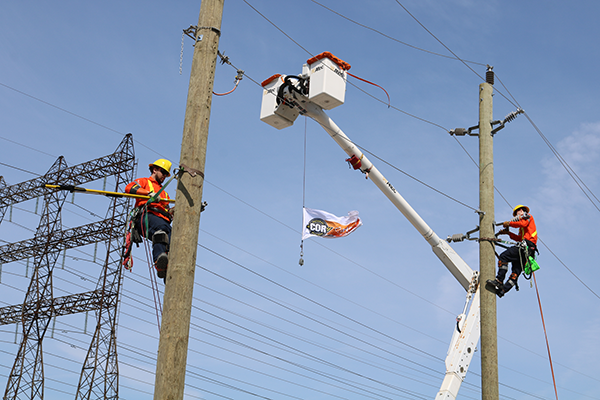
Many of the competitions were focused on the construction sector, such as plumbing, bricklaying, welding and carpentry. But there were also competitions in fields such as landscape design, culinary arts and graphic design, plus information technology related subjects including cyber security and coding.
There was also a meat cutting demonstration, although it was not classified as a competition.
“There is shortage of meat cutters and butchers in Ontario,” says Howcroft, explaining why this event was introduced a few years ago.
The first day was set aside for elementary school students, with the second day allocated for secondary school, college and training centre students, he says.
A total of 230 gold, silver, and bronze medals were presented to the winners. As well, $60,000 in monetary awards was distributed. Some of the gold medal winners will be going on to compete in the Skills Canada National Competition at the Enercare Centre in Toronto, May 28 and 29.
In addition to the contests, there were a number of guest speaker presentations on topics such as young women initiatives, First Nations, Métis, Inuit initiatives, and the trades and tech summer camps skills Ontario offers.
Approximately 1,800 girls and young women attended the young women initiatives seminar and between 500 to 600 youths attended the Indigenous presentation in person, with another 1,000 participating virtually. Topics covered by speakers in those seminars included how to overcome entry barriers to their chosen field, says Howcroft.
As well, there was a guidance counsellors’ conference that attracted about 400 members of that profession.
“This is the fourth time we’ve run that conference. Its purpose is to introduce guidance counsellors to the skill trades opportunities so that they, in turn, can assist their students in making career decisions.”
Another major feature was the bilingual Provincial Entrepreneurship Showcase where aspiring student entrepreneurs presented their business ideas and/or products and, in some cases, made “pitches” from the stage. The keynote speaker was contractor and television personality Kate Campbell.
Other highlights included a VIP breakfast on the second day which was attended by Premier Doug Ford and Labour, Immigration, Training and Skills Development minister David Piccini. Another highpoint was the closing ceremonies on the third day which included acknowledging the competition winners, says Howcroft.
Held annually, the Skills Ontario Competition is the culmination of a series of qualifying competitions the school boards hold to determine which students will be participating in the provincial competition.
Contest “scopes” or outlines are posted on Skills Ontario’s website in early January. They give teachers and competitors a summary of what each specific contest entails, he says.
In summarizing the importance of the competition, Howcroft says it provides a unique opportunity for top students to demonstrate their skills in what may be their future career path.
“It opens their minds and opens doors.”