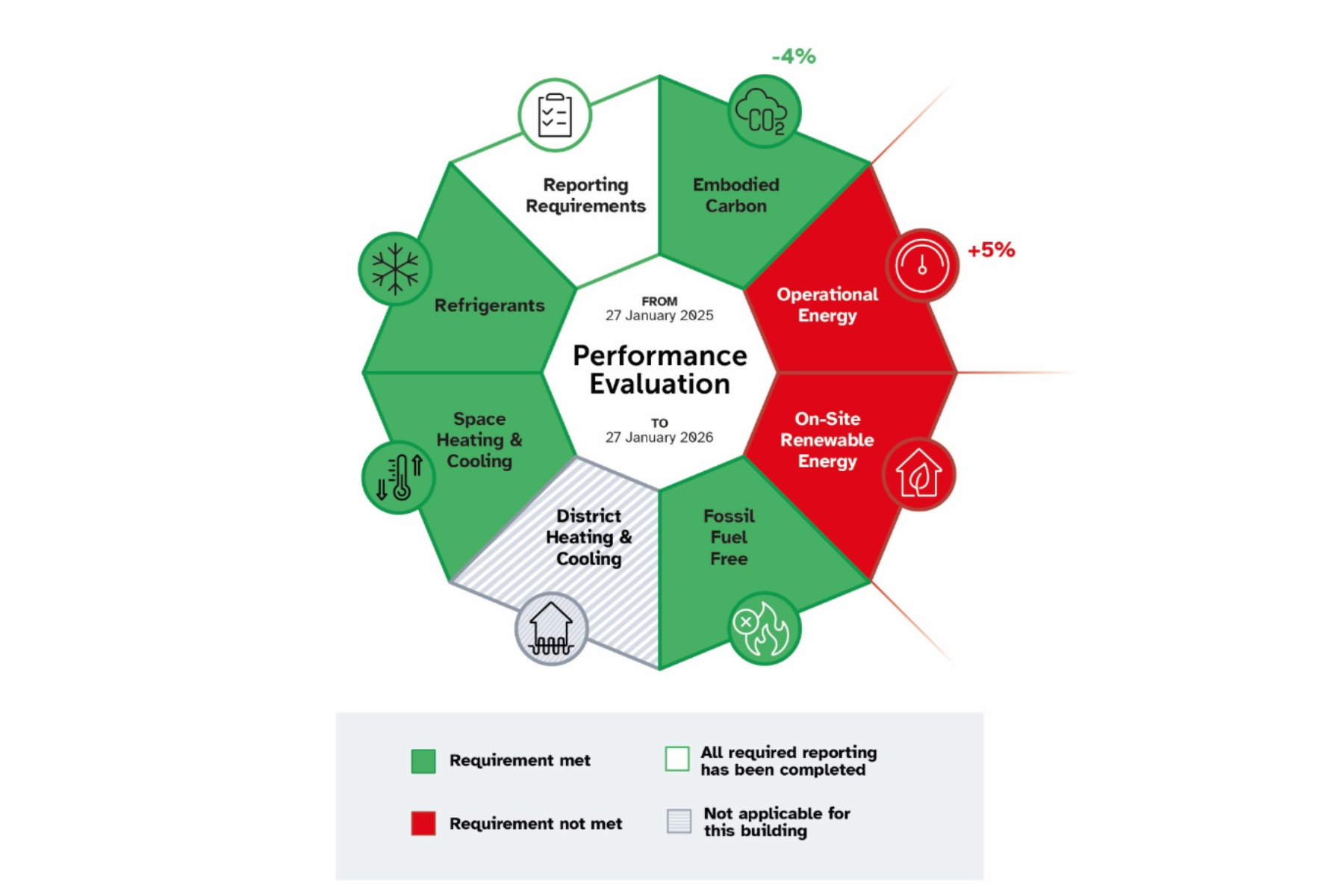
The new performance evaluations have been designed to allow for the upskilling, data collection, and relative improvements needed to put the industry on track to be fully aligned with the standard. While buildings must meet all of the standard’s requirements to be classed as Net Zero Carbon Aligned, the performance evaluations will allow developers to show how projects meet individual aspects.
While not the same status as being Net Zero Carbon Aligned, a verified Performance Evaluation acts as a “report card” for the building, using the same metrics and measurements. They also show how closely a building performed against the applicable limits in the Standard. This represents an important step on a building’s decarbonisation journey, both through reporting of in-use performance, and following the process: learning to measure and assess performance against the Standard, and to access and understand the relevant data.
The intention of introducing Performance Evaluations is to support widespread adoption of the Standard, acting as a “building MOT” that shows where attention is needed to meet its requirements. They encourage transparency about building performance, provide a robust indicator of a building’s progress on the journey towards being Net Zero Carbon Aligned, and contribute to the evidence base that will inform the future development of the Standard.
Performance evaluations are also a mechanism for industry-wide improvement. Every building that pursues a performance evaluation has gone through a data-gathering and measurement process with the Standard’s requirements in mind. The more buildings that go through that process, the more the industry as a whole moves in the right direction — driving down carbon emissions and reinforcing the skills and knowledge needed to reach net zero.
David Partridge, chair of the governance board of the UK Net Zero Carbon Buildings Standard said, “Performance evaluations will further drive market transformation towards achieving Net Zero Carbon by 2050. They will allow users to report on their building’s journey to Net Zero Carbon Alignment by measuring and understanding its performance, which also makes them suitable for use in reporting within ESG, legal and regulatory processes. This will help to drive the industry towards adopting the Standard’s metrics, resulting in upskilling and verified data collection and a nationally consistent and transparent reporting methodology, which is what the industry has been crying out for.”
Got a story? Email [email protected]