Illegal construction plagues Canadian authorities and municipalities, especially those that are seeing rapid growth, with investigations largely triggered by residential complaints.
New construction is heavily regulated through permits, but still, illegal builds slip by. It is the renovation sector, a $105-billion industry in Canada, where much activity is often occurring and spurred by housing shortages and high rents.
“It is certainly is an issue in renovations,” said BILD Alberta CEO Scott Fash. “Renovators also are not licensed the same way builders are, so it is much easier for the underground economy to thrive.”
The problem is expected to grow as BuildForce Canada predicts the renovation sector’s growth at two per cent above inflation to 2033. It will continue to employ more workers than new home construction.
While authorities rely upon complaints to investigate, the use of satellite imagery is emerging as it can contrast and compare images over time of new construction or changing buildings shape.
Google tools and GIS are being used; however, more sophisticated tools exist such as OnGeo Intelligence which provides on-demand, satellite imagery reports in Canada, offering a pay-as-you-go service.
The Edmonton and Surrey municipalities aggressively pursue contractors that skirt the system. Edmonton, undergoing more infill housing, triggered a 2025 record number of 514 complaints compared to 196 in the previous year.
Edmonton Mayor Andrew Knack has stated publically if contractors are not following the rules “we need to throw everything at them to ensure that they are.”
The Construction Accountability Program was established in 2025 to track contractors who have run afoul and places more oversight on those builders.
“When voluntary compliance cannot be achieved, there are a number of enforcement actions available to the city,” the city said via email, including violation notices, fines, legal action and calling in outside health and safety agencies.
Surrey established its Illegal Construction Enforcement Team (ICET) in 2022 and “we really put the hammer down,” said Matt Rose, building division director, as the city was registering over 2,000 construction complaints annually.
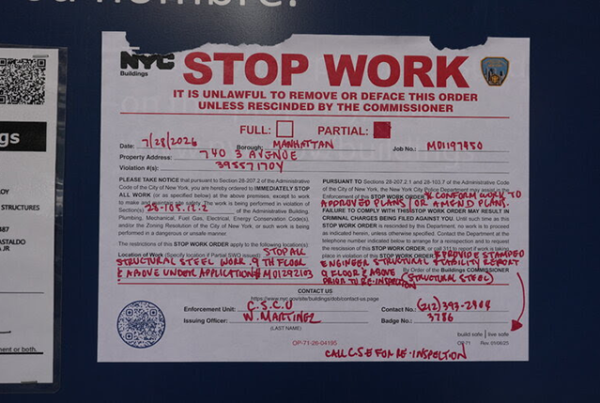
ICET targets unpermitted, unsafe residential construction, ignored stop work orders and illegal suites under the BC Building Code. It has seen 17 properties undergo illegal alterations (multi-suites and add-ons) since July 2024. One was a barn with five living units inside.
Rose said the incentive to add-on or create multiple suites in houses has been the rental incomes. He said the city attempting to make permitting as simple as possible and works to achieve compliance when a building strays outside the system.
But in 2025, it issued three demolition notices.
“Those were properties where there was no path forward,” said Rose, adding they could not be made to conform to the BC Building Code.
ICET has impacted activity.
“In 2025, there was a significant decrease from 2,000 to 1,300,” Rose said of complaints.
Surrey is also using satellite technology such as Google Earth and in-house software to track illegal construction, he said.
Calgary is also seeing its share of illegal activity. In 2022, it laid 49 charges against a construction firm and principals for building two structures and a garage without permits.
Darren Lockhart, manager of building and development and inspections, said: “We spend a lot of time with the building community explaining the value of getting permits.”
The city’s focus is on compliance and as such, hasn’t raised its permit fees for eight years.
“We are a pro-growth city,” Lockhart said.
New developments and business are occurring and the city wants to drive that development, he said.
“We try to make it easy.”
Calgary is not seeing more non-compliance than usual, Lockhart said, as new developments are hard to hide once in the city’s development continuum.
“If you take out a development permit but not a building permit – that is something we are going to look at,” he said.
Non-compliance can be costly, not just in the double fees imposed but in work.
“It might mean tearing out a wall,” Lockhart said or the city may ask for an engineer’s report. “It can be expensive.”
Vancouver saw its peak of illegal construction case files peak at 381 in 2023, but that figure has dropped to 292 in 2025.
Vancouver focuses on bringing the development into line with bylaws, said a city issued statement, as inspectors have a range of tools to foster bylaw alignment.
“Demolition orders are very rare in cases involving unpermitted constructions,” the city said.
In Winnipeg, illegal work is an ongoing issue.
The city, like others, has launched permit and occupancy search webpages where residents can search addresses for permits issued.
“Another measure taken to ensure permits are obtained is that Manitoba Hydro will not energize a newly constructed building without a ‘Metro OK,’ which is a formal inspection by our electrical branch to ensure the grid will not be compromised,” said Winnipeg communications officer Kalen Qually.
Toronto doesn’t keep statistics on illegal builds, but the Ontario Home Construction Regulatory Authority (HCRA) licenses and regulates new homebuilders and sellers. Illegal builds are a “significant consumer protection issue” in Ontario, according to the authority.
In 2024-205, the HCRA received 314 complaints, a 26 per cent increase.
During that period, a construction firm was fined over $1 million for building 39 homes illegally and not registering them in the province’s warranty plan.
The Ontario government took a tough stance in 2022 doubling administrative penalties to $50,000 per infraction with limit on monetary benefit penalties.
“Fines for repeat offenders were also doubled, with individuals now facing fines of up to $100,000 and corporations up to $500,000,” the HCRA said.