A site superintendent dismisses a decision you’ve made, and you’ve just spent the next three days processing how that happened instead of making the next decision.
A bid review takes place where your cost analysis gets questioned and instead of responding with the data, you felt the need to defend yourself as a person.
A project gets credited to a male colleague and in that very moment you say nothing.
These are real-life examples Leslie Dibling, director of organizational development at AMC Services, and Agnes Watkinson, founder of AMC Services, shared during their keynote address at the recent 2026 Women in Construction Gala hosted by the Ontario General Contractors Association (OGCA).
“Being in construction was really about understanding the difference between church and state. Really understanding where people come from and how they support each other in the industry,” Dibling said, adding the conversation has moved passed getting women at the table. “You’re here because you belong here.”
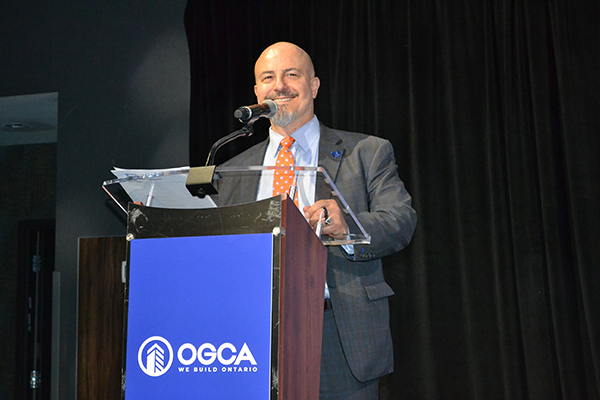
The conversational keynote discussion was meant to educate and provide tangible tools to both help and encourage women in construction to negotiate their value.
The question both women posed was if the women in the room, and beyond, are negotiating like they have power.
“If you’re at the table you have power, it’s what do you with it,” explained Watkinson, who has over a decade worth of experience in the industry.
The speakers mentioned employees can spend two hours and 26 minutes per day in drama and “emotional waste.”
“They are not solving a problem. They are processing their grievances, their frustrations and rerunning conversations in their head,” said Watkinson.
A large reason behind this is ego.
“Ego is the need to be seen as right, whether you’re male or female,” explained Dibling, a 19-year construction veteran who worked her way through nearly every position, starting as a labourer. “Stop believing everything you think. We can tell ourselves a really good story.
“Your ego is not your amigo.”
Removing your ego from situations and moving through them with data can often bring a more positive result.
This can be rooted in the SBAR methodology – Situation, Background, Assessment, Recommend.
This helps decipher what is happening with facts, not drama; the context the listener needs; evaluating what the risks are; and what you propose.
“Feelings are not negotiating currency,” advised Watkinson.
“There is a way to present them (the facts) in a way that benefits the organization.”
Dibling added, “don’t ever come to a situation without a solution.”
Another angle the speakers highlighted pertained to a concept known as the Best Alternative to a Negotiated Agreement (BATNA), which starts by defining what your “floor” is.
“Where can I not go below? I have to stick to these guns,” explained Watkinson, adding you strengthen your position by documenting your wins, being organized and then assessing the other person. “What don’t they have? What do they need? Can I provide a solution for that? You’re assessing their situation so you understand how you can move around them in this particular negotiation series.”
Once you have established your floor, she said, “Aim higher. You’re going to aim for the best. You’re going to be flexible. You’re not going to win the war, but you might win that battle. Then the next time you negotiate, your floor has moved up.”
Both Dibling and Watkinson stated it’s critically important for women to negotiate as defined by their current role or responsibilities and not their gender.
“The industry’s future is being built by people who are already here and that is you.” Dibling explained.
“You’re negotiating for generations to come,” added Watkinson. “Keep at it, keep the pressure on. That’s how we raise that ceiling.”
A historic gala
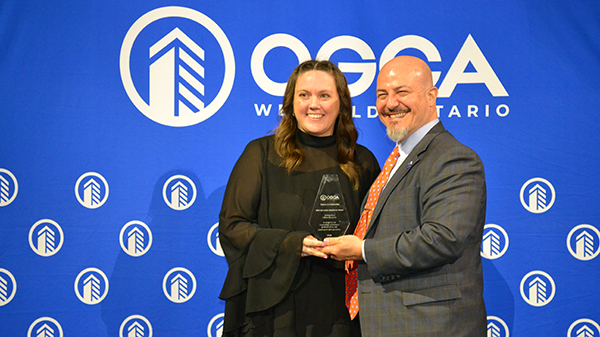
OGCA president Giovanni Cautillo kicked off this year’s gala with a simple message before he introduced Alexia MacLeod, who will become the association’s first female chair in September.
“We’re always pushing the envelope,” he said. “We’re always trying ensure we are part of the solution, welcoming women, so that at one point in time we want to see 50/50 (representation).”
MacLeod, who is a co-owner and president of Somerville Construction, not only introduced the keynote speakers, she also announced three winners for the inaugural OGCA Women in Construction Awards.
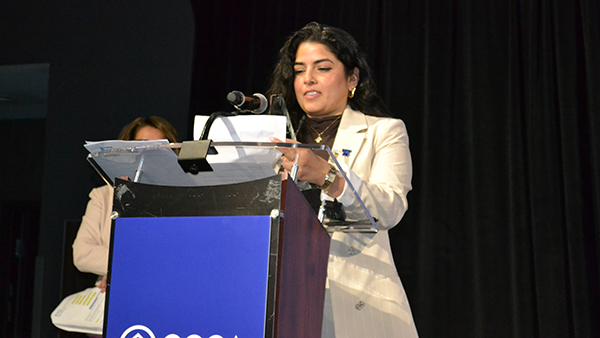
“Over the years I have watched this industry evolve into something far greater and more inclusive, but what inspires me most is just how much the industry has changed,” she told the audience. “It’s the people within it. I have seen barriers break down. I have watched more diverse voices step into leadership. I’ve witnessed younger generations bring fresh ideas, while seasoned professionals continue passing down invaluable knowledge and information. The industry has read the room so to speak.”
This year’s winners included:
“The women in this industry are fierce,” added MacLeod. “And the most exciting part is we’re still evolving.”