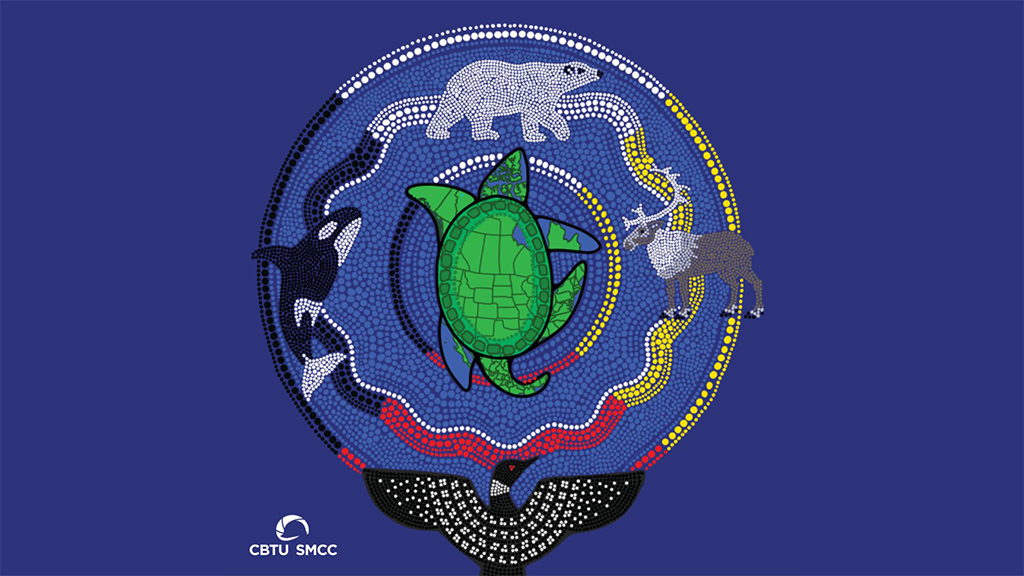
Canada’s Building Trades Unions (CBTU) has unveiled a new Indigenous Reconciliation Action Plan (IRAP) with 41 commitments to boost Indigenous status in the workforce and create economic partnerships along with targeted timelines and engagement frameworks.
CBTU director of workforce development Lindsay Amundsen spearheaded the initiative. She says the ultimate measure of success will be one main identifiable achievement.
“I think there’s a lot of ways we can measure success – how is engagement going? how are the programs running?” she said in an interview following the May 28 release of the IRAP.
“But I think ultimately it’s very simple. We have more Indigenous people engaged in our organizations, and our union members, and building trades members, and thriving in their careers.”
Sean Strickland, executive director of CBTU, stated in a release, “With unprecedented investment in infrastructure, we have a responsibility to ensure Indigenous engagement and partnership are embedded across every jobsite and community.”
The IRAP “is that unified national voice,” he said.
The IRAP presents four strategic pillars: participation; learning and engagement; economic reconciliation; and representation.
Workforce participation is said to include expanding Indigenous entry into the trades through training pathways, partnerships and targeted outreach, while economic reconciliation includes increasing Indigenous participation in procurement and major project supply chains.
The CBTU worked in partnership with Mokwateh, an Indigenous-owned consultancy founded by JP Gladu, an Anishinaabe leader from Sand Point First Nation on Lake Nipigon, Ont. with extensive experience in the resource sector as well as reconciliation consulting.
The CBTU’s efforts to build a comprehensive reconciliation plan began in 2017, Amundsen explained, with the adoption of the Truth and Reconciliation Commission of Canada’s Call to Action number 92.
The CBTU convened a committee to consult on next steps and has developed an allyship booklet and an Indigenous awareness training course and skills plan. The course has been taken by some 1,800 participants.
In 2024, CBTU started working with the First Nations Power Authority to support Indienous workforce and project development initiatives.
The creation of the IRAP stemmed from the CBTU’s efforts to measure success – to determine what its affiliates are doing and learn what the impacts of its efforts have been, Amundsen said.
“We needed a more formalized process, something that we could hold ourselves accountable to, and measurable actions year in, year out, to make sure that what we’re doing is working,” she said.
The IRAP development process included an analysis of existing programs, with several rounds of interviews and workshops conducted with stakeholders throughout the sector.
“There’s a lot of people doing great work, and then there’s others that might be just hesitant and afraid of doing the wrong thing or saying the wrong thing. This is where we want to come in and help share best practices and show people some successful models, some successful programs at the local level,” said Amundsen.
Now that the IRAP has been released, Amundsen said the next phases are to launch an Indigenous advisory committee and then potentially hire an Indigenous relations lead.
“This is a four-year plan. It’s an evergreen document,” she said. “We’re going to be working in consultation with the same people that we consulted throughout this process, and they identified gaps as well.
“We want to create networking groups and opportunities for Indigenous businesses and communities to engage with the building trades.”
Procurement gaps
Gaps were identified by the CBTU affiliates in procurement with Indigenous businesses, organizations and communities. Amundsen said a resource document could be prepared similar to a union-made list for stakeholders to consult.
One of the 41 commitments includes developing and piloting a national pre-employment “Workforce Ready” curriculum for prospective Indigenous tradespeople, targeted to be in place by 2029.
By 2028, the CBTU aims to have resources available to support signatory contractors with outreach to Indigenous communities and contractors.
Gladu, who is a member First Nations Major Projects Coalition Advisory Centre, could not immediately be reached for comment. He recently provided a third-party Indigenous review of the Domtar’s new Global Indigenous Relations Policy and in a post on the Domtar website in January he discussed the process, using the analogy of examining a tree for suitability in the forestry sector: “You have to take the time to ‘walk around the tree’ – to truly get to know the community and understand their needs, aspirations and perspectives. Companies shouldn’t assume they know what’s best for Indigenous commu-nities. Instead, they need to spend time in the community, listen and learn.”