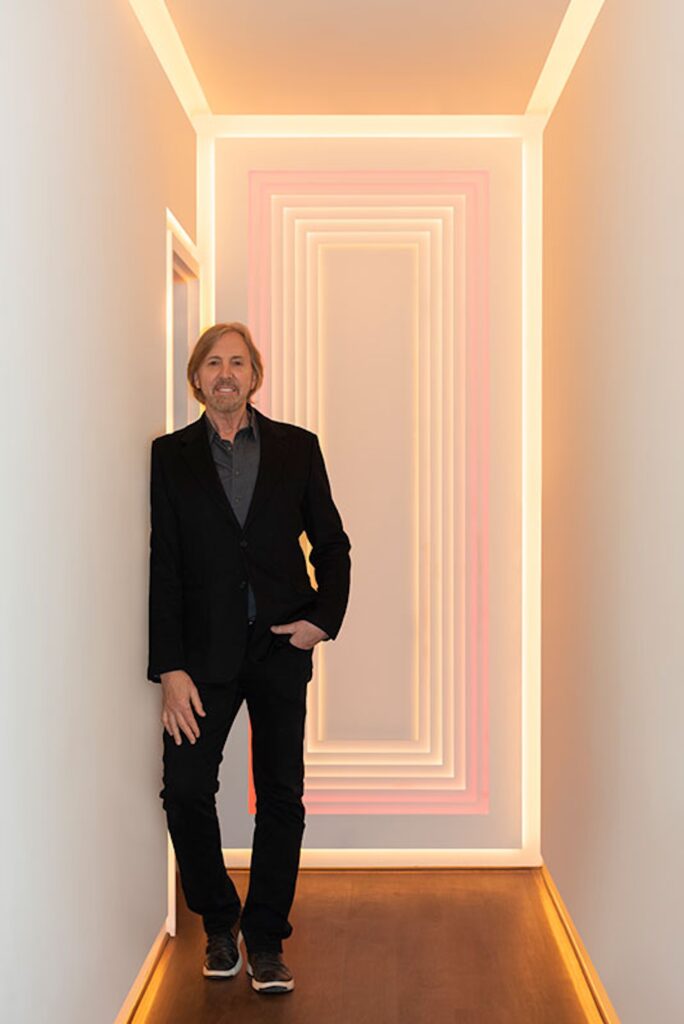
As consumers become increasingly focused on health and well-being at home, lighting is emerging as an important part of the conversation. We spoke with LightologyCEO Gregory Kay about the growing interest in circadian and wellness-focused lighting, the products driving demand and how the retailer is helping shoppers understand the connection between light, mood, sleep and overall wellness.
Why has Lightology decided to put wellness front and center in its assortment?
We’ve always believed that great lighting does more than illuminate a space, it shapes how people feel in it. What’s changed is that the science has caught up with that intuition. Research on circadian rhythms, sleep quality and the psychological effects of light has made it undeniable: the lighting in your home directly affects your emotions. It is a fact that emotions significantly affect your physical health through a powerful mind-body connection. Our customers are increasingly aware of this, and we felt a responsibility to curate an assortment that meets that need. Wellness isn’t a trend for us, it’s an evolution of what good lighting has always meant.
Tell me more about the Skyview Pro Wellness table lamp
The Skyview Pro is a great starting point. It’s the first wellness pendant of its kind, combining beautiful design with BIOS SkyBlue circadian technology built specifically for human health, not just illumination. Most LED products are engineered for brightness and efficiency. SkyView was engineered for wellness from the ground up, using a patented mix of four channels LEDs with a high spike in 490nm (blue light) to that no other product replicates.
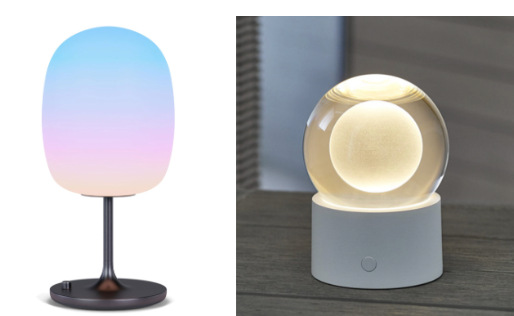
What that means in practice is a fixture that actually cycles through your day with you, sunrise, daytime, sunset, and nighttime modes, delivering industry-leading melanopic content during the day to provide maximum circadian stimulus, then transitioning to sunset and nighttime modes in the evening to remove those daytime light signals and prepare your body for rest. It also meets the WELL Building Standard Circadian Lighting Feature criteria, which is a meaningful benchmark for customers who want clinical validation behind their purchase.
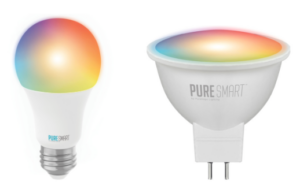
But the Skyview Pro is the entry point. What we really get excited about is helping customers take that concept room by room, or whole home. That’s where PureEdge Lighting‘s TruColor RGBTW system comes in, and it’s a gamechanger.
TruColor uses proprietary 5-channel color mixing to achieve one of the widest and most accurate tunable white spectrums on the market, from the warm golden glow of 1500K all the way to a crisp 5700K midday daylight and beyond, up to 6500K. What makes it special isn’t just the range, it’s the accuracy: a CRI above 94, R9 above 90, and a DUV of just .0037, meaning the whites are clean and true, closely following the black body curve the way natural light does. That translates to 85,000 white tones your eye actually perceives as natural.
Does Lightology see a lot of opportunity in circadian lighting? Why?
For a customer serious about wellness lighting, the real opportunity is consistency across the home, every fixture tuned to the same color temperature, at the same time of day, in every room.
The opportunity in circadian lighting is enormous. Energy slumps and screen fatigue are near-universal complaints, and consumers are increasingly connecting those problems to their indoor environment. Products like SkyView and TruColor give us real, science-backed solutions to offer that follow the sun’s natural rhythm, and that’s a powerful conversation to have on a showroom floor.
Are shoppers actively seeking circadian-friendly lighting, or is education still a key part of the selling process?
Both, honestly, and I can speak to this personally. We’re seeing a growing segment of customers who walk in already educated: they’ve read about blue light exposure, they know what color temperature means, and they’re asking specifically for tunable-white or human-centric solutions. But the majority still benefit from a conversation, and I find the best way to start that conversation is with a story they’ve already lived.
Here’s mine. A few years ago, I redid my entire home with what were considered excellent LEDs at the time — 90 CRI, 3000K, beautiful light. Then a Chicago winter hit. I’d get home at 5 p.m., sit down, dim the lights, and something just felt wrong. My warm, inviting 3000K LEDs were suddenly cold and flat, the CRI dropping to around 75, the color shifting into something unsettling. My wife hated it. I hated it. And I couldn’t figure out why a dimmed light was affecting our mood so profoundly, until I started testing and realized those dimmed LEDs were turning the color of the sky before a tornado rolls in.
That’s when it clicked. Think about how you feel on a bright sunny day versus an overcast one, sitting by a campfire, or watching a storm approach, those are primal emotional responses that humans have always had to light. Light affects your emotions, and your emotions affect your health. Good lighting makes you happy. Bad lighting doesn’t.
That’s the standard LED problem, what we call “cold dim.” As you bring the level down, the color goes cold and the quality falls apart. Thankfully, PureEdge Lighting introduced Warm Dim LEDs, and I replaced everything in my home almost immediately. Warm Dim works the way a halogen bulb always did: it starts at 3000K with a 90+ CRI, and as you dim it, the color temperature warms down to 1800K, staying above 90 CRI the entire time. It’s the glow of a fireplace, not an approaching storm.
Warm Dim is really the minimum any home should have. From there, the next step up is Tunable White, and PureEdge makes what I consider the best tunable white (TruColor) product on the market.
Are there particular categories — table lamps, pendants, smart bulbs — where wellness is resonating most strongly?
Suspension, cove lighting, and downlighting are leading the conversation. These are the dining room, bedroom, and living room staples, the spaces where people are most attuned to how light shapes their mood and relaxation at the end of the day. When you’re unwinding at the dinner table or settling into the living room for the evening, bad light is impossible to ignore. TruColor smart bulbs are also a significant entry point, because they let customers upgrade the fixtures they already own without starting from scratch, that lower barrier opens the wellness conversation to a much wider audience. And we’re seeing real momentum in ceiling fixtures and undercabinet lighting for kitchens, where the morning routine sets the tone for the whole day. Bright, accurate light while you’re making coffee and getting ready is a simple change with an outsized impact on how people feel heading into their day.
How is Lightology merchandising the concept of wellness in its stores? How is it explaining features and benefits?
We let customers experience the difference firsthand, because no amount of explaining replaces actually feeling it.
When I tell people I own Lightology, the first thing they want to talk about is a beautiful chandelier they’ve been eyeing. And yes, that’s an important part of lighting, but it’s only one part. Great lighting is a system. Everything has to work together, from your architectural lighting to your decorative pieces. You can’t have one fixture at 2700K and another at 4000K, some that dim and some that don’t, some cold dimming and some warm dimming. The whole room, the whole home, needs to be in sync.
That’s exactly why we’ve built our showroom the way we have. We’ve created fully realized room environments where customers can experience their lighting in layers. Start with decorative lighting only, then introduce accent downlighting on artwork, then add cove lighting, shelf lighting, toe kick lighting, and experience it all at the same color temperature, the same high-quality color rendering above 90 CRI, all dimming together in TruColor. That moment when it all comes on in sync is when people truly get it.
Our team is trained to lead with lifestyle and outcome rather than specifications. Instead of talking lumens, we talk about waking up feeling energized, cooking breakfast in light that actually wakes you up, or winding down in the evening without reaching for your phone. We use signage and product callouts throughout the showroom that speak to specific benefits, sleep, focus, mood, energy, so the conversation often starts before a salesperson even enters the picture.