BGC Engineering of Vancouver has won the 2026 Association of Consulting Engineering Companies British Columbia (ACEC-BC) Award of Excellence in the Soft Engineering category.
BGC won for a project called Geospatial Analysis – Provincial Disaster and Climate Risk and Resilience Assessment (DCRRA) that it undertook for the B.C. government.
The project delivered geospatial data and analysis for the most extensive province-wide disaster and climate risk assessment.
It maps such natural hazards as wildfires and floods, the impact of climate change on those hazards and the exposure to the hazards of people, communities and critical infrastructure across nearly one million square kilometres.
“We’re very happy to have won the award,” says Kris Holm, BGC’s principal geoscientist and communities team lead. “The work that BGC does with communities is very meaningful to us, because it addresses fundamental needs.”
B.C. is in one of Canada’s danger zones for natural disasters that are partly caused by climate change.
The province was hit with damaging wildfires in 2021, 2022 and 2023.
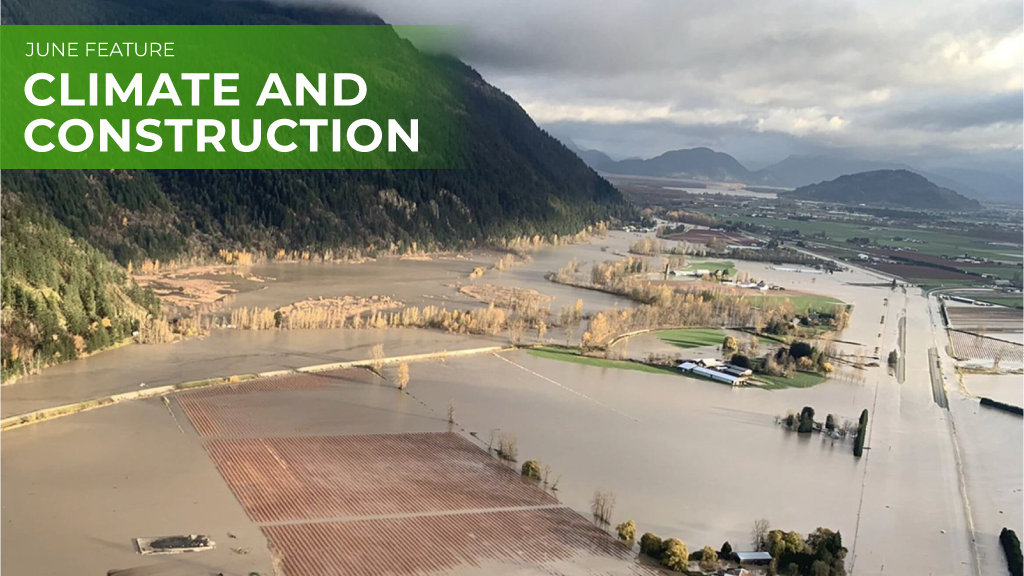
And in late 2021, a strong atmospheric river in southwestern B.C. brought two days of intense rain that caused floods and landslides, killed at least five people and cut road and rail connections between Vancouver and the rest of Canada.
With more climate and disaster risks possible, B.C. needed an accurate picture of what’s at stake.
According to the Ministry of Emergency Management and Climate Readiness, in the face of increased climate emergencies and natural hazards, the government knows it needs to be prepared and to reduce risks where it can.
“That’s why we are making more risk information available to communities and emergency practitioners,” says the ministry in a statement. “The province’s last hazard assessment was completed in 1997, so updated risk information was long overdue.
“Results from the DCRRA will help prioritize actions that enhance B.C.’s resilience and guide strategic investments.”
To assess the challenge, a large consulting group led by prime consultant Sage on Earth Inc. of North Vancouver was assembled.
BGC’s team was made of specialists in geo-hazards, data science, risk analysis and geographic information systems.
“We provided the information and the data,” says Holm. “Where are the natural hazards and what are the assets we value?”
BGC compiled and analyzed data for six types of natural hazards: Earthquakes, drought, extreme heat, river flooding, coastal flooding and wildfires.
It also analyzed the hazards for the danger they posed to people and to private and public property.
BGC identified the hazards faced by cities, towns, villages and other settlements containing approximately five million people, the natural environment as well as $900 billion worth of buildings and over one million kilometres of transportation, energy, water, petroleum and communications infrastructure.
It analyzed the extent of hazards according to exceedance (excess, overrun) probabilities and intensity thresholds, with climate change considered for extreme heat and drought.
The BGC team integrated diverse population and asset data and developed software to intersect it with hazard data, summarizing results in 1 km by 1 km vector grids.
The results identified hazard exposure hot spots as well as individual hazard-asset intersections, for future assessment.
In sum, the DCRRA created the most extensive province-wide picture of disaster and climate risk ever completed in British Columbia.
The geospatial assessment yielded foundational data about people and critical infrastructure hazard exposure in a repeatable framework for future updates.
The results support the new Emergency Act requirements and inform disaster risk reduction and climate adaptation planning across B.C.
Holm says BGC’s part of the project had to deal with some challenges.
“Risk assessments at the level of the entire province – almost one million square kilometres in area – is very complex and our knowledge of the hazards is very incomplete,” he says. “Every risk assessment is a snapshot in time and they need frequent updating.”
Finally, Holm says, “We need to recognize that we’re all in this together. B.C. facing many different natural threats. Everybody shares responsibility for managing the risks from climate change.”
The entire project, including BGC’s geospatial analysis, was developed in collaboration with First Nations, with an emphasis on Indigenous and local knowledge, and aligned with the modernized Emergency and Disaster Management Act and the Climate Change Accountability Act.
The results of the assessment are a starting point to understanding and reducing natural disaster risks in B.C. and managing risks at the regional and local level in the future.
BGC received its award at the 2026 ACEC-BC Awards for Excellence Gala on May 8 at the Vancouver Playhouse. The awards were started in 1989.