The scheme was developed in response to Barnet Council’s ambition to reduce carbon emissions from routine resurfacing works on live streets, supporting its BarNET ZERO programme and wider commitment to becoming a net zero borough by 2042.
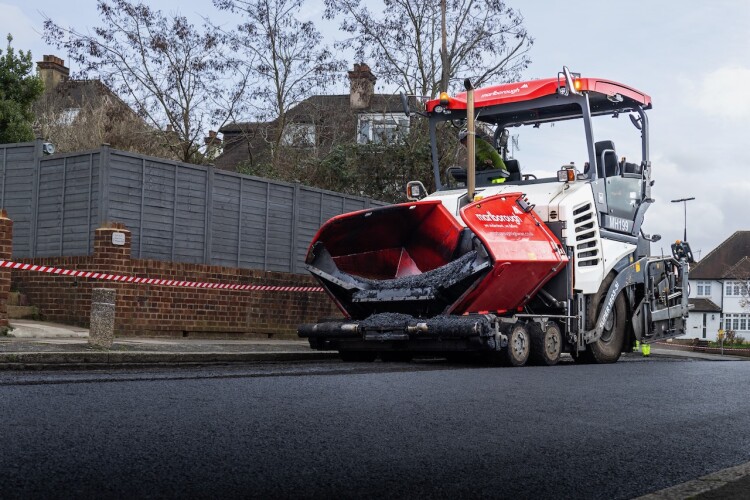
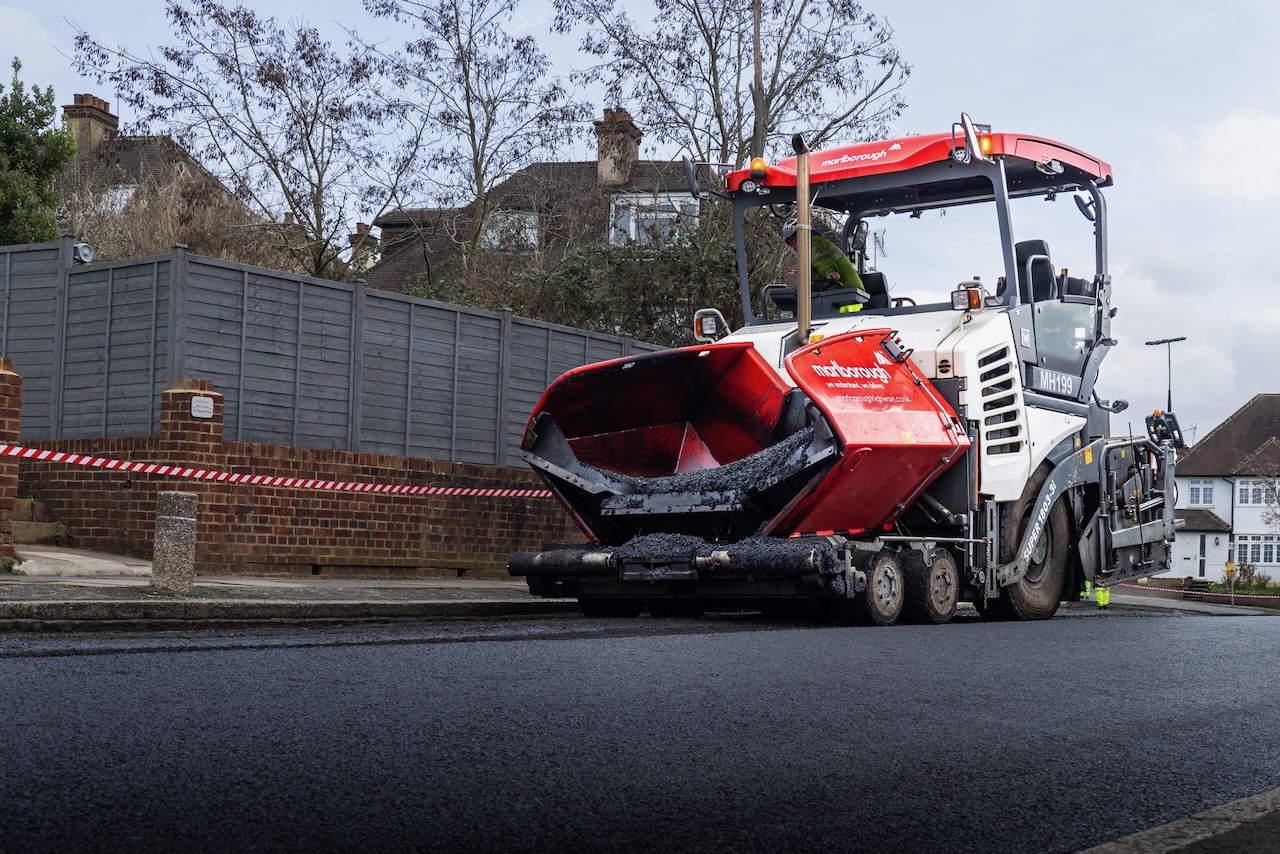
Delivered across three streets in just six days, the works combined lower carbon asphalt materials with planned changes to transport, plant and site delivery, achieving clear and measurable reductions in carbon equivalent emissions (CO₂e) without affecting the programme or network operation.
Marlborough worked closely with Barnet Council to turn the brief into a practical highways scheme, coordinating the supply chain and identifying where carbon could be reduced across both the asphalt specification and the delivery method.
This approach combined Holcim SuperLow asphalt in both the binder and wearing courses with ACLA, a carbon negative additive developed by Low Carbon Materials. ACLA was used within the binder course to reduce embodied carbon, while maintaining the performance required for a live carriageway.
Electric plant was prioritised where feasible, including an electric roller and electric disc cutter, supported by electric vans charged through a 100% renewable tariff. HVO-powered plant was used where electric or lower carbon alternatives were not viable.
The completed works reduced the estimated carbon footprint from 62.34t CO₂e to as low as 4.49t CO₂e, representing a saving of up to 57.85t CO₂e. The majority of this reduction was achieved through material selection, with further savings delivered through plant and transport changes.
Got a story? Email [email protected]