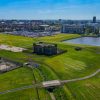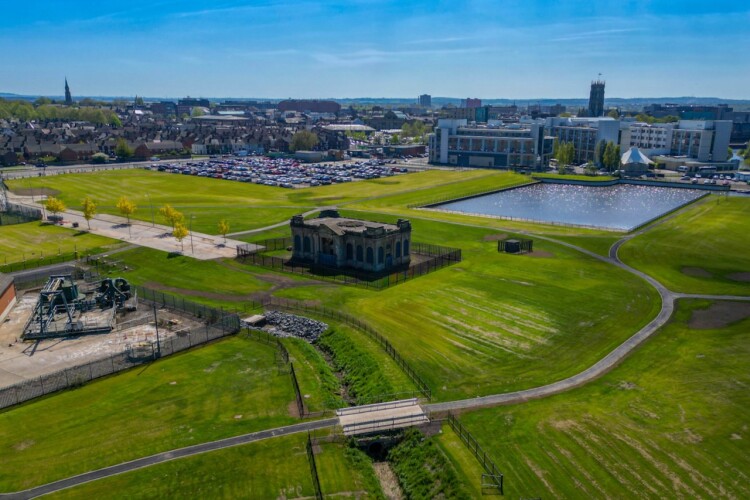
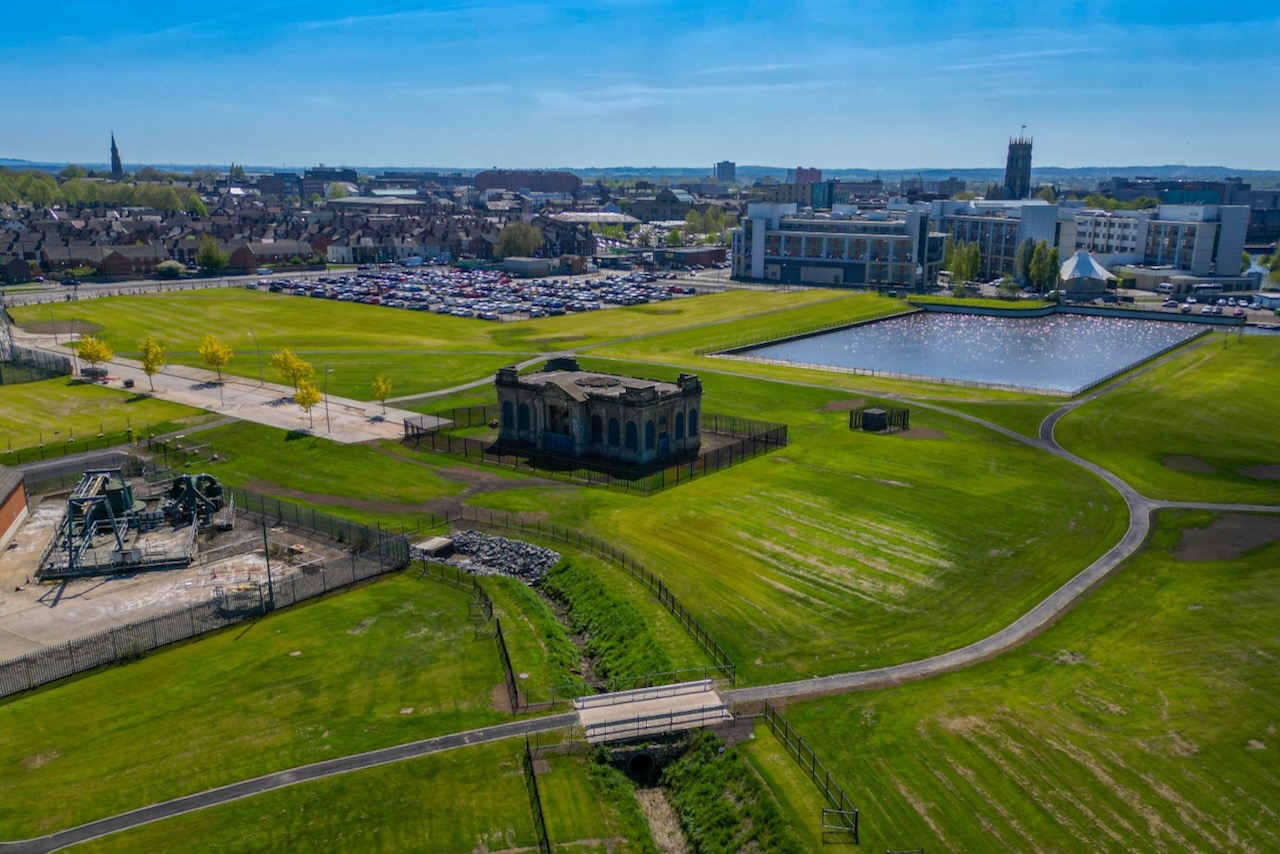
The formerly contaminated brownfield site had been used for car parks, industrial units, a scrapyard and a pumping station, and was often underused. Its historic industrial uses, combined with its proximity to the river, required thorough and carefully managed environmental remediation to make the land suitable for future development.
Pick Everard was appointed to provide project management, cost management, quantity surveying, civil engineering, building and construction safety and environmental services. The firm worked alongside main contractor Keltbray to remediate the site.
Emelye Kenyon, director of environmental services at Pick Everard, said: “Given the site’s former uses, it required us to bioremediate the land. This process involved mixing and aerating the soil to reinvigorate it and encourage naturally occurring microorganisms to break down contaminants. On this site, it was predominantly hydrocarbon contamination that we treated in this way.
“There were also areas of heavy metal contamination, which were remediated using a clean cover system. This involved importing around 1,044 loads of topsoil and 64 loads of subsoil. By combining these approaches, we were able to maximise the amount of material treated on site, significantly reducing waste and supporting a more sustainable remediation strategy.”
The project also included the removal of invasive plant species, notably a significant presence of Himalayan balsam along the drainage ditch running through the site. A specialist contractor was appointed to remove the plant and associated contaminated soils, ensuring compliance with environmental regulations and preventing further spread.
Once remediation was complete, hydroseeding was undertaken to promote rapid vegetation establishment, with pre-soaked seed applied within a gel medium to accelerate germination.
The works also addressed extensive underground obstructions, including historic concrete footings, former roadways, car parks and floor slabs. Removal of the concrete pad from a former gas holder revealed significant additional sub-surface concrete, all of which was processed on site. Crushed materials were reused or sold, supporting a circular approach that minimised disposal and maximised recovery.
In total, Keltbray moved approximately 38,650 cubic metres of material across the site, reusing around 32,365 cubic metres. A total of 6,319 cubic metres of material was produced during the works, of which 1,000 cubic metres was reused on site to infill soft spots, backfill excavations where water was encountered and form haul roads.
The site will now become a temporary green, open, space, ready for future investment.
Got a story? Email [email protected]