Hello retailers!! Summer has wrapped itself up nicely, kids are heading back to school, tourist season is winding down, and we’re gearing up for fourth-quarter holiday fun. I don’t know about you all, but by this time of year I’m needing not just a second wind, but a third or fourth.
Between my two showroom shops, I’ve got about 12,000 square feet of floor to work with. The idea of dreaming up new floor plans, merchandising tables, and window displays makes me want to scream into an expensive decorative pillow. So, what do we do when we’re stressed? “Add to cart”… No. We dig deep and find inspiration.
I find inspiration everywhere: movies, TV shows, magazines, traveling, and of course, the internet. Instagram and Pinterest are my go-tos. Between the amazing accounts I follow and a few well-chosen keywords in Google, I’m quickly down the rabbit hole of gorgeous window displays, clever merchandising concepts, better-flowing floor plans, and unique props and accessories to build my own masterpieces.
I was looking for inspiration on where to find inspiration for retail merchandising when I stumbled onto my new favorite podcast, “The Retail Wh*re” — or as we’ll call it here, TRW. The host is Michelle Sherrier, a self-proclaimed “creative curator and visionary gangster” who’s spent 40 years in retail merchandising. She’s done apparel display for Wet Seal (hello, ’80s), Z Gallerie, and the zeitgeist icon of all window-display masters — Anthropologie. These days, Michelle works behind the scenes at many of our favorite showrooms at the home and gift markets in Atlanta, Dallas, and Las Vegas, while also managing buying and merchandising for a handful of private clients. Her guiding principle: at the end of the day, it can all look amazing, but if it doesn’t sell, none of that matters. Michelle and I had a great conversation, and I asked her every question I had about merchandising, displays, store flow, and how it all works together to actually sell product.
What Michelle notices first
Michelle gave me the lowdown on what she clocks the second she walks into a store. First: sound, sight, and scent — the subtle elements that set the mood before a customer even looks at a single product. Next: what’s the brand here? If tags are hanging off everything and
spinners, endcaps, and POP displays are all shouting their own logos and colors, it muddies the brand of the shop instead of reinforcing it.
Designing the flow
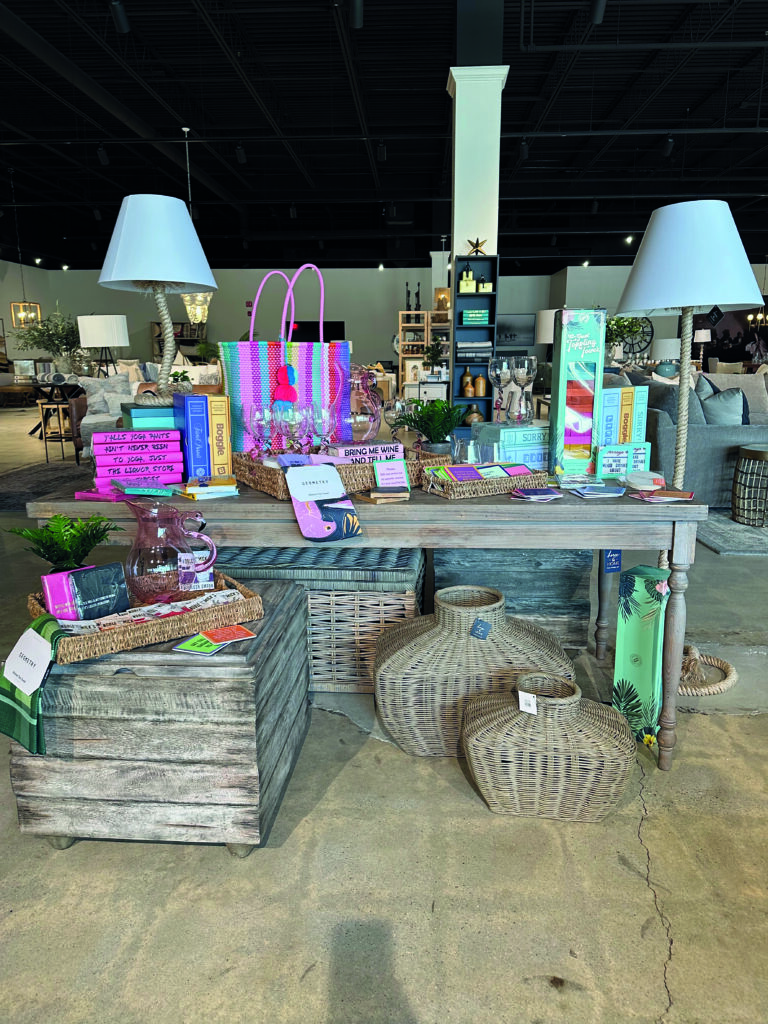
So, let’s talk about your store. Customers need a decompression zone — a transition space of about 10 to 12 feet just inside the door — where they can pause and take everything in. And they’ll almost always turn right so make that first display or merchandised table they hit reflect the season, showcase your newest pieces, speak to your brand, and be beautifully styled — while still being genuinely shoppable. There’s a fine line between a display that’s beautifully decorated and one that’s actually merchandised. It shouldn’t be so precious that customers are afraid to touch it, and it shouldn’t be so overstuffed that they’re overwhelmed by choice.
Tell a story
Naming an area helps define the space and gives it a narrative. Let’s call one “Sunday Morning” — cookbooks, mixing bowls, wooden spoons, tea towels, coffee mugs. Choose items that build the story, look beautiful together, and cross-sell naturally. If a customer picks up a cookbook, it should make sense that a mixing bowl and spoon are sitting right there — instantly doubling the sale. Michelle shared a funny (and slightly baffling) story about a shop she visited that had merchandised drink mixes right next to Poo-Pourri. What story is that telling?
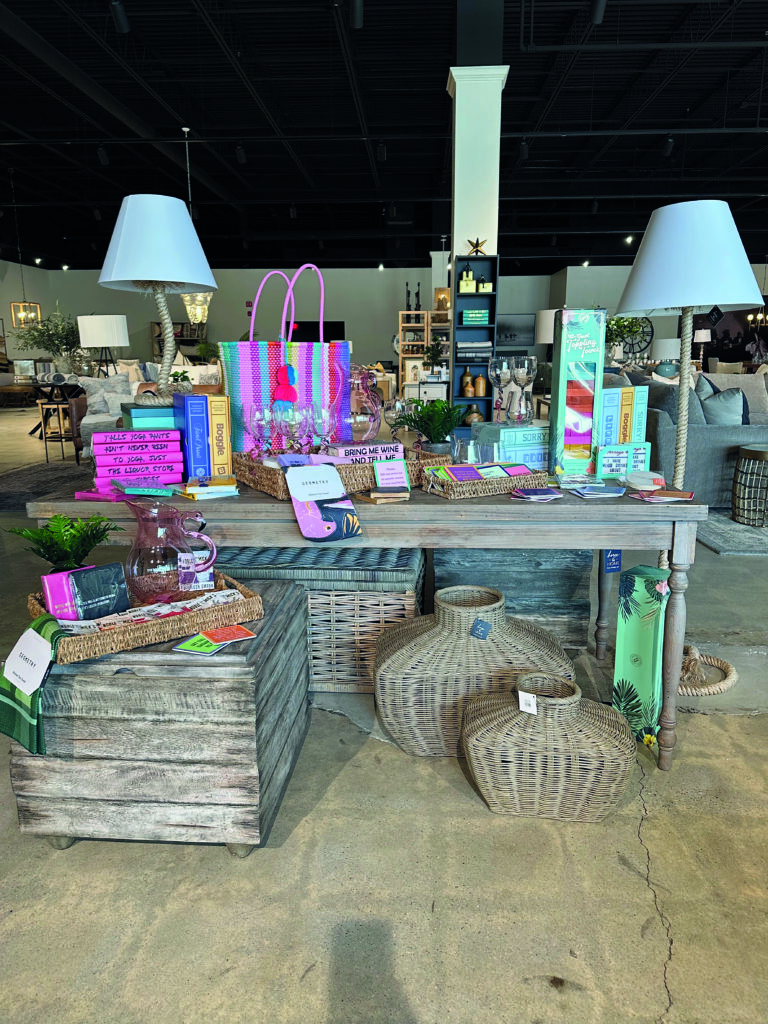
accessories in a colorful, eye-catching display in her store, House & Home.
(Photo courtesy of Christina Van Blake)
Building the display
Gather your goods and start building. Begin by clearing the surface and wiping it down — it has to start clean. Then build up and out. Nesting tables are a great way to create varying heights.
Use trays to corral small items so nothing gets lost. Big glass jars are perfect for holding wooden spoons. A crate or a sturdy basket turned on its end makes a great backdrop for stacking mugs. And always include a plant or two — it adds texture and makes the whole display feel more layered. You can find these foundational architectural pieces at most of the vendors you already buy from, but also at flea markets, antique shops, and garage sales. Michelle has one hard rule here: no plastic.
The takeaway
Retail will always be a place to look, touch, try and get inspired. Make it easy for shoppers by telling the story — and then offering the products that make that story a reality. I’m currently working on a Harvest Morning display in a cream, goldenrod, and bittersweet palette: vintage wooden fruit boxes, gathering baskets, and an old wooden ladder suspended from the rafters for height. Wheat sheaves, dried bunny-tail stems, yarrow, and sea oats break up the hard, shiny elements and add texture. The product mix includes stoneware crocks, mugs, and bowls; French rolling pins; teak spoons; old jars; linen tea towels; stoneware spoon rests; marble soap dishes; and lazy Susans.
Who doesn’t want a lazy Sunday morning with homemade waffles and a good mug of coffee?
Van Blake is an interior designer and the founder of Home Design Furnishings Decor and House and Home in Dover, N.H.