The construction industry is embracing robotics more than ever before, according to Builtworld’s 2026 Annual Equipment & Robotics Benchmarking Report.
“Less than a third (29 per cent) of contractors were using robotics on their jobsites to some degree in 2025. This year, that figure has more than doubled,” the report says.
Several research organizations offer their outlook concerning the expansion of robotics.
On one hand, Zacua’s Construction Robotics Report 2026 says despite the growth in adoption, “robots are still a tiny line item in global construction spend. Estimates for onsite construction robotics revenue sit in the low single digit billions of dollars globally, growing at roughly mid-teens annual rates. That is not a bubble. It is steady compounding from a very small base.”
Nevertheless, the expenditure numbers for robotics are still large and projected to get even larger, alongside their increased usage.
In its review of the U.S. construction robot market, Grandview Research foresees rapid growth, from an estimated $407 million in 2026 to nearly $1.5 trillion by 2033. That’s an impressive CAGR of 19.4 per cent. Globally, research firm SMS Insider sees overall spending growth jumping from an estimated $1.76 billion in 2026 to $6.27 billion by 2035.
The Zacua report details how robotics in construction is moving from novelty pilots to repeatable, ROI-producing tools used for layout, solar piling, rebar tying and reality capture. Case studies report major labour savings (often 30 to 50 per cent), faster cycle times (15 to 25 per cent) and less rework.
As this column has outlined recently, there is a need to understand how broadly the term “construction robotics” can be applied.
As SMS Insider explains, the construction robot market is highly segmented. There are demolition robots, bricklaying robots, concrete robots, welding robots, inspection robots, material handling robots, drones and aerial robots. Some of these can be sub-divided by their level of autonomy (semi-autonomous and fully autonomous), and application type such as residential, commercial, industrial and infrastructure.
Adoption succeeds when robots focus on bounded, high-utilization tasks that plug into existing workflows, with safety and data proving more convincing than “cutting costs” alone, Zacua’s report explains. It says robots also create structured, BIM-linked information for QA/QC, forecasting and insurance.
Human-robot teaming is now standard, with staff shifting toward technologist roles. Pricing is increasingly favourable towards “Robots-as-a-Service” and outcome-based contracts. Looking ahead, Zacua says “humanoids are hype; task robots are real.
Humanoids will likely see targeted use in controlled environments and certain factory or logistics roles. On rough, dynamic construction jobsites, specialized machines will remain the workhorses.”
Nevertheless, it comes as little surprise that humanoid robotics capture the imagination, and within the construction industry that is no exception. There are several companies developing two-legged upright robots ready to take on several worksite tasks.
One example is Persona AI based in Houston, Texas. The company has a stated strategy of building a modular humanoid platform that will deliver skilled industrial labour across several heavy industrial sectors, including construction.
“Construction and manufacturing environments are facing ongoing labour shortages, particularly for skilled roles in fabrication, assembly and equipment operation,” the company says. “Persona AI is building industrial humanoid robots designed to perform these tasks in real world conditions, helping increase efficiency, reduce downtime and support workforce gaps.”
Robotic developments are a global phenomenon. Not surprisingly, major players include China, where for some time robots have played an important role in manufacturing. The rapid growth of cities within China has seen robotics move beyond the factory and onto major construction sites. Grandview Research says China today represents over 10 per cent of the global construction robot market, a percentage that is expected to increase significantly over the next several years.
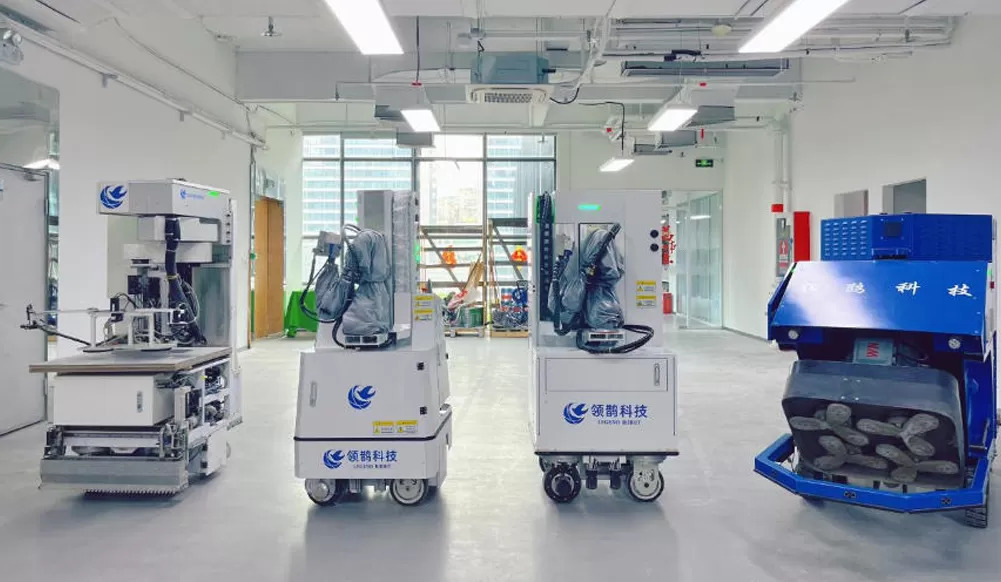
One example of Chinese success is Legend Robot Technology. The company has developed a full complement of free-standing robotic devices targeting the labour-intensive process of interior finishing.
The company is particularly proud of its achievement at a large-scale residential project at Guanhao Mingyuan in the Lianyungang Economic Development Zone.
A team of three construction robots and four operators replaced a traditional 15-worker crew to complete the same workload, the company says. The increase in efficiency was clear: a 21 per cent reduction in construction time along with a 30 per cent cost savings in labour, project management and time-related expenses.
Embracing robotics requires a major capital expenditure decision for construction companies. However, the projected growth over the next decade is destined to rise.
For many, the decision concerning how to integrate robotics into a particular construction task may come down to the proposal suggested by AE Partner Aarni Heiskanen: “The question for a contractor in 2026 is not which robot to buy. It is which parts of your process you are willing to make repeatable, and whether your models can drive a machine.”
As SMS Insider points out, “Rising investment in modular and prefabrication construction techniques are inherently more robotics-compatible than traditional site-assembled construction, where standardised component manufacturing in controlled factory environments enables higher robot utilisation rates and more consistent automated assembly quality than variable on-site conditions allow.”
It goes on to predict the advancement of construction robots designed for collaboration, or “cobots”, that can operate safely next to human workers without the fencing and isolation typically needed for traditional industrial robots.
This supports mixed human–robot construction processes, where robots take on the hardest, most repetitive and potentially dangerous duties, while experienced people focus on decisions, oversight and ensuring overall quality.
John Bleasby is a freelance writer. Send comments and Inside Innovation column ideas to [email protected].