Canada’s universities and colleges are reshaping their programs to integrate AI, and the University of Toronto’s master’s of engineering program with a stream in construction management is part of that shift.
Through a number of courses, students gain hands‑on experience with digital twinning, BIM and robotics, while exploring the potential of AI in construction, says Daeho Kim, one of the U of T’s engineering program’s instructors.
The two-year graduate degree might be the only one in Canada that teaches AI applications specific to construction management but that is likely to change.
Kim sees AI education as becoming essential for anyone entering construction management, with automation and digitization now unavoidable forces that are reshaping the industry.
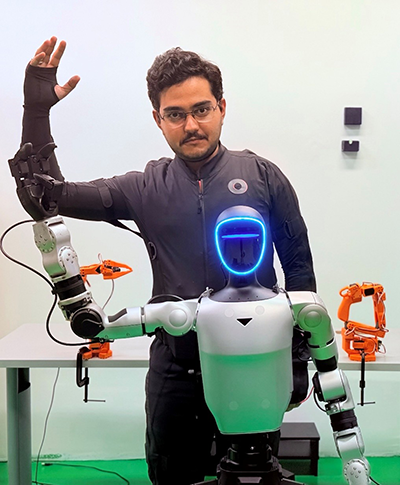
In some of his classes, Kim includes humanoid and animal robots and he has started using a motion catcher suit for students to conduct construction tasks. Data on movements recorded can be used to train humanoid robots through a process called “imitation learning.”
“The suit has a lot of potential to be in AI and robotics research,” Kim says.
AI can play an important role in safety on construction sites as well and Kim’s team has developed a course identifying problems in safety culture and evaluating solutions using robotics and other AI tools.
He says his construction management students get firsthand exposure to new technologies, materials and installation methods through visits to building sites on the university’s campus.
Kim also runs a lecture series where industry professionals present how AI is being applied across the construction sector.
An important element to the program, the professor points out, is the curriculum is developed around real construction problems and then builds coursework around solutions through AI, robotics and computer digitization.
While the construction industry has traditionally been slow to adapt to change and new technologies, Kim points out the high cost of change can influence management decisions, especially when factoring in the unpredictable costs of running a project.
He says the top challenge among construction managers is schedule or production overrun forecasting. “It would be wonderful if we could get AI to do it.”
It is happening in other industries.
In factories, for instance, AI is proving effective but unlike a factory, a construction site can be a constant state of flux.
“Our environment (construction industry) is more challenging than any other industry to apply automation, digitization and robotics technology.”
Delivery schedules can change, construction flow is not constant and such issues as safety would require collaboration between construction robots with human workers to be effective, he adds.
He is optimistic AI will eventually be an integral part of construction.
“One day when we have enough training data where we can learn patterns to explain why a project has been delayed and by how much, then we can create (train) AI. We aren’t lacking technology but we are lacking data.”
As AI accelerates, he says the graduate program’s curriculum will evolve.
Kim is one of only two faculty members teaching construction management classes, but staffing could increase as the industry embraces AI.
“Our program is growing very fast and construction management specifically is receiving a lot of attention.”
The master’s in engineering is a two-year program.