“I obsess over lightbulbs,” designer Nicole Fisher confessed in a recent Hudson Valley Lighting blog post on the company’s website. “I am obsessed with lighting temperature and strength. It can easily be the biggest thing to change the mood.”
Yet the lightbulbs that enhance a fixture at market and make it so striking are often not included in the box, according to one manufacturer.
That leaves it to lighting showrooms to educate their consumers on what lightbulb works best with what fixture. Here’s how two retailers approach that:

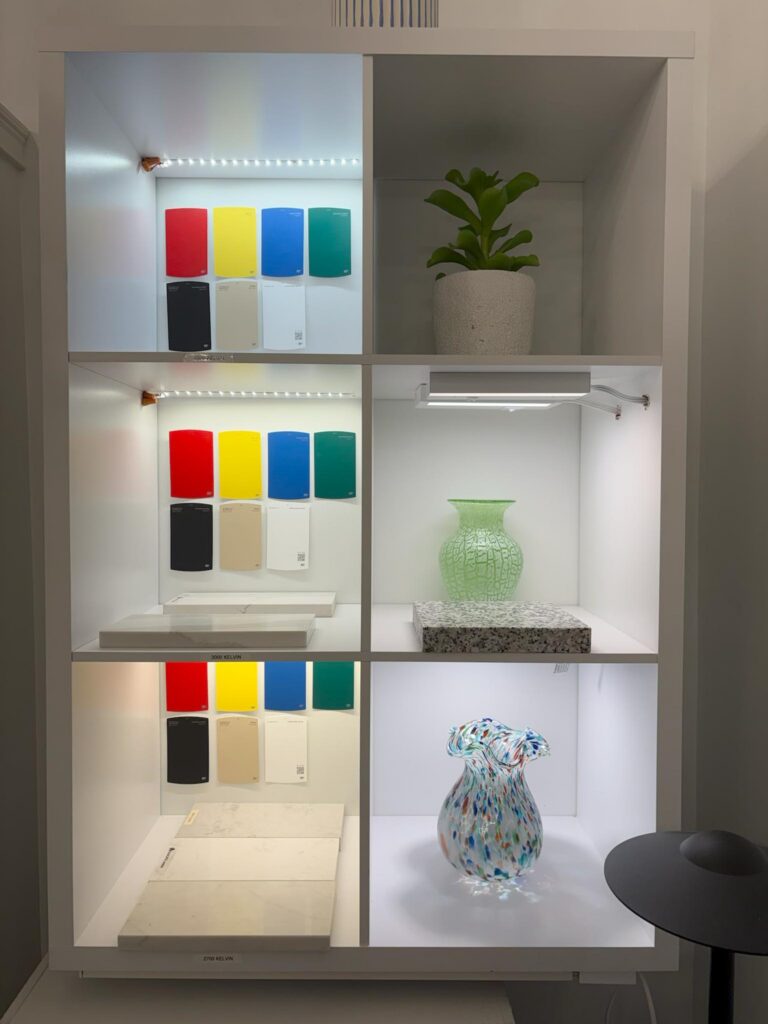
“When a customer buys a light fixture from us, we discuss the light bulbs. It can be confusing. We learn where the fixtures will be used and discuss style differences — frosted vs. clear bulbs, for example — and more importantly, what type of light is needed for a space. Customers need to budget for bulbs. We help them understand the difference in color and intensity. We have a Kelvin temperature box where we demonstrate how different temperatures affect colors. We stock 2700 (warmer for such uses as hallways and bedrooms) and 3000 Kelvin bulbs (cooler light for bathrooms and kitchens).” – Carla Snowdon, founder, Tidewater Lighting & Design, Old Saybrook, Conn.

“We believe the light source is just as important as the fixture itself, so educating our clients on bulbs is a key part of our consultation process. Whenever possible, we recommend and supply the appropriate bulbs alongside the fixture to ensure customers achieve the intended look and performance. Color temperature, lumen output, dimming compatibility and bulb shape all significantly impact the final result. We educate our customers on how different options affect the mood, color rendering and overall design of a space.” – Hailey Kleinberg, Director, Elements Lighting & Design, Carle Place, N.Y.