Kishorn, on the West Highlands coast, was developed in the 1970s. It was used to build the Ninian Central oil production platform, at the time the world’s largest floating concrete structure. In 2025, Highlands and Islands Enterprise invested up to £24m to expand the dry dock to build floating wind turbine foundations.
The circular dry dock could accomodate a 160m-long vessel sitting 13.8m below high tide level. The current scheme adds 100m of usable length to the dry dock while reclaiming an adjacent tidal area to establish nine hectares of critical laydown land – infrastructure designed to service the growing offshore wind, decommissioning, and aquaculture sectors.
Achieving the required depth and footprint meant relocating existing internal road networks before drilling and blasting more than 450,000m3 of Torridonian sandstone. Recognised as one of the oldest and most abrasive rock formations in the world, the dense sandstone placed severe demands on both ground-engaging tools and haulage machinery.
RJ McLeod is processing, crushing, and reusing all excavated material on site, supporting the project’s sustainability objectives and limiting road movements, which requires a high and continuous workload for the mobile plant fleet.

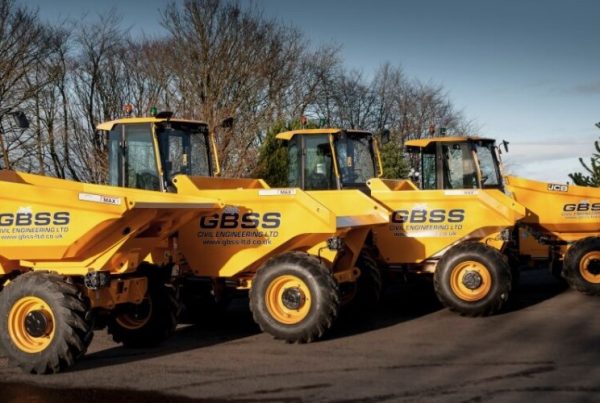
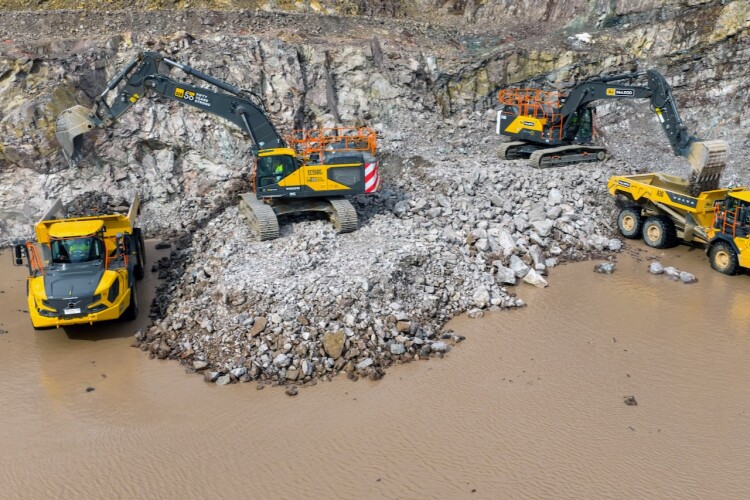
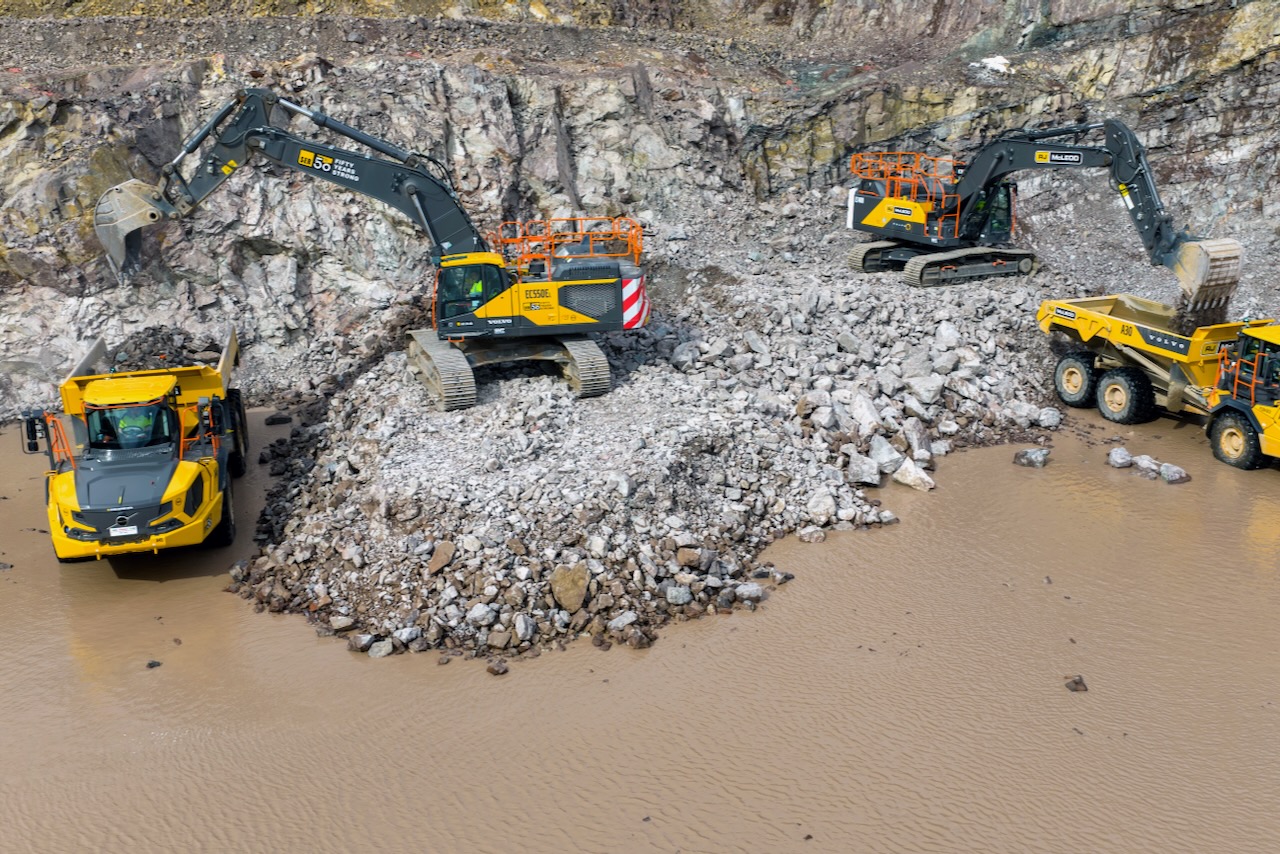
Stevens Equipment Rental supplied Volvo A45 and A30 articulated haulers; Volvo EC550, EC400, and EC300 excavators; Volvo L180 wheel loaders; Caterpillar 352 excavators; and Caterpillar D7 and D6 dozers, to enable excavation, haulage, crushing, spreading, and compaction across the demanding and remote site.
To supply material for quayside protection, the site team intentionally designed a wide-spaced drilling and blasting pattern at the face. While this generated large, intact boulders suitable for use as rock armour, it also yielded material that required site-level segregation before further processing. The fleet has to work as a balanced system, with digging capacity, truck payload, loading capability, and dozer output all aligned to avoid bottlenecks.
Heavy excavators are positioned on blasted rock to load articulated haulers, while a hammer-equipped excavator breaks oversize sandstone for the mobile crusher. From there, wheel loaders and dozers help feed, place, and trim material as the dry dock and laydown areas take shape.
Stevens supplied parts and fluids on site, to help ensure uptime, with an engineer based at the site to help cover maintenance requirements and respond quickly to any issues.
Got a story? Email [email protected]