Online lighting, furniture and décor retailer Lumens recently opened a design gallery with an immersive environment in San Francisco. We followed up with CMO Dana Gers to discuss the role the gallery plays in the retailer’s business and design strategy, her assortment strategy and what customers Lumens hopes to reach.
What does your first physical space enable you to do that your e – commerce business cannot?
Our digital platform has always been about breadth — giving our clients access to the world’s most exquisite lighting and furniture design. The Design Gallery extends that promise into the physical world, allowing people to experience scale, materiality, light and the emotion of being in a designed space in a way that cannot be replicated on the screen. The gallery was designed as more of a living editorial canvas. A space where design is not only seen, but engaged with, celebrated, and remembered.
Is the Lumens Design Gallery meant to drive revenue or serve more as a branding and storytelling tool?
It’s both. Revenue will always be important, but this gallery is about creating cultural capital. For two decades, Lumens has been known for authority and reach. With the gallery, we’ve created a space that embodies storytelling, inspiration, and connection. It’s a destination where architects, designers and clients can come together — whether to source a pendant for a project, meet with a client, or simply be inspired by design at its most imaginative. We view it as a catalyst: strengthening relationships, sparking new ideas, and shaping how people think about living with de sign. Those conversations ultimately drive growth in every channel.
It looks like you are offering much more than lighting in the Gallery. Can you detail your cross-category strategy? How does that reflect your overall assortment?
Lighting will always be central to Lumens — it’s our foundation. But the way people live with design has evolved and so have we. Alongside lighting, you’ll find furniture and decorative objects , all carefully curated to reflect the way designers and clients realize spaces today with a creative harmony of design elements together. With the design gallery, we intentionally present a representation of iconic brands like Flos, Vitra and Louis Poulsen alongside emerging and artisan creators like Parachilna, SkLO, Ariel Zuckerman and Rosie Li studio. So, the gallery is truly a place of discovery.
Who is the target demographic of the Lumens Design Gallery?
We designed the gallery with multiple audiences in mind. First and foremost are architects and interior designers who need a space that supports their creative process: somewhere to bring clients, experience scale and materiality, and source across categories.
At the same time, the gallery is for design enthusiasts. People who want to immerse themselves in extraordinary design and discover new pieces. We’ve already welcomed design students, collectors and neighborhood passersby who wandered in and found themselves inspired. That blend of professional and personal audiences is exactly what makes the gallery so vital: it’s a community hub for design in all its forms.

Ghislaine Viñas is the first Designer in Residence. How did you come to work with her? What products did she pull together for this inaugural program, and what is her overall point of view?
We wanted to ensure the Design Gallery would never feel static, but always like a living, breathing canvas. The Designer in Residence program brings that to life by giving leading designers the freedom to transform the front gallery and window display through their lens.
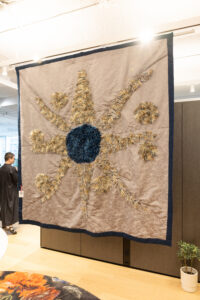
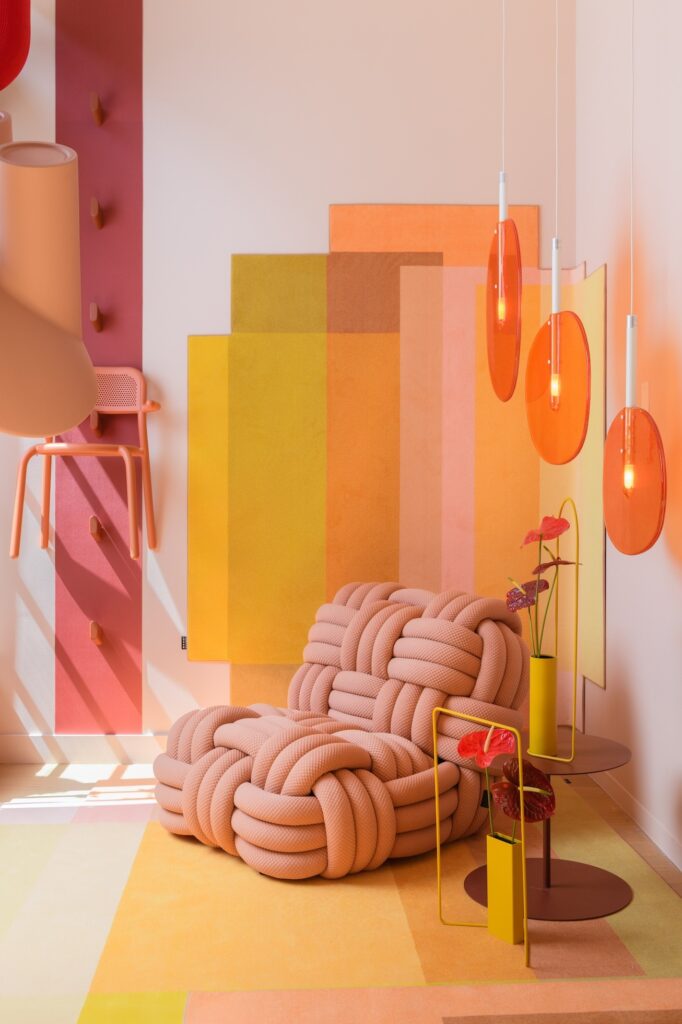
Ghislaine is a long-time client of Lumens and has always had a talent for realizing unexpected and wonderfully imaginative spaces. We knew that she would be able to bring her exuberant creativity to this space and develop something that would be memorable and joyful. She approached the space in a color-first way, in complementary tones of yellow and mustard, pink and ruby. Her bold creativity paired with a sense of play aligned beautifully with the Lumens ethos. For her installation, she pulled together pieces that speak to craft and character: Brightly colored Moooi rugs that function as floor and unexpectedly as wall coverings, transformed into works of art. Ariel Zuckerman knitted pendants at the entry, sculptural objects from SkLO and Lasvit, a hand-crafted chair from BD Barcelona suspended from the ceiling and a mix of playful, art-driven designs that bring her vibrant perspective into dialogue with our assortment. The result feels joyful, intellectual, and deeply personal.
Who else do you plan to work with as a Designer in Residence?
The intent is to work with both established voices and emerging talent, reflecting the spectrum of the design community today. Each residency will take on its own character, evolving the front gallery in new and unexpected ways. We’re already in conversations with potential designers, and we can’t wait to share that chapter and celebrate it with the community.

Will this be a singular Lumens space, or is there a plan to open more, and if so, where?
San Francisco, being a center for design and innovation and also in the backyard of our headquarters, was the perfect space to incubate this concept. We’re considering this space as a way to explore the brand in the physical realm, and sure, if there is opportunity, we would love to expand to other locations. We see tremendous potential in other design-forward markets. Our vision for the Design Gallery is not to replicate a formula, but to create a distinctive destination where digital reach meets physical experience, and where each space becomes a cultural landmark for design.