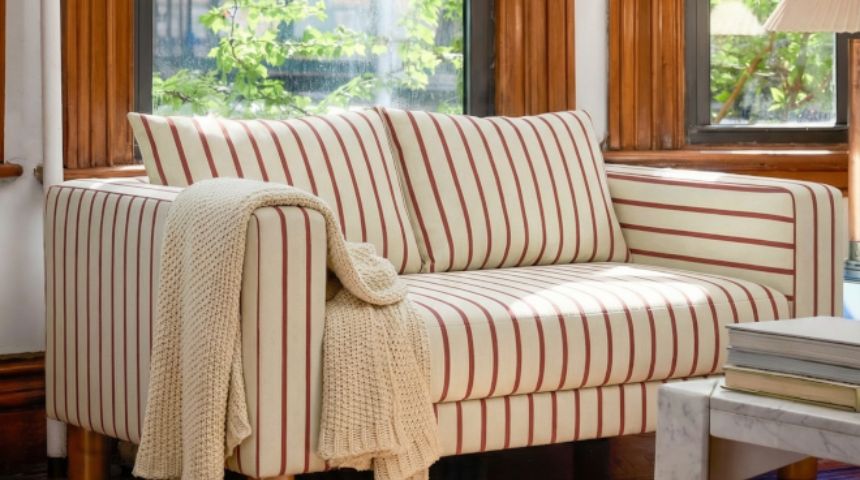
Sabai’s fabric by the yard program includes its new hemp blend rust stripe. Image courtesy of Sabai.
NEW YORK — Recognizing a growing need for smaller quantities of sustainable fabrics for interior design trade and consumer projects, direct-to-consumer furniture brand Sabai has launched a fabric by the yard program featuring its sustainable textiles.
The program was shaped by direct demand, according to CEO Phantila Phataraprasit, who noted customers were reaching out because they wanted to reupholster existing furniture to match new Sabai pieces they had ordered. The company saw “a very clear gap in the market,” she said, “especially as we see consumer demand increasing for natural and nontoxic textiles.”
A key challenge was minimum order quantity, which put some of the sustainable fabrics out of reach for smaller projects. With this launch, Sabai is helping to close that gap by offering materials by the yard that typically required a larger quantity commitment.
See also:
Sabai’s fabric by the yard program covers its recycled velvet, cactus leather and organic hemp blend fabrics.
The company’s recycled velvet is made from recycled water bottles using a water-free process and is inherently stain resistant, eliminating the need for special treatments. The cactus-based leather is made from 40% prickly pear cactus and 60% biopolymer made with organic renewable compounds such as waste material from the cactus food industry. The organic hemp blend combines 55% hemp with 45% cotton upholstery material. Hemp is typically grown using minimal water and no pesticides.
In addition to the fabric program launch, Sabai has also expanded into four new colorways: brick and cobalt stripes for its hemp blend; redwood for its solid hemp blend; and cornflower recycled velvet.
While the company’s yellow-clay-striped hemp blend fabric has been its most popular, Phataraprasit said she expects the rust stripe to resonate in a similar way because it “provides color and visual texture while still being more of a neutral.” Calling out the cobalt stripe as a personal favorite, she added it is “one of the boldest fabrics we’ve made to date, and I’m really excited to see how people respond to it.”
The new colors were shaped by feedback from Sabai’s Instagram community and a post-purchase survey. The Sabai team uses polls to better understand what customers want so it can avoid creating waste by producing fabric that won’t be sold.