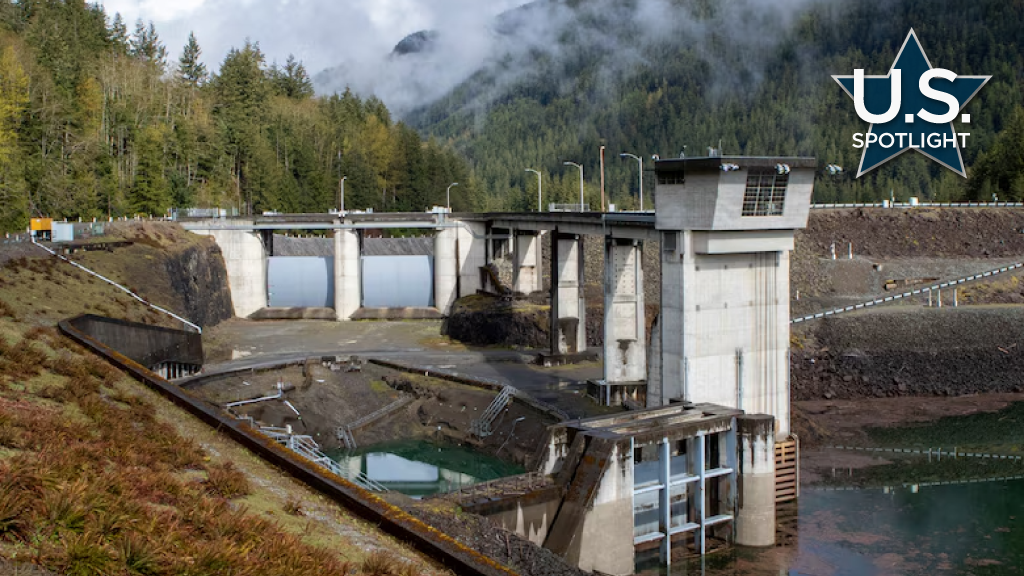
A major infrastructure investment aimed at strengthening water security and restoring critical salmon habitat is moving forward in Washington State, about 35 miles southeast of Seattle.
The U.S. Army Corps of Engineers (USACE) has awarded a $691-million contract for the Howard A. Hanson Dam Additional Water Storage Fish Passage Facility project on the Green River to a FlatironDragados-Aecon joint venture.
The project represents a significant step in modernizing the dam, a structure that has played a central role in flood control and water management in the region since it became operational in 1961.
Following successful completion of the collaborative design phase, the project is now advancing into construction, with substantial completion anticipated in the third quarter of 2031.
The multi-year effort reflects both the technical complexity of the project and its environmental importance.
At the heart of the initiative is construction of the fish passage facility, a sophisticated downstream structure designed to improve fish migration while enabling increased water storage capacity.
The facility will feature vertically stacked ports positioned on the upstream side of the dam. They are a key component of the fish bypass system and allow juvenile salmon to safely navigate around the dam during downstream migration.
The bypass system itself is an engineered solution designed to mimic natural river processes while accommodating the realities of a large flood-control structure. It includes a fixed multiport collector that guides fish toward designated entry points, a steep slope bypass channel that moves them past the dam and a deceleration tunnel that reduces water velocity before fish are released into the river below through an outfall stilling basin.
Together, these elements create a controlled pathway that minimizes stress and injury to migrating fish.
The system will work in co-ordination with upstream infrastructure to ensure fish can access spawning habitats above the dam – areas that have historically been cut off. By reconnecting these parts of the river ecosystem, the project is expected to significantly enhance salmon populations in the Green River and the broader Puget Sound region.
Beyond ecological benefits, the project also addresses growing demand for reliable water storage.
The dam already plays a crucial role in flood risk reduction by capturing runoff during heavy rainfall and releasing it at controlled rates. With the new facility in place, the dam’s storage capacity will be expanded, improving its ability to supply water during drier months while maintaining flood protection capabilities.
USACE Seattle district commander Col. Kathryn Sanborn emphasized the dual benefits of the project.
“(The) Howard A. Hanson Dam serves as our primary line of defense against catastrophic flooding in the Green River Valley, holding a record pool and decreasing peak flooding by over five feet during the record-breaking flows in December 2025,” she said.
She added the investment will have long-term regional benefits.
“This project significantly expands our water storage, ensuring a reliable supply for thousands of homes and supporting the future economic growth of the region, while also providing salmon access to nearly half of the Green River habitat above the dam.”
The project is being delivered using an integrated design and construction model developed by USACE, which brings designers, engineers and contractors together early in the process.
For Aecon, the project represents both a technical challenge and a strategic opportunity to expand its footprint in North America’s infrastructure sector.
Jean-Louis Servranckx, president and CEO of Aecon, highlighted the company’s readiness to execute the work.
“This project is an exciting undertaking that leverages Aecon’s extensive civil and dam infrastructure capabilities while advancing Aecon’s steady growth across North America,” he said. “Building on the collaborative development phase, we are well positioned to safely execute construction, working alongside our client, tribal partners, federal and state agencies, and Tacoma Public Utilities.”
The project is in alignment with Indigenous and community priorities as it will restore the salmon population, which is ecologically, economically and culturally significant throughout the Pacific Northwest.
Historically, the construction of large dams across North America disrupted natural fish migration routes, contributing to declines in salmon populations.
The dam is an earth and rockfill structure that spans Eagle Gorge, a ravine with steep rock walls, and sits within a protected watershed that supplies drinking water to the city of Tacoma. The reservoir behind it collects runoff from a substantial portion of the Green River basin, helping to regulate seasonal water flows.
In winter, the reservoir remains relatively empty to accommodate stormwater and prevent flooding. In summer, stored water is gradually released to maintain river levels that support fish migration and spawning.
The new facility will enhance the seasonal balancing act. By increasing storage capacity while simultaneously improving fish passage, the project strengthens the dam’s ability to serve multiple purposes – flood control, water supply and ecosystem support — without compromising any one function.
The work is expected to take five years to complete.