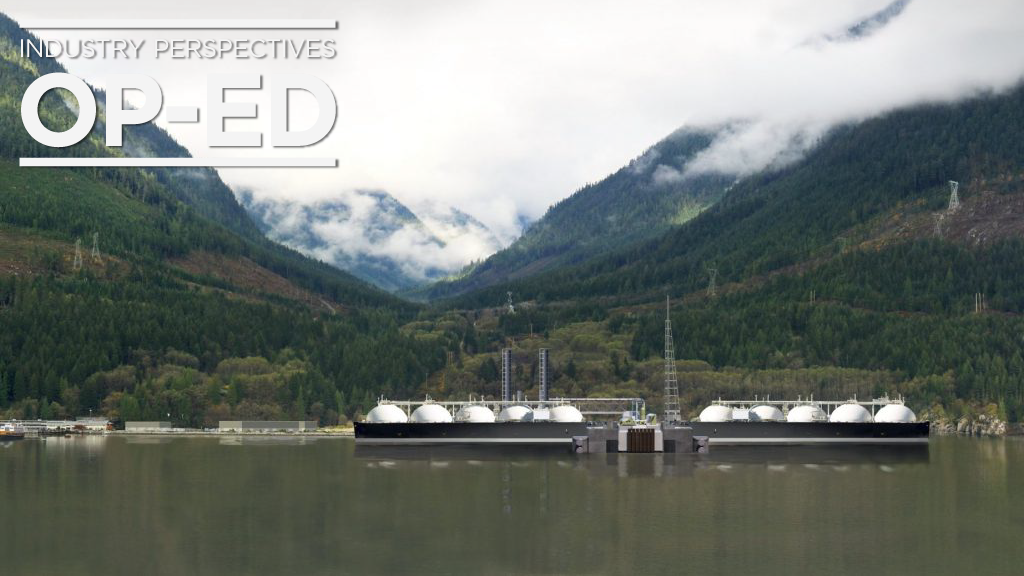
When the first major module arrived at Woodfibre LNG in May 2025, it marked more than progress.
It signalled that a different model for building projects in Canada is already underway.
For decades, governments approved, companies proposed and Indigenous Nations were asked to respond, often late and without meaningful authority. The result was predictable: conflict, delay and mistrust.
That model no longer works.
The question today is not whether Indigenous Nations should be involved, but how that involvement is structured and whether it is strong enough to support projects that can move forward with legitimacy.
At the Squamish Nation, our experience with the Woodfibre LNG project offers one answer.
Located near Squamish, B.C., on our traditional territory, the project is being developed on the site of a former pulp mill, land that carries memories of environmental harm. Today, something different is taking shape, not only in the infrastructure, but in the intent behind it.
The arrival of that module reflected years of work, including conversations, disagreements, and ultimately, alignment on what responsible development should look like. Projects like this are not built in a single moment. They are built through relationships tested over time.
That is the part that often goes unseen.
The foundation of this project was not a permit. It was a relationship. Before construction and regulatory filings, there were sustained conversations about what success would mean from both perspectives. That process required time, patience and trust. It was not always easy, but it established something essential: a shared understanding of what this project needed to be.
From there, a different framework emerged.
Through a consent-based Environmental Assessment Agreement, the Squamish Nation exercises regulatory authority alongside the Province of British Columbia. Our environmental assessment is not advisory. It is binding. Our laws, values and stewardship responsibilities are embedded directly in how the project is reviewed, approved and monitored.
This changes how the project functions.
When Indigenous Nations have a defined and enforceable role in decision-making, standards rise. Oversight becomes continuous rather than episodic. Accountability is shared rather than deferred.
You can see it in the details.
The facility uses electric-driven air cooling instead of seawater cooling, helping protect marine ecosystems. Environmental management plans incorporate Squamish Nation knowledge alongside scientific monitoring. The Marine Mammal Monitoring Program combines traditional knowledge with modern detection systems to better understand and protect marine life in Howe Sound.
But the impact is not only technical. It is human.
During a recent visit with Canada’s energy minister, what stood out was the people. Workers are learning new skills, community members are preparing for long-term roles and there is a growing sense this is not just a project happening on our land, but one we are helping to shape.
The Operator Training Program is preparing Squamish Nation members for careers in operations. Workforce standards have also evolved, with thousands of workers completing cultural and gender safety training. These are not side initiatives. They are part of building a project that reflects our values.
That distinction matters.
Partnership does not mean agreement on every issue. There have been challenges, and there will be more. But it does mean there is a structure to work through them, one that recognizes the Squamish Nation as a government with authority, not a stakeholder to be consulted after decisions are made.
This is the broader conversation taking place across Canada.
From April 29 to May 1, leaders from Indigenous Nations, business and government were slated to gather in Toronto for the First Nations Major Projects Coalition Conference. The focus is practical: what works, what does not and what needs to change.
The lesson is becoming clearer.
Canada is competing in a global energy market where reliability, credibility and timelines matter. Projects built on conflict and uncertainty struggle to move forward. Projects built on clear and durable partnerships are far more likely to succeed.
Indigenous governance should not be seen as a barrier. When properly recognized and integrated, it becomes a source of strength. It improves outcomes, reduces long-term risk and builds confidence among investors, governments and communities.
The work at Woodfibre LNG is ongoing. It is not a finished story. But it demonstrates that a different approach is possible, one where projects are built with shared authority, shared accountability and shared benefit from the outset.
In time, this should not be considered innovative. It should be standard practice.
Because in Canada today, the path forward is clear. Projects built on permission will continue to face resistance.
Projects built on partnership have a far greater chance to succeed and to last.
Chief Ian Campbell, Hereditary Chief, Squamish Nation. Send Industry Perspectives Op-Ed comments and column ideas to [email protected].