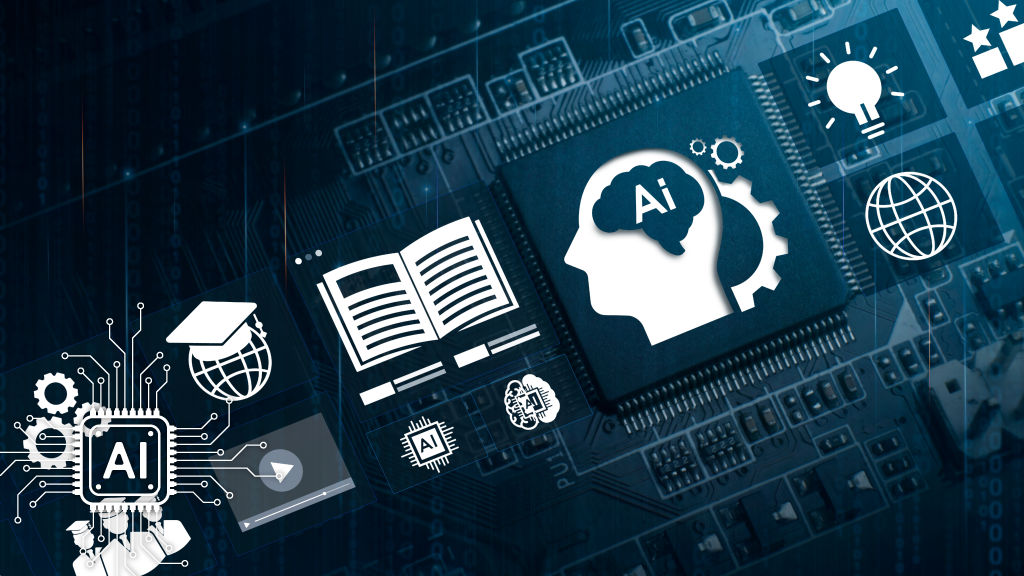
Artificial intelligence is rapidly reshaping the building industry and George Brown Polytechnic is making sure students in its construction and related programs are prepared for the transition.
The Toronto institution has been expanding both AI-focused education and AI-enabled training tools across its construction, manufacturing and clean-tech offerings as employers are increasingly looking for workers who can operate in a digital and data-driven environment.
Employers increasingly expect workers to understand technologies such as Microsoft Copilot, ChatGPT, robotics, automation and applied AI. At the same time, builders are adopting BIM, digital twins, predictive analytics, automation systems and smart-building technologies.
Through construction management programs, continuing education courses, a specialized AI graduate certificate and an innovative solar-energy training curriculum, students at George Brown are gaining exposure to technologies that will play a growing role on jobsites and in offices.
While the Angelo DelZotto School of Construction Management does not offer a dedicated AI degree, students are increasingly encountering technologies that rely on AI, machine learning, predictive analytics and digital-twin concepts.
Colleges, Universities, Research Excellence and Security Minister Nolan Quinn noted recently the school’s master of construction management program “will ensure Ontario students gain the practical skills they need to lead major construction projects in communities across Ontario, ensuring our province can keep moving and growing, no matter what we may face.”
The school has a number of offerings – an honours bachelor of technology (construction management), postgraduate construction management program, residential construction management program and a postgraduate building information modeling (BIM) management program.
School officials say the programs are developed with industry partners and reflect current technologies being adopted across the construction sector. The technologies include BIM platforms and digital project management systems that are increasingly incorporating AI-driven capabilities for scheduling, cost forecasting, risk assessment and project optimization.
As contractors and developers adopt smarter software tools, they say students entering the industry need to understand how data can be used to improve decisions and project outcomes.
For students who want deeper exposure to AI, George Brown has created several pathways through its continuing education division and specialized postgraduate studies.
One option at the college is an applied AI solutions development graduate certificate, which combines AI, machine learning, deep learning, data analytics, mathematics, computer science and business analysis. Students learn how to build machine-learning and deep-learning models, interpret data and communicate findings through dashboards and visualization tools.
The program is not construction-specific, but the skills have applications throughout the building sector. For example, machine-learning can be used to forecast project schedules, analyze productivity, improve site safety, optimize building performance and support digital-twin applications.
George Brown has also launched a smart manufacturing program for construction professionals looking to understand the technologies driving the industry. The program teaches students how to program and operate robotics, automation systems and additive manufacturing technologies while learning how AI interacts with the Industrial Internet of Things (IIoT).
Students configure smart sensors, build IIoT networks and work with digital twins that simulate real-world production systems. They also learn to analyze operational data using AI tools, apply cybersecurity principles and explore sustainability strategies that reduce energy consumption, material use and waste generation. The curriculum consists of courses on smart and data-driven manufacturing, the IIoT, and advanced manufacturing practices.
Standalone courses in machine learning and large language models are also offered by the college.
A six-week machine learning 1 course introduces students to AI and machine learning fundamentals. They learn the basics of Python programming and data structures before progressing to key machine-learning algorithms such as linear and logistic regression and clustering. Students learn how machine-learning techniques can be applied to real-world problems.
An AI and language models in business development course is offered that focuses on conversational AI and large language models such as ChatGPT. Students explore how AI-powered language models are built, how they integrate with business platforms and how organizations use them to automate workflows, improve customer engagement and increase operational efficiency. The course uses labs, demonstrations and case studies, and successful students earn a micro-credential.
Solar energy technician and solar panel installer programs use adaptive learning technologies, simulation software and AI-enabled tools to personalize instruction and accelerate skill development.
Algorithms assess student strengths and weaknesses, enabling the learning platform to tailor content to individual needs. Instead of relying solely on physical equipment, students can work in simulated environments that reproduce the behaviour of solar panels, inverters, battery energy storage systems, microgrids and electrical circuits.
Using software such as 3DLab and CircuitLogix, learners can troubleshoot electrical systems, model solar installations, test different configurations and analyze system performance under varying conditions. They can examine how weather affects solar production, design grid-connected and off-grid systems and practice solving complex technical issues.
The AI-driven solar energy technician program covers photovoltaic systems, battery storage, commercial solar installations, solar farms, microgrids, system sizing, maintenance, troubleshooting and safety procedures. Graduates are prepared for careers in residential and commercial solar projects, solar farm installations, photovoltaic system design and other roles.