As cities are growing due to urbanization, many infrastructure assets cannot meet the demand of an increasing population. Yet, the gap between infrastructure demand and investment is estimated to reach 15 trillion USD by 2040 according to the World Economic Forum. Therefore, industry needs smart, cost-effective strategies to bridge this gap.
When considering large aging infrastructure such as bridges, for example, they cannot be simply replaced, as this would be challenging not only in terms of costs, but also sustainability and overall feasibility. Rather, they should be maintained, updated, and extended to meet the needs of growing cities and to guarantee they are still safe.

The latter point is quite important, because accidents can have severe consequences. Consider for example the collapse of a section of the Morandi bridge in Genova, Italy, in 2018, resulting in multiple fatalities, or the recent accident at the Key Bridge in Baltimore, U.S., in 2024. Even though in this case the collapse was caused by a ship collision, it created severe road and water traffic congestion and supply chain disruptions.
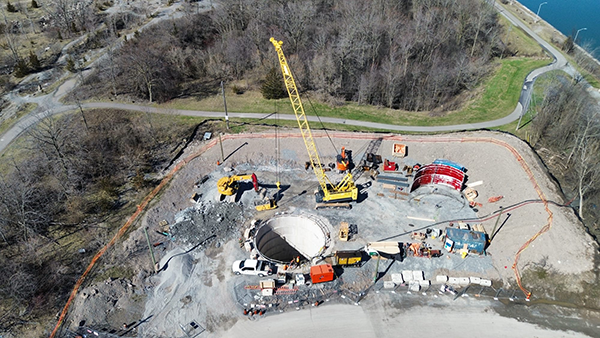
But it is not only about bridges. Ground excavation operations are another example of key procedures associated with potential severe risks, as shown by Singapore’s Nicoll Highway collapse in 2004. The important message here is that we should not only plan for a future where demand grows but also prepare for unexpected events and ensure infrastructure remains resilient. But how to do it?
The good (and bad) news is that infrastructure assets are often designed with safety factors and conservative assumptions. As a result, some may have reserve capacity. While conservative design may appear inefficient with respect to the gap reduction goal, it offers an opportunity to perform repair and enhancement more effectively. To provide a concrete example, if reserve capacity is available, a bridge upgrade such as adding a new lane may require less reinforcement and therefore lower operation costs.
However, this capacity needs to be quantified precisely to effectively plan for infrastructure improvement tasks. To do so, complex and often time-consuming computer simulations (e.g., based on physics-based models like finite elements) are needed. But there is a caveat. Such physics-based models require the knowledge of unknown material parameters that, to be measured directly, would damage the infrastructure, thus defying the purpose of the whole analysis. Fortunately, there is another way.
Indirect measurements allow engineers to estimate unknown parameters in a way similar to a medical doctor using tests to look for a plausible explanation of the symptoms of a patient. In practice, some measurements are collected on the infrastructure (e.g., place some load on a bridge and measure the deflection), and then a set of parameter values is considered plausible if the results of the physics-based simulation are compatible with the measurements. In the medical doctor analogy, it is identifying a possible cause (parameter values) that explains the symptoms (measurements) based on the test (simulation) results. Indeed, there are some details to take care of, such as dealing with uncertainty and possible faulty sensor data, but there are methods to do so.
This validation procedure that uses a physics-based model of infrastructure is often more reliable than purely data-driven AI approaches such as deep learning. In fact, deep learning methodologies are well-suited for interpolation, but not as much for extrapolation. It is like gathering data on speed and engine rpm for a car and establishing a relationship through a model. If such data was collected while driving in second gear, predictions would be likely wrong if driving in fourth gear.
And that is the point: to predict what could happen in extreme situations, a purely data-driven model may fail if trained only with data collected in normal situations. Moreover, if an accident occurs, explaining that a collapsed bridge was designed that way because a neural network said so may not be the best line of defense in a court.
A challenge, however, remains. The procedure described above can tell engineers if a given set of parameter values is plausible. These values are used as input for a simulation with the physics-based models. If the results are compatible with the field measurements, then the answer is yes. But the procedure does not tell engineers which values to test. When the parameter domain is large, testing all possible choices is impractical. Therefore, a more systematic search methodology is needed.
This is where AI can help significantly. The field of derivative-free optimization can help identify such parameter values without the need to test all combinations. This can be done, for example, thanks to surrogate models, i.e., mathematical functions built by learning from previous simulations which regions of the parameter space are more promising for generating predictions compatible with measurements. And this can be done quite efficiently using a small number of expensive simulations.
AI alone is unlikely to close the infrastructure investment gap. But when computer scientists, practicing engineers, and decision-makers work together, it can help the industry develop smart, cost-effective strategies to make infrastructure safer, more resilient, and ready to meet the increasing demand of growing cities.
Alberto Costa is an associate professor of Urban Informatics (Research) at Singapore Management University. His research focuses on the development of optimization methods for resilient infrastructure, energy systems, and decision-making under uncertainty. Send Industry Perspectives Op-Ed comments and column ideas to [email protected].