Religious organizations are the second largest landowners in Canada after government yet much of their land is underused and could be well suited for badly needed housing.
That is why a faith-based non-profit called Relèven is working with churches and other stakeholders to identify reuse opportunities that benefit congregations and their communities.
If churches can “mobilize even 20 per cent” of the more than 30,000 acres of land they own to develop housing, it would be a step to addressing the scarcity of affordable housing in Canada, says Mike Wood Daly, director of research at Relèven.
He says while churches have underused land available, developers and congregations need clarity in what steps to take to move ahead with projects.
Municipalities need to lead the movement by treating church properties as viable sources for affordable land for housing, he points out.
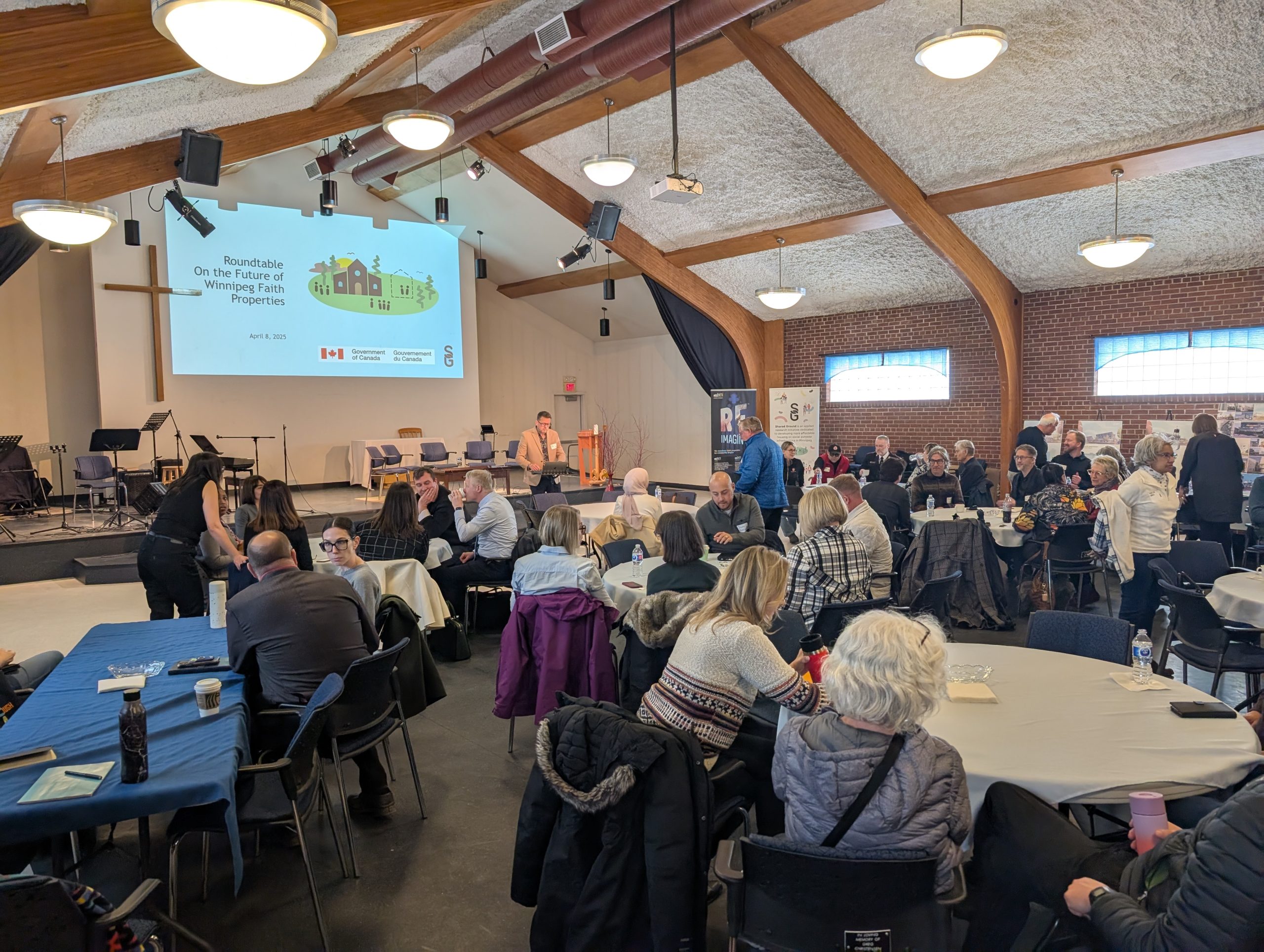
To raise awareness of the subject, Relèven held a series of roundtables in Winnipeg on redevelopment opportunities across Canada, bringing together church congregations, city politicians, planners, architects, private and public funding groups and other stakeholders.
Daly cites St. Mary’s Road United Church in Winnipeg as one of the leaders in the process. It is in the final stage of pre-development for the demolition of existing facilities for a project that includes affordable housing, a shared worship space and other community uses.
With a target of roughly 30 per cent affordable housing, the church would still be able to make some revenues and maintain a sustainable development model, he says.
For most projects churches would need to be in partnership with developers.
“The congregation puts in the value of the land and the developer takes on the construction costs and they both recoup their respective investment over the long-term after the project is developed and is generating revenue through (housing) rentals,” he explains.
Daly says one of the biggest initial challenges for churches is securing early stage funding.
Relèven’s roundtables conducted in a number of Canadian cities have helped municipalities understand some of the financial burdens churches face and how even small financial incentives can get the development ball rolling.
A case in point is in Edmonton where the dialogue has resulted in a partnership between the city and a community foundation to offer up to $135,000 to churches with early-stage feasibility studies which will cover some of the geotechnical and traffic study work required as well as meet other municipal obligations.
Daly says Alberta’s capital is the second fastest-growing city in North America and faces “significant housing issues,” a sound reason for the City of Edmonton taking church redevelopments seriously.
The City of Winnipeg has also offered financial incentives to kickstart pre-development, while the City of Vancouver is working on zoning changes that could help churches expedite development plans.
For church administrators wondering where to start, Relèven has developed a nine-level online course covering many of the ins and outs of the redevelopment process.
Like many private projects, church property redevelopments can take five to 10 years from conception to completion. That shouldn’t be a deterrent and Daly views the development or repurposing of church property as a “crucial” step to tackling the affordable housing crisis while providing churches with long-term viability.
“Groups like ours help congregations move through the initial stage to see how delivering housing aligns with their mission and purpose. It’s a huge step.”
Along with its focus on affordable housing developed on church properties, Relèven, which was founded in Montreal in 2018, supports church heritage preservation and modernized usage. It emphasizes sustainable revenue models and works to attract partners, investors and municipalities to the process.