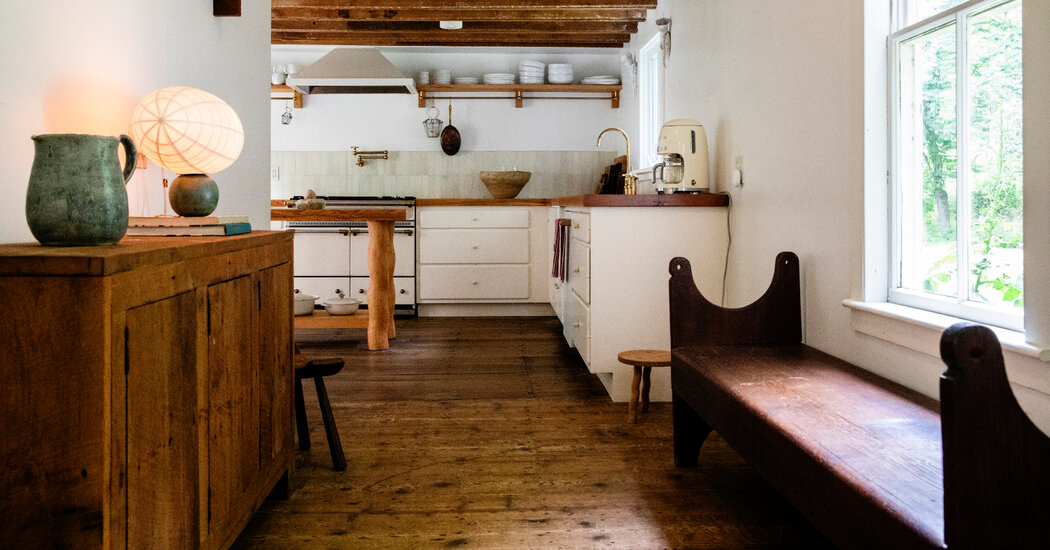
During the pandemic, the designer Eny Lee Parker took up house hunting as a hobby to pass the time in her New York apartment. It didn’t take long for her to uncover a listing for an 1870s farmhouse in Connecticut that had gone into foreclosure. After viewing the 1,716-square-foot property with her husband at the time, they submitted an offer and in less than six months it was theirs.
A year later, the couple broke up, Ms. Parker moved out of the house and divorce proceedings began. After the dissolution of the marriage was finalized in 2022, her ex asked if she wanted to buy him out of the house; Ms. Parker didn’t hesitate to claim full ownership.
Not only would this be a fresh start for Ms. Parker, but she had big ideas for the space. While dreaming about the home’s potential, she was having conversations with her studio’s manager, Soren Ferguson, about his interest in leaving New York to be closer to nature. When she suggested that he move to the house to help with the renovation, Mr. Ferguson was intrigued, but he wanted to maintain ownership of his work on the project.
Ms. Parker proposed that Mr. Ferguson put his money toward materials. “We worked it out where he would also have equity in the house throughout the renovation process, which for me was perfect because running a house is so much work, and it’s just not my cup of tea,” she said. “Owning a house with a friend felt so much more doable, less overwhelming and more fun.” (Mr. Ferguson lived at the house during the renovation. He still holds a stake in the house but has since relocated to Seattle.)
The designers took a “scrappy” approach to renovating the home, which they called Brandy Hill Farm, meticulously documenting the progress on Instagram. Ms. Parker requested furnishings from brands and used products from some of her own collections, while Mr. Ferguson embraced the charm of elements that were original to the property. “So much stuff was sourced from the property itself because we had a couple of structures that ended up being torn down, so a lot of material came out of that,” he said.