For decades, even during Detroit’s bleak years, which saw massive disinvestment and a moribund wider downtown, the Greektown neighborhood thrived.
The three-block strip, nestled in the southeastern corner of the city’s core, has always maintained a vigorous commercial life, chock full of largely Greek but other restaurants, cafes and shops.
Now the area is two-thirds through a $20 million streetscaping projectRFQ Owner’s Representative – Monroe Streetscape Redevelopment ProjectStatusPost-BidValue$14MLocationMonroe St, Detroit MISectorPrivateTypeRoads/Highways · New Construction · Service, Maintenance & SupplyData as of August 19, 2026View Project Page → to enhance the area’s esthetics and improve pedestrian-vehicle safety.
The money comes from the Michigan Economic Development Corp., the state’s development arm. Hometown Colasanti Group is the general contractor.
Ayesha Maxwell, Greektown Neighborhood Partnership’s executive director, said Greektown thrived when other parts of downtown didn’t because of the “really unique” makeup of the area – family-owned businesses “that have been here for 50 years-plus” and built a loyal clientele. “Greektown has always remained a true destination because before when you spoke about downtown you spoke about Greektown, so Greektown was Detroit’s downtown for so many years.”
Maxwell didn’t have a pedestrian count of the people who visit the district but said “thousands…in any given year.”
While a long-time magnet, the enclave became even more of a destination when one of the city’s three casinos, the Hollywood Casino in Greektown, opened in 2000.
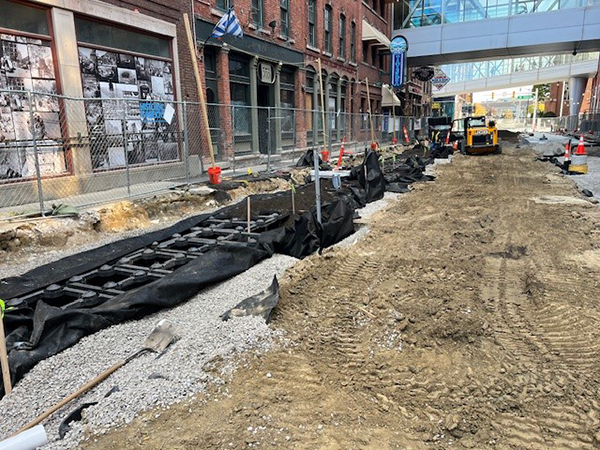
Maxwell added with the renovation the district wanted to up the pedestrian experience, primarily by widening sidewalks and installing better lighting.
The street’s asphalt in turn has been replaced with “premium granite pavers,” she said. There is new landscaping including trees.
The revitalization, concentrated along central thoroughfare Monroe Street, began in March 2025. The 500 block was completed in June, the 400-block scheduled this month and the 300 block in November. The borders are Randolph Street on the west and St. Antoine Street on the east.
Most businesses are concentrated on the 500 block, with more than two dozen.
Maxwell said during the build all businesses remained open. But despite its new vitality there remain some vacant storefronts, which the project is also addressing.
“Now that we are nearing completion with construction, our broader strategy is to make sure that we fill those storefronts and create a destination where people want to not only dine, but where they also want to shop and stay and hang out.”
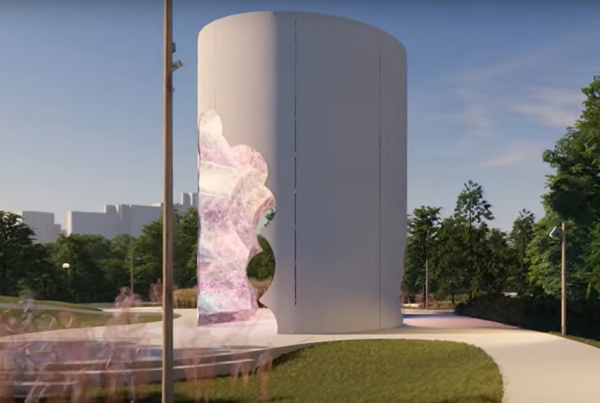
The other new design feature is a plaza on the west end at Randolph Street, marking the gateway to the rest of the core, which in turn has seen resurgence with new pedestrian nodes like Campus Martius, The Belt and Capitol Park.
“It’s giving us that connectivity that we need to the rest of downtown,” Maxwell said.
The wider Downtown Detroit Partnership, through its Urban Innovation Team, assisted in the rebuild including providing logistics and security in the “subdistrict,” CEO Eric Larson said.
He described the renewal as “really a big part of how downtowns are ultimately experienced – at street level. So, reclaiming important streets and making connections to local and small businesses and holding on to our cultural assets that define the diversity and history of the city are key to that.”